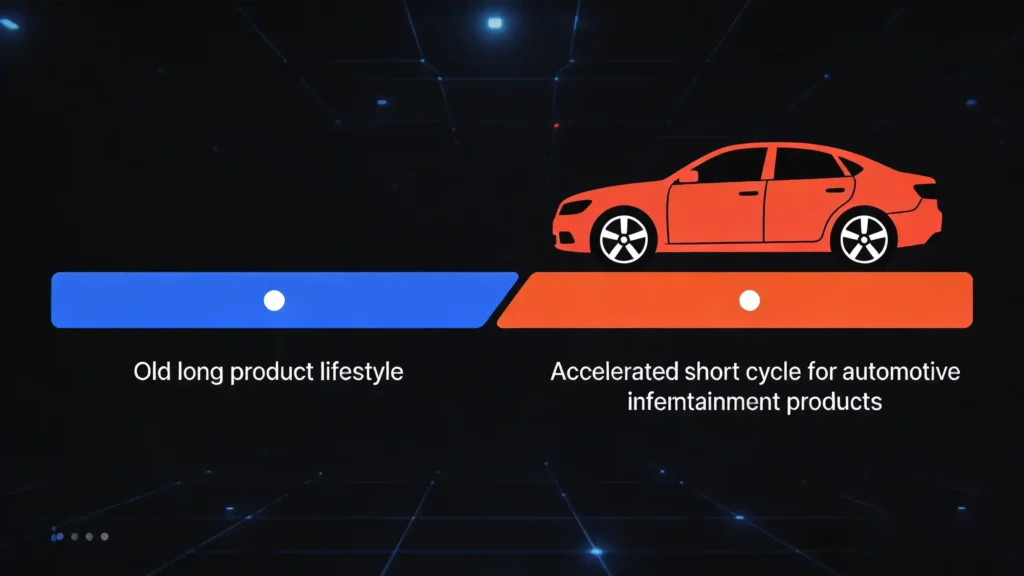
Infotainment product cycles used to move slowly enough that a dealer could stock the same head unit lineup for a couple of years without much risk. That is no longer true. Connectivity, voice AI, multi-screen cockpits, and software-driven upgrades are compressing that cycle. Buyers who do not track where the technology is heading end up holding inventory that looks dated within a season.
This guide walks through the five trends reshaping vehicle infotainment right now. It covers how mature each one is. It also covers how to sequence sourcing so you are not betting the warehouse on something that is not ready yet.
Why Future Infotainment Trends Matter for B2B Automotive Electronics Businesses
The Shift to Smart Cockpit Platforms
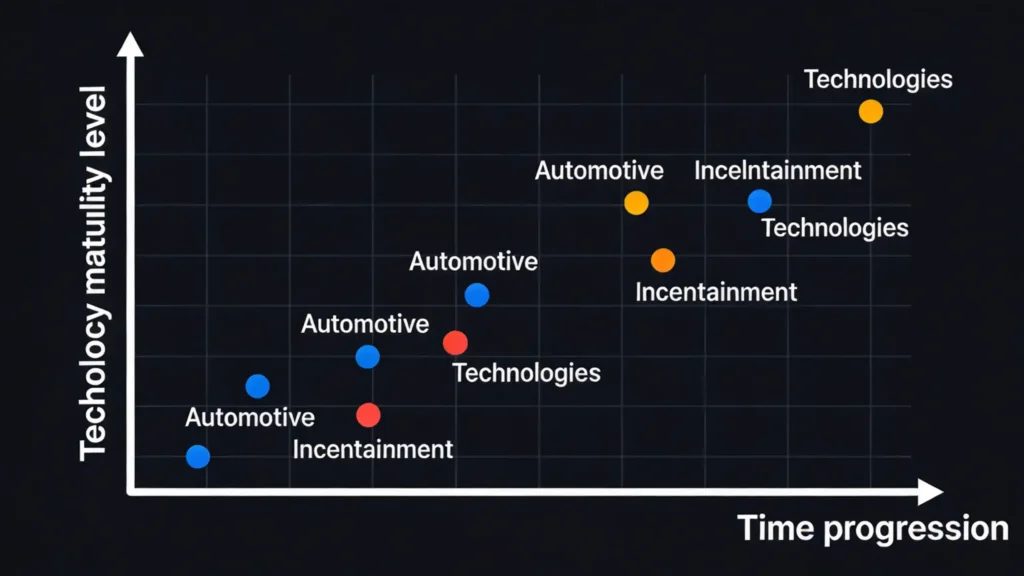
Infotainment has moved well past simple multimedia units. The market is shifting toward integrated smart cockpit platforms. Buyers who adopt early tend to hold a real edge over the ones waiting for a trend to fully mature.
New Revenue Streams
Emerging technology also changes where revenue comes from. Connected services, OTA upgrades, and data-driven features open recurring revenue streams. A static hardware sale never could offer these.
Shorter Product Lifecycles
Product lifecycles are shortening as a result. This matters for how you plan inventory.
Regional Adoption Speed
Adoption speed is not uniform either. China has moved fastest on connectivity and smart cockpit features. Europe and North America follow at a pace shaped by regulatory considerations.
The Risk of Ignoring Trends
Buyers who ignore these trends risk stocking products that age out quickly. Buyers who plan around them reduce that investment risk considerably.
5G IVI Real-Time Services: Connectivity-Driven Infotainment Evolution
What 5G IVI Systems Offer
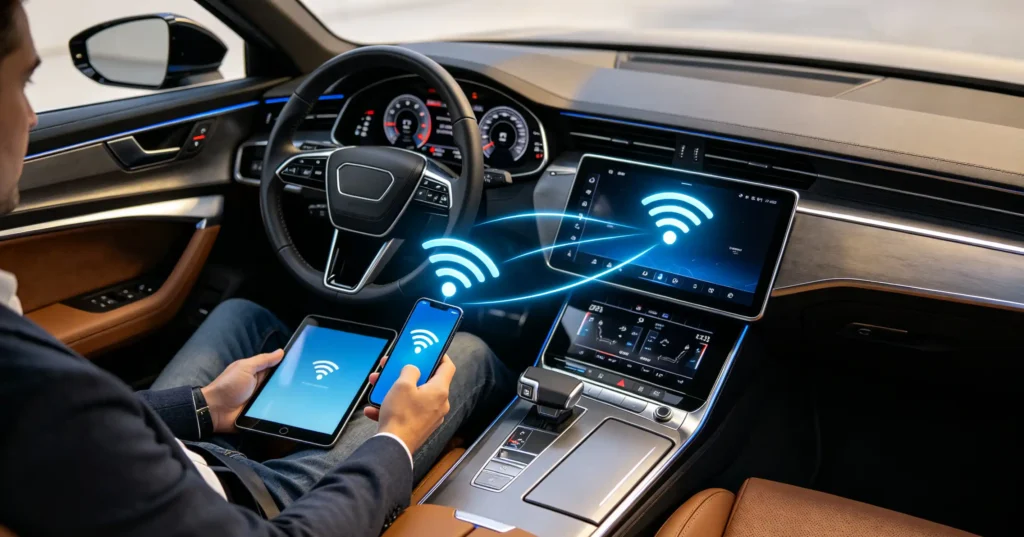
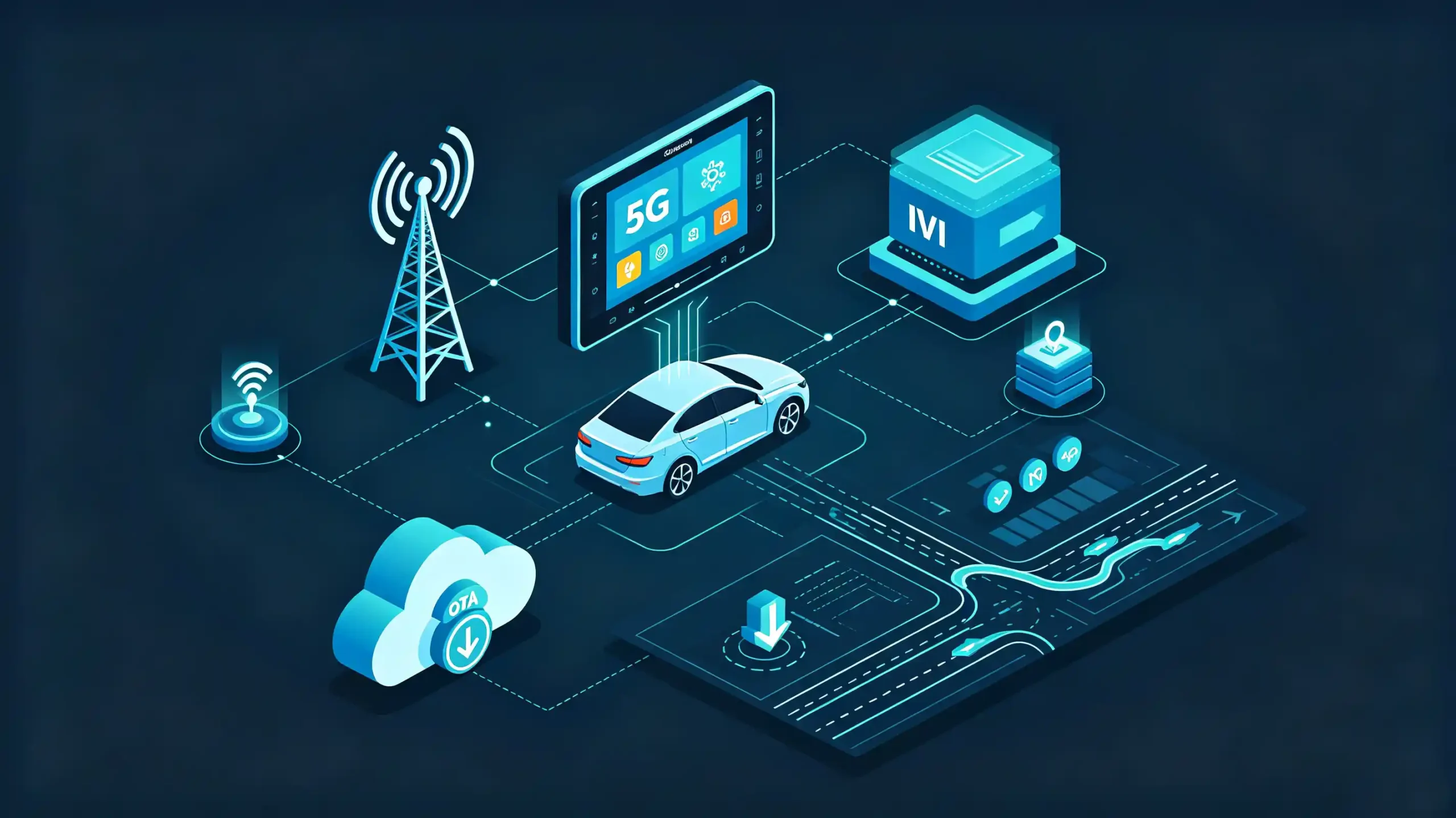
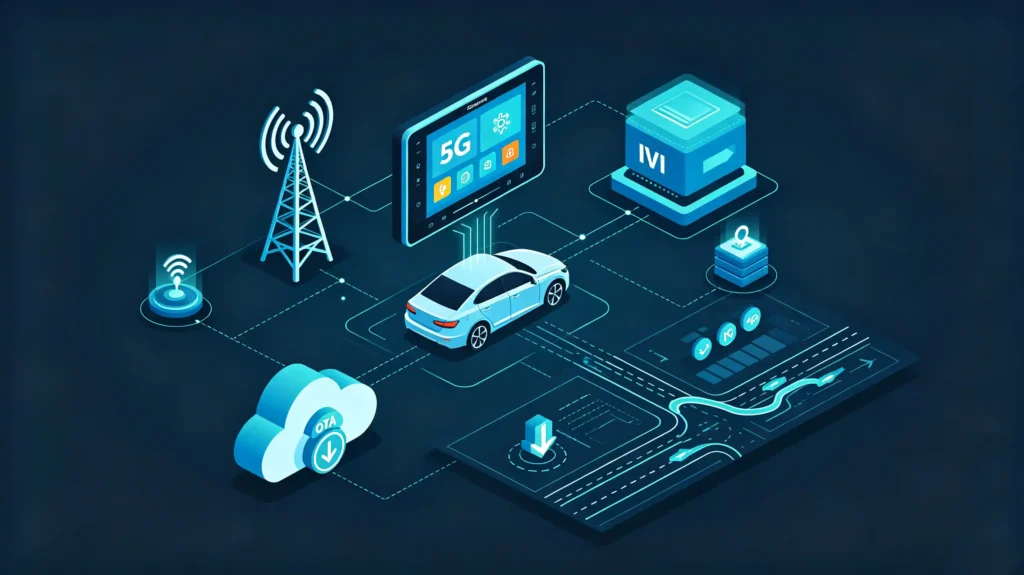
5G-enabled IVI systems combine infotainment hardware with cellular connectivity. This is built for real-time data, cloud services, and low-latency applications.
Key Capabilities
That connectivity unlocks several capabilities:
- Real-time traffic updates
- Streaming media
- OTA updates delivered without a shop visit
- Cloud-based navigation
- Remote fleet monitoring
These are capabilities a purely offline unit cannot offer.
Commercial Angle
The commercial angle is straightforward. Connected units support recurring revenue through data plans and connected services. This is not just a one-time hardware sale. Fleet management opens a customer segment that has nothing to do with individual vehicle owners.
Adoption and Market Reality
Adoption is growing quickly in China and Europe. Other markets move at whatever pace local 5G infrastructure allows. Connectivity is not all-or-nothing either. Units without full 5G can still support 4G or Wi-Fi tethering to cover the basics. This is a reasonable middle ground where 5G rollout is still patchy.
Smart Cockpit Multi-Screen Link: Integrated Display and Interaction Architecture
What Multi-Screen Means
A smart cockpit multi-screen setup links several displays into one coordinated system. These include instrument cluster, center screen, passenger display, head-up display, and rear-seat screens. They are not treated as isolated units.
Central Control
A central control unit drives all of them. Information can move between screens. For example, navigation directions can pass from the center display to the instrument cluster. The interface remains consistent across the layout.
Practical Value
The practical value shows up in synchronization and content sharing. Media, navigation, and vehicle data stay aligned across screens. Some systems even support drag-and-drop handoff between them.
Commercial Positioning
Commercially, multi-screen systems support premium pricing. They tend to appeal to higher-end 4S shops and automakers looking to differentiate. They are already standard in luxury vehicles. They are increasingly common in premium aftermarket. They are working their way into mid-range products from there.
The Trade-Off
The trade-off is real. Multi-screen architecture needs more processing power. It requires higher-quality displays. It also requires more sophisticated software integration than a single-screen unit.
AI Voice Infotainment Upgrade: Intelligent Interaction and Personalization
Beyond Basic Command Recognition
Voice control has existed in vehicles for years. But the upgrade path buyers should watch now goes beyond basic command recognition. It moves into natural language understanding, context awareness, and personalization.
What the Upgrade Delivers
This means the system understands conversational phrasing. It does not require exact keyword commands. It remembers recent conversation context. It gradually learns preferences like favorite routes, music choices, and climate settings.
Practical Applications
This shows up practically in hands-free navigation setup. It enables voice-controlled media. It allows settings adjustments without touching the screen. Personalization is what actually differentiates a premium product from a basic one.
Multi-Language Support
Multi-language support matters here too. This is particularly important for buyers serving global markets with varied language needs.
Market Maturity
Basic voice control is standard across most of the market at this point. The natural-language, personalized version is still concentrated in premium segments. This makes it a reasonable lever for differentiation rather than a baseline expectation.
Software-Defined Car IVI: OTA Upgrade and Flexible Function Expansion
What Software-Defined Means
A software-defined approach treats the IVI system as something that gets better over time through software. It is not something fixed the day it ships.
OTA Update Capabilities
OTA updates handle system software, feature additions, and vehicle protocol updates remotely. New functionality does not require a hardware swap or a shop visit.
Benefits for B2B Buyers
For B2B buyers, this means several benefits:
- Lower after-sales support costs (fixes can often be pushed remotely)
- A longer effective product lifecycle (the system stays relevant through updates)
- New revenue paths through paid feature upgrades or subscriptions
Hardware Foundation Requirements
None of this works without the right hardware foundation. The unit needs stable connectivity. It needs enough storage and processing headroom to support ongoing updates. The supplier needs to commit to sustained software development. They should not just ship a unit and walk away.
Security Considerations
Security matters just as much. OTA infrastructure needs encrypted updates and proper authentication. Cybersecurity regulation like UN R155 is increasingly shaping expectations in regulated export markets.
AR HUD Infotainment Fusion: Augmented Reality Display and Safety Integration
What AR HUD Is
An AR HUD (augmented reality head-up display) projects navigation, safety, and vehicle information directly onto the windshield. It sits in the driver’s line of sight. It layers augmented reality overlays onto the real road view. It does not show a floating dashboard-style readout.
How It Works
Cameras and sensors read the road environment. Turn arrows, lane guidance, speed limits, and hazard warnings appear positioned against the actual road ahead.
Why It Is an Infotainment Story
What makes this an infotainment story rather than just a display upgrade is the fusion. AR HUD pulls from navigation, driver assistance systems, and vehicle sensors simultaneously. It surfaces whatever is relevant directly in the driver’s field of view. It does not ask them to glance down at a screen.
Commercial Positioning
Commercially, it is a premium, safety-forward feature. It has real appeal for high-end 4S upgrades, automakers, and safety-conscious fleet buyers.
Market Maturity
Right now it sits squarely in the premium and luxury segment. But features like this typically work their way into mid-range vehicles and aftermarket over the following several years.
B2B Strategic Guide: Technology Maturity Assessment and Procurement Layout
A Rough Maturity Framework
Not every trend on this list belongs in a bulk order today. A rough maturity framework helps sequence sourcing decisions.
Mature: Ready for Bulk Procurement Now
These technologies are mature and ready for bulk procurement now:
- 5G/4G connectivity
- OTA-capable software-defined systems
- Android-based IVI platforms generally
Growing: Worth Sourcing for Premium Lines
These are growing and worth sourcing for premium lines:
- AI voice with natural language processing
- Multi-screen smart cockpit configurations
Emerging: Worth Monitoring Rather Than Committing
These are emerging and worth monitoring rather than committing to at volume:
- AR HUD (still carries higher cost and more limited supply)
Safest Approach for Emerging Categories
The safest way to handle the emerging category is small trial batches. Do not make full-scale commitments. This way you are not overexposed if adoption moves slower than expected.
Regional Timing Considerations
Regional timing matters too. China is generally ahead on connectivity and smart cockpit adoption. Europe is following. North America is accelerating from a different starting point.
Supplier Relationship Matters
Across all of this, the supplier relationship matters as much as the technology. Prioritize manufacturers with real in-house R&D. Prioritize those with working OTA infrastructure. This determines whether they can support you as these technologies mature.
FAQ
Which infotainment trends are ready for bulk procurement now?
5G and 4G connectivity are ready. OTA-capable software-defined IVI systems are ready. Android-based platforms generally are ready. AI voice with natural language processing and multi-screen cockpits are growing fast. They are worth adding to premium lines. AR HUD is early enough that trial orders make more sense than full-volume commitment.
How do connected infotainment units benefit dealers and distributors?
Connected units allow fixes and feature updates to be pushed remotely through OTA. This reduces physical returns for firmware-related issues. Dealers can also offer value beyond the initial sale. Data plans, connected services, and fleet monitoring are examples. This shifts part of the business model toward ongoing customer relationships rather than a single transaction.
What is the cost premium for multi-screen cockpit systems?
Multi-screen systems cost meaningfully more. This is due to more powerful processors, additional high-quality displays, and more complex software integration. The premium is generally justified for buyers targeting higher-end dealerships or automakers needing clear differentiation. But it is not a fit for budget-focused product lines.
What are the security risks of OTA-update-capable IVI systems?
Any system that accepts remote updates introduces a potential attack surface. This happens if the OTA infrastructure is not properly secured. Unauthorized access to update channels could compromise vehicle data or functionality. Buyers should confirm updates are encrypted and authenticated. Ask suppliers how they address cybersecurity expectations like those outlined in UN R155.
When will AR HUD become accessible for aftermarket and mid-range vehicles?
AR HUD currently sits in the premium and luxury segment. This is due to cost and limited supply. Features at this stage of maturity typically take several years to filter into mid-range and aftermarket products. Buyers interested in early positioning should treat it as a monitor-and-test category. It is not a volume purchase for now.
Conclusion
Sourcing decisions get easier once you know which technologies are ready for volume. You also need to know which ones are still worth watching from a distance. Contact our team to discuss your customized requirements. Request a quotation for Android IVI solutions built around where your target market actually is today.