A dealer stocking the same generic navigation head unit as every competitor in the region eventually runs into the same problem. There is nothing distinguishing their product from the shop down the street selling an identical box under a different sticker. Custom car GPS navigation systems solve this by giving buyers control over branding, software, and hardware configuration. This is better than reselling an off-the-shelf unit.
This guide covers what custom and ODM navigation sourcing actually involves. It covers UI branding and private label production. It also covers what to check before committing to a manufacturer.
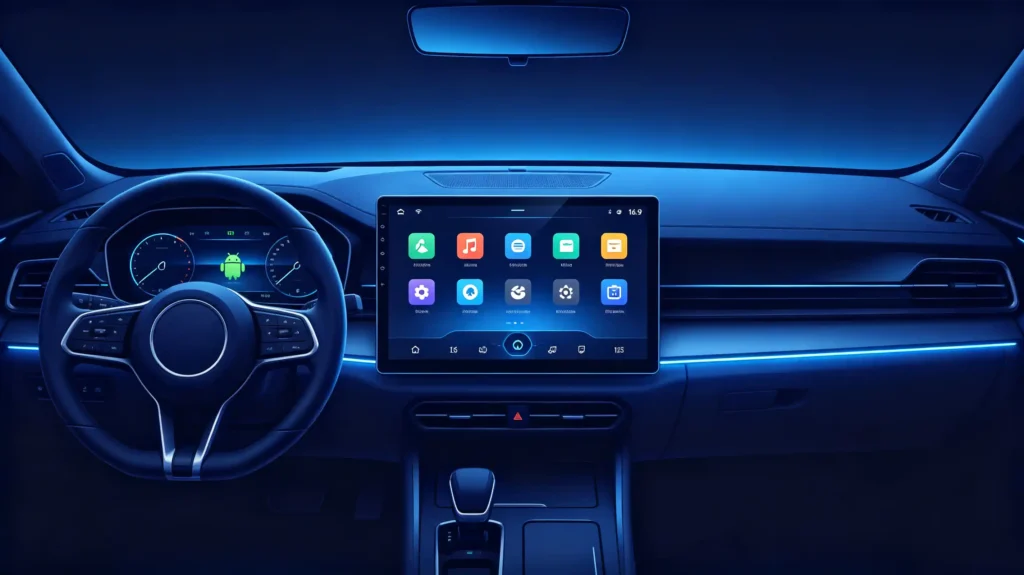
What “Custom” Actually Means for Car GPS Navigation Systems
More Than Buyers Assume
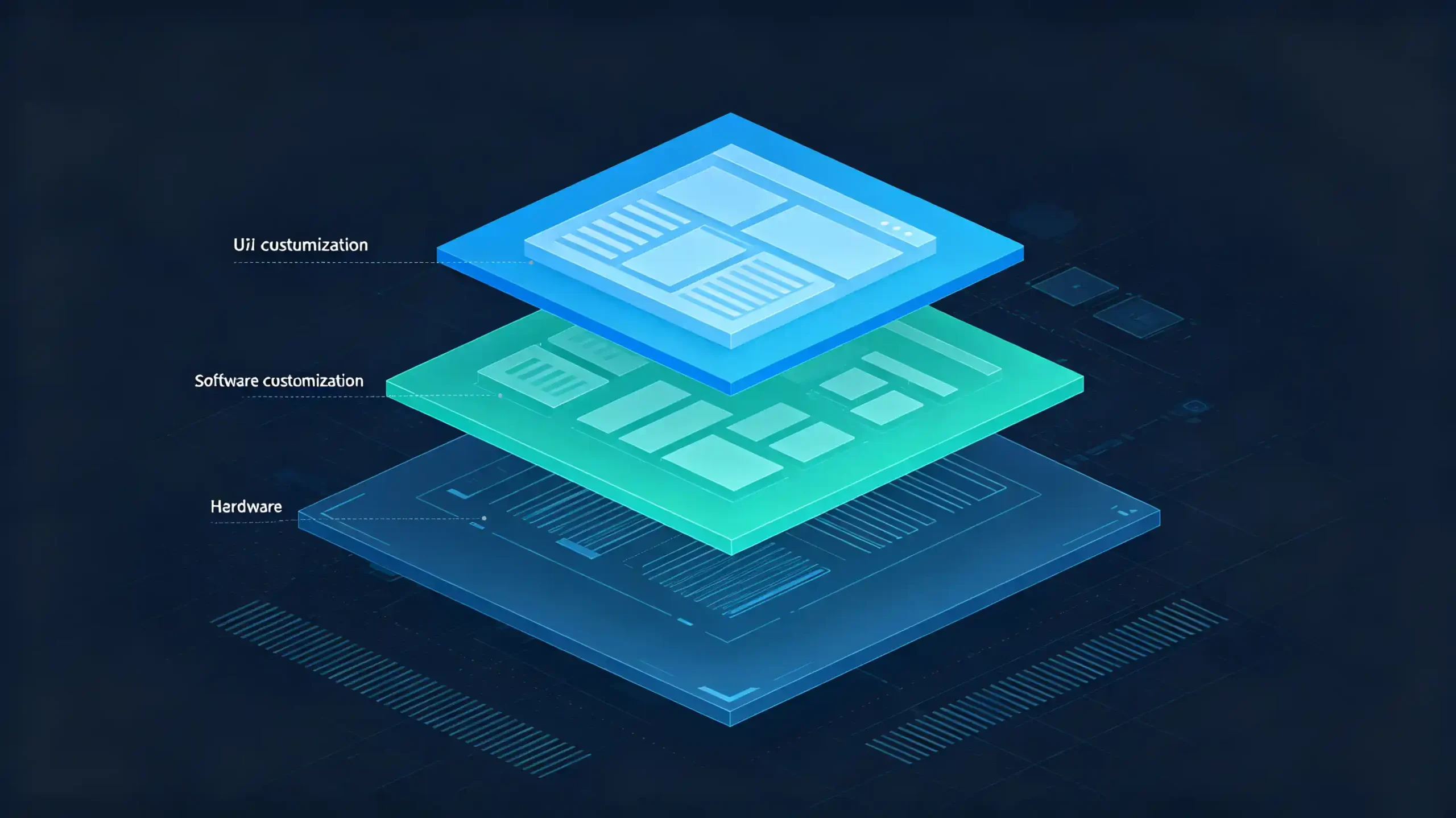
Customization in this industry spans a wider range than most buyers initially assume. Understanding the layers helps clarify what to actually ask a supplier for.
Surface Level: Custom UI
At the surface level, custom UI covers the visual experience. Desktop theme, icon style, color scheme, and menu layout matched to a brand’s visual identity. A personalized boot animation displays a customer’s logo when the system starts up. This replaces a generic manufacturer splash screen.
Middle Layer: Custom Software
Beneath the visual layer sits custom software. Modifying system functions. Adding vehicle-specific protocols. Adapting regional radio frequency settings. Adjusting system logic to match a target market’s requirements.
Deep Layer: Hardware Customization
And beneath that sits hardware customization. Adjusting RAM and ROM capacity. Screen resolution. Available ports. Power modules to suit different country voltage standards.
The Three Layers Together
A genuinely custom navigation system touches some combination of these three layers. It is not just a logo swapped onto an unchanged base product.
ODM Solutions versus Simple Private Label
Two Approaches, Different Engagement
It is worth distinguishing between two approaches that get lumped together under “custom navigation.” They involve very different levels of supplier engagement.
Private Label
Private label, in its simplest form, means putting a buyer’s brand — logo, packaging, color scheme — on an otherwise unchanged standard product. This works well for buyers who want brand consistency without deep technical customization. It is typically faster and less expensive to implement.
ODM (Original Design Manufacturing)
ODM goes further. The manufacturer adapts the underlying hardware and software specifically for the buyer’s requirements. This is not just the branding wrapped around it. This is the path for buyers who need specific vehicle protocol support, particular hardware specifications, or software functionality tailored to a target market. They do not want a standard configuration with a different logo attached.
The Spectrum Between
Most custom navigation projects fall somewhere on a spectrum between these two poles. Clarifying which one a project actually needs upfront prevents a mismatch between what a buyer expects and what a supplier is prepared to deliver.
The Risk of Private Label Alone
A dealer new to sourcing sometimes assumes private label alone will differentiate their product enough to compete. They discover after launch that customers cannot tell the difference from a rebadged competitor unit once the branding wears thin as a talking point. Understanding this distinction before ordering helps set realistic expectations for what private label actually buys versus what a deeper ODM engagement delivers.
What Goes Into Building a Custom Navigation System
Multiple Customization Points
A full custom navigation project typically moves through several concrete customization points. Each is worth understanding on its own terms.
Software Customization
Software customization covers modifying system functions. It covers adding dedicated vehicle protocols for specific car models. It covers optimizing system fluency. It covers adapting regional radio frequency standards. It covers adjusting system logic based on a target market’s needs. This is where CAN Bus protocol adaptation for specific vehicle brands typically happens. Matching steering wheel controls and vehicle data display to a new car model requires software-level development work.
Hardware Customization
Hardware customization involves freely adjusting configuration. Upgrading RAM and ROM. Adjusting screen resolution. Expanding USB and HDMI interfaces. Customizing power modules for different country voltage standards. This is the layer that determines actual performance and physical compatibility with a target vehicle or market.
Branding Customization
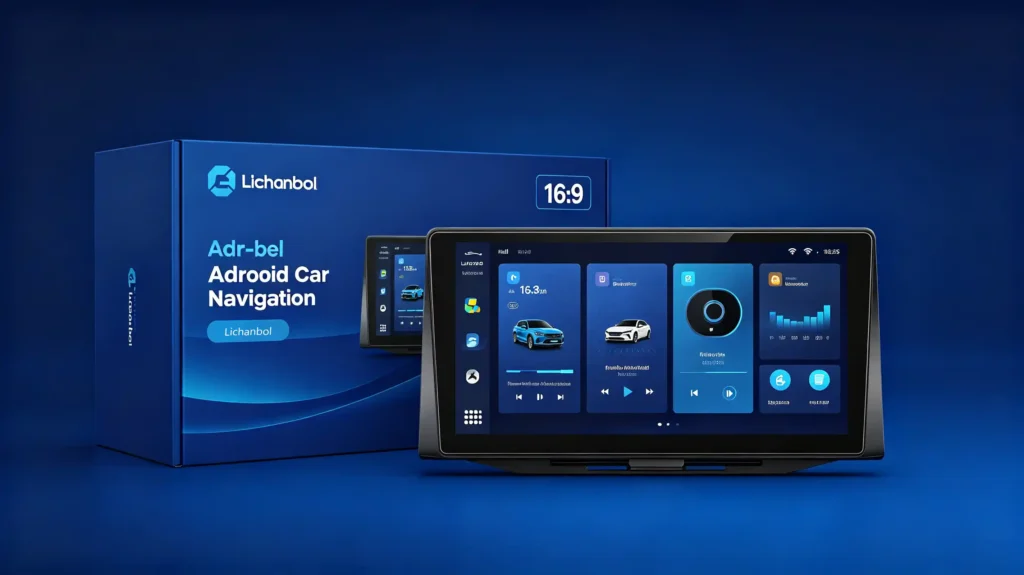
Branding customization spans UI design. Boot wallpaper, desktop icons, color theme, menu layout. A personalized boot animation with the customer’s logo. Physical branding — silk-screen or laser-engraved logos on the front panel, back shell, remote control, and outer packaging. Packaging itself can be customized too. Neutral export cartons. Custom color gift boxes with printed barcodes and product labels matching a customer’s brand. Foam protection packaging suited to international shipping.
The Value of Going Deeper
Together, these three layers give a buyer far more control over the final product than simply relabeling a stock unit. A dealer who only changes packaging and a front-panel logo still hands the customer an experience that looks and behaves exactly like every other unit built on the same base platform. Extending customization into the UI and software layers is what actually creates a product that feels distinct once the customer turns the key and the screen lights up.
Sourcing Considerations for Custom Navigation Projects
Different Supplier Evaluation
Buyers moving from a standard catalog purchase to a custom navigation project need to evaluate suppliers differently. They would for an off-the-shelf order.
Production Capacity and Timeline
The buyer needs a manufacturer that can actually deliver custom orders within a workable timeline. They do not want customization treated as an open-ended engineering project. Companies usually evaluate whether a supplier maintains dedicated production capacity for custom orders. They also evaluate what lead time to expect once specifications are finalized. A slow or unpredictable custom production process can undermine an otherwise well-planned product launch.
Minimum Order Quantity and Trial Batches
A customized solution can help buyers avoid overcommitting on an unproven product line. Flexible minimum order quantities let a new client place a smaller trial order before scaling to bulk volume. Established importers can access volume discounts on larger orders. This flexibility matters particularly for buyers entering a new regional market or testing a new brand concept before committing significant capital to a full production run. A smaller initial batch limits downside risk if a market response turns out weaker than expected or a UI detail needs adjustment before the next order.
Quality Control for Custom Orders
Custom orders introduce additional verification points beyond standard functional testing. Confirming that logo placement, UI branding, and boot animation match specifications exactly. This is alongside the usual checks on product function, appearance, and packaging. A manufacturer with dedicated final inspection specifically verifying custom branding consistency, not just baseline hardware function, reduces the risk of a batch shipping with a branding error a customer would immediately notice.
FAQ
What’s the difference between private label and full ODM customization?
Private label typically means applying a buyer’s branding — logo, packaging, colors — to an otherwise standard product without deeper technical changes. Full ODM customization goes further, adapting hardware specifications and software functionality to a buyer’s specific requirements, such as vehicle protocol support or regional configuration. Most projects fall somewhere between the two. Clarifying which level of customization a project actually needs helps set accurate supplier expectations.
How long does it typically take to produce a custom navigation order?
This varies by supplier. A manufacturer with dedicated custom production capacity can generally complete OEM/ODM orders within a defined working timeline once specifications are finalized — commonly around two to three weeks for an established factory process. Confirming this timeline explicitly during the quoting stage, rather than assuming it matches standard product lead times, avoids scheduling surprises for a product launch.
Can a small business place a custom order, or is this only for large importers?
Many manufacturers support flexible minimum order quantities specifically to accommodate smaller trial orders from new clients. Volume discounts are available for established bulk buyers. This makes custom navigation sourcing accessible for businesses testing a new brand concept or entering a new market without committing to a large production run upfront.
What should I check on a sample before approving a full custom production run?
Verify that UI branding, boot animation, and logo placement match your specifications exactly. Confirm the hardware configuration performs as expected for your target vehicle models. Check packaging details including barcode printing and brand labels. Catching a branding or configuration error on a sample avoids a much costlier correction after a full batch has already been produced.
Conclusion
Whether you need a fully customized ODM solution with vehicle-specific software or a straightforward private label product with your branding applied, matching the right level of customization to your business goals makes the sourcing process far more predictable.