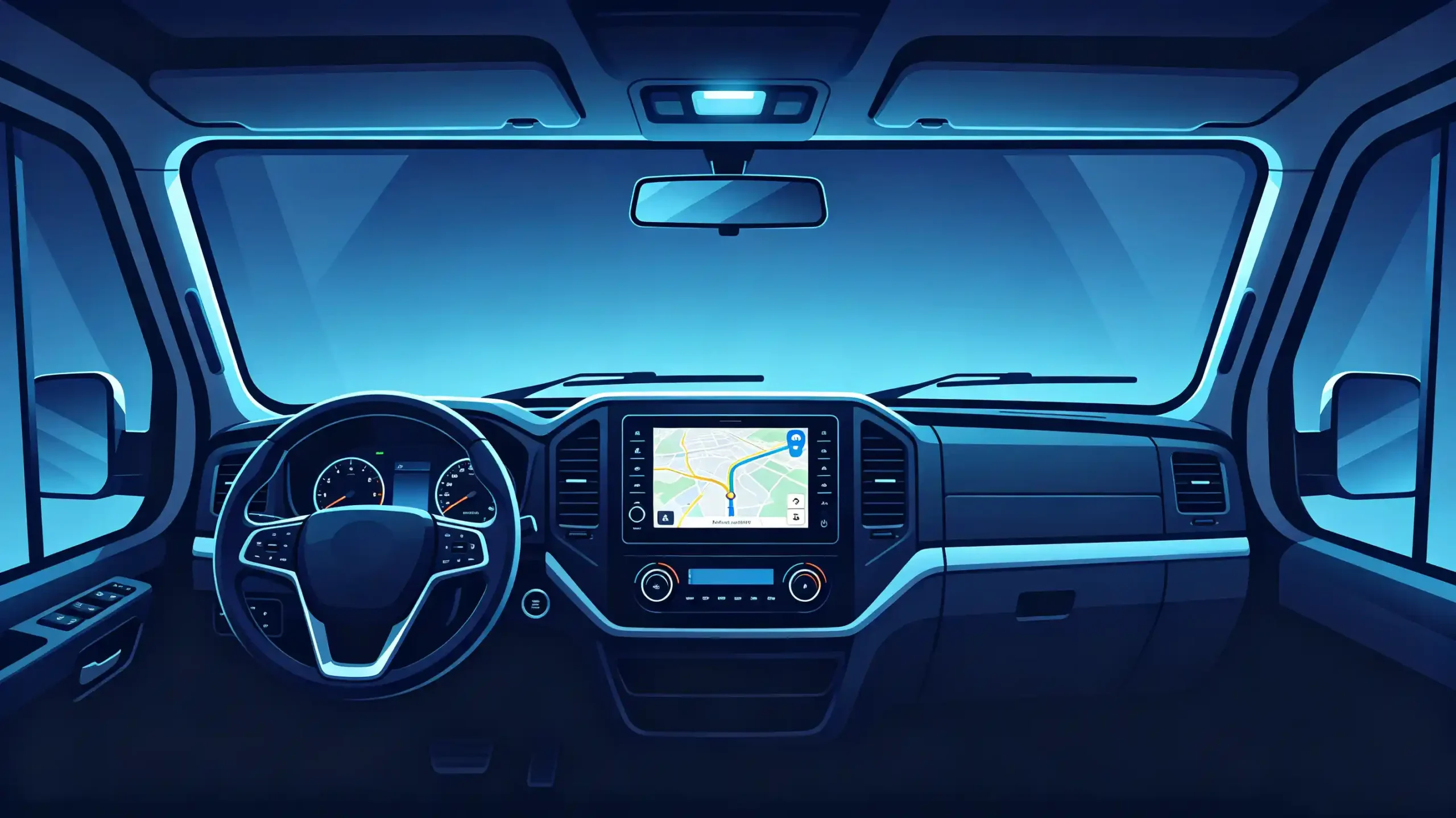
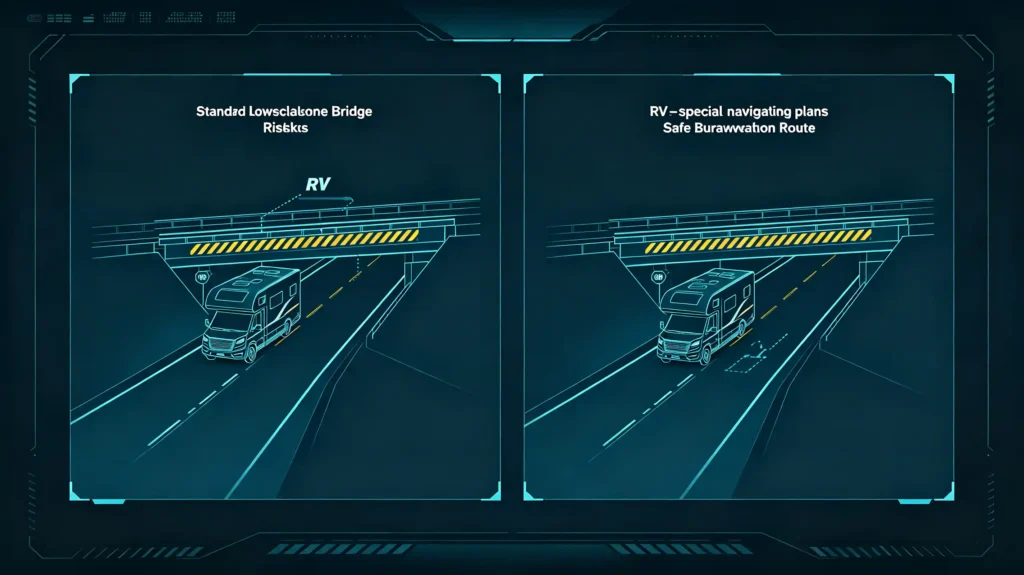
A standard car GPS will happily route an RV driver under a bridge with nine feet of clearance. It will send them down a residential street that cannot handle a thirty-foot turning radius. It will route them across a weight-restricted rural bridge. It does this because it has no idea the vehicle is anything other than a sedan. This is the core problem RV owners run into with regular navigation. It is why “GPS navigation for RV” gets searched as its own distinct category. It does not fall under general car navigation.
This guide covers what actually differs about RV navigation needs. It also covers what dealers and importers should know when sourcing navigation hardware for this market. For a foundational overview of navigation systems, see our what is a car navigation system guide.
Why RV Navigation Needs Differ From Standard Car GPS
Vehicle Profile Awareness
The core issue with using a standard car navigation system in an RV comes down to vehicle profile awareness. Regular GPS systems calculate routes based on road type and distance. They do not account for a vehicle’s height, weight, length, or turning radius. These details matter enormously for a 30-foot motorhome. They are irrelevant for a passenger car. Routing an RV down a route built for standard vehicles can mean a driver discovering a low clearance bridge or a weight-restricted road only after committing to the turn.
Different Practical Priorities
Beyond routing logic, RV drivers also tend to prioritize different practical factors than typical car drivers. Longer trip planning for multi-day routes. Larger and more legible display screens readable from a driver’s seat set further back than in a typical car. Navigation hardware that holds up to the vibration and temperature swings common in a vehicle that may sit parked for extended stretches between long-distance trips.
Dedicated RV GPS Devices versus Android Head Units for RV Navigation
Two Paths to Solving the Problem
RV owners generally have two paths to solving the navigation problem. Understanding both helps frame where an Android head unit actually fits.
RV-Specific Routing Profiles
Dedicated RV GPS devices come preloaded with a vehicle profile feature. The driver inputs height, weight, length, and sometimes hazmat restrictions. The system’s routing engine avoids roads and bridges unsuitable for those dimensions. This routing intelligence lives in the underlying map and routing software itself. It is not in generic GPS hardware. This is why it is specifically marketed as an RV feature. It is not something every navigation device includes automatically.

Why Android’s Open App Platform Matters for RV Drivers
An Android-based head unit does not include RV-specific routing built into its base navigation software. It does not do this any more than a standard car system does. But it offers something a closed, single-purpose GPS device generally cannot. It offers the ability to install a dedicated RV navigation app from an app store. Because Android supports third-party app installation, an RV owner can add an app built specifically for RV routing. They can do this on a head unit that also handles media, phone connectivity, and standard navigation. This gives the vehicle both general-purpose infotainment and RV-specific routing capability on the same screen. The driver does not need to run two separate devices.
Explaining the Difference to Customers
This flexibility is a genuine differentiator worth explaining to customers. Some assume a “regular” Android head unit cannot handle RV-specific needs. The routing intelligence comes from the app, not the hardware platform. But the platform has to actually support installing and running that app smoothly. For guidance on hardware specifications, see our RAM and storage guide for Android car stereos.
Hardware Considerations for Heavy-Duty and Industrial-Grade RV Navigation Systems
Physical Demands on Electronics
RVs place different physical demands on electronics than passenger cars. This affects what “heavy-duty” or “industrial-grade” actually means in practice for this category.
Larger Screen Requirements
A larger, higher-resolution screen matters more here than in a compact car. RV dashboards often have more available space. Drivers seated further from the display benefit from larger, more legible text and map graphics.
Longevity and Temperature Tolerance
Vehicles that sit parked for weeks between long trips put different demands on hardware longevity than a daily-driven car. In a daily-driven car, components see more consistent use. They see less exposure to temperature extremes while idle. Buyers sourcing navigation hardware for this market should ask suppliers directly about component durability and wide-temperature-range tolerance. Do not assume standard automotive-grade components are automatically sufficient for a vehicle with a different usage pattern.
Power System Compatibility
Power system compatibility deserves attention too. Many RVs run auxiliary electronics off a house battery system. This behaves differently from a standard vehicle’s electrical system. This is particularly true during periods when the engine is not running. The unit relies on stored battery capacity. Confirming that a navigation head unit’s voltage tolerance and power draw suit this kind of setup avoids issues. These issues would not show up when the same unit is tested in a standard passenger vehicle wired directly to the engine’s electrical system. For step-by-step installation guidance, see our head unit installation guide.
Custom GPS Navigation for RV Manufacturers and Fleet Operators
Sourcing Beyond the Standard Catalog
For RV manufacturers, importers, and dealers specifying navigation systems at the OEM level, sourcing decisions go beyond picking a head unit off a standard catalog. The platform needs to fit both the vehicle’s physical dashboard and its intended use case.
Customization Options for RV Applications
The buyer needs a head unit platform flexible enough to support a larger touchscreen matched to an RV’s dashboard space. It also needs the hardware headroom to run navigation apps — including dedicated RV routing apps — alongside standard media and connectivity features without lag. Companies usually evaluate whether a supplier can adjust screen size, hardware specifications, and system configuration for a non-standard vehicle category like RVs. They do not want only configurations designed around passenger car dashboards.
Supplier Evaluation Factors
Buyers sourcing navigation hardware for RV applications tend to check a consistent set of things. Whether the platform supports the screen size and resolution an RV dashboard requires. Whether hardware specifications can handle running RV-specific navigation apps smoothly alongside standard infotainment functions. How the supplier’s quality control process accounts for the vibration and temperature conditions RVs experience during long-distance travel. Whether OEM customization is genuinely available for a vehicle category outside standard passenger cars. For guidance on choosing the right supplier, see our how to choose a car navigation system supplier guide.
The Supplier Separation Point
This last point separates suppliers more than buyers might expect. Many manufacturers build their entire catalog and R&D process around passenger car dashboards and standard installation kits. An RV request becomes an awkward exception rather than a normal part of their business. A supplier accustomed to adjusting screen dimensions, mounting configurations, and hardware specs for non-standard vehicle categories tends to move through this kind of customization request faster. They also have fewer surprises during production.
FAQ
Can a standard Android head unit provide RV-specific route planning?
Not by default. Standard Android head units run general navigation software the same way a car system would. They do not have built-in awareness of vehicle height, weight, or length restrictions. However, because Android supports installing third-party apps, an RV owner can add a dedicated RV navigation app. They can get vehicle-profile-based routing on the same head unit that handles media and standard navigation.
What makes a GPS system “heavy-duty” or “industrial-grade” for RV use?
This generally refers to hardware built to handle the physical conditions RVs experience. Vibration during long-distance travel. Extended idle periods with temperature swings. Larger screen requirements for dashboards set up differently than passenger cars. It is less about processing power alone. It is more about component durability and screen configuration matched to how RVs are actually used.
Do RV navigation systems need a bigger screen than car navigation systems?
Generally, yes. But this depends on the specific vehicle and dashboard layout. RV drivers often sit further from the dashboard than in a compact car. RV dashboards frequently have more available space for a larger display. A bigger, higher-resolution screen improves map and route legibility at that increased viewing distance. This matters more for RV use than it typically does in a standard passenger vehicle.
Can RV manufacturers get custom navigation head units for factory installation?
Yes, through OEM or ODM customization. This typically includes adjusting screen size and hardware specifications to fit an RV’s dashboard. It also includes software configuration to support the navigation and connectivity apps a manufacturer wants preloaded. Confirming a supplier’s experience customizing for non-standard vehicle categories is worth doing early in the sourcing conversation. Do not assume a passenger-car configuration will transfer directly.
Conclusion
Whether you are outfitting RVs with larger displays for better road visibility or need a platform capable of running dedicated RV routing apps alongside standard infotainment, matching hardware specifications to how these vehicles are actually used makes a real difference.