A datasheet listing “1000W” next to a head unit’s audio specs looks impressive. That is until someone actually measures what the amplifier delivers under continuous playback. It is usually a small fraction of that number.
Car stereo amplifier power rating is one of the more misread specs in automotive audio sourcing. The gap between what is advertised and what is actually delivered is exactly where mismatched expectations, inflated marketing claims, and after-sales complaints tend to originate.
This guide covers what amplifier power ratings actually measure. It covers the difference between RMS and peak power. It covers why advertised maximum figures often diverge from rated output. It covers how built-in and external amplifiers compare. It covers the real-world factors that shape delivered power. It covers speaker impedance matching. It also covers what to verify on a supplier’s datasheet before sourcing in volume.
What Are Car Stereo Amplifier Power Ratings?
Definition
A car stereo amplifier power rating is the quantified output capability of the audio amplification stage. Essentially, it describes how much electrical power the amplifier can convert into sound signal sent to the speakers.
Distinct from Volume and Perceived Quality
It is a distinct spec from volume, loudness, or perceived sound quality. All of those depend on speaker efficiency, cabin acoustics, and source material as much as on the amplifier itself.
Why It Matters for B2B Buyers
For B2B buyers, this spec carries real weight beyond a number on a sheet. Power rating determines compatible speaker types and sizes. It directly shapes how an audio system performs once installed in a vehicle. Mismatches between advertised and actual output are a recurring source of returns and dealer complaints. or a full view of all audio hardware decisions, see our car stereo hardware components overview.
Supplier Figures Are Not Always Comparable
Ratings appear consistently on datasheets. But how suppliers arrive at those numbers varies considerably. That includes the testing conditions, the metric used, and the channel configuration. A car stereo power output figure from one supplier is not automatically comparable to the same-looking figure from another. This is the starting point for everything that follows in this guide.
RMS Power vs Peak Power for Car Stereo Amplifiers
The Two Most Common Metrics
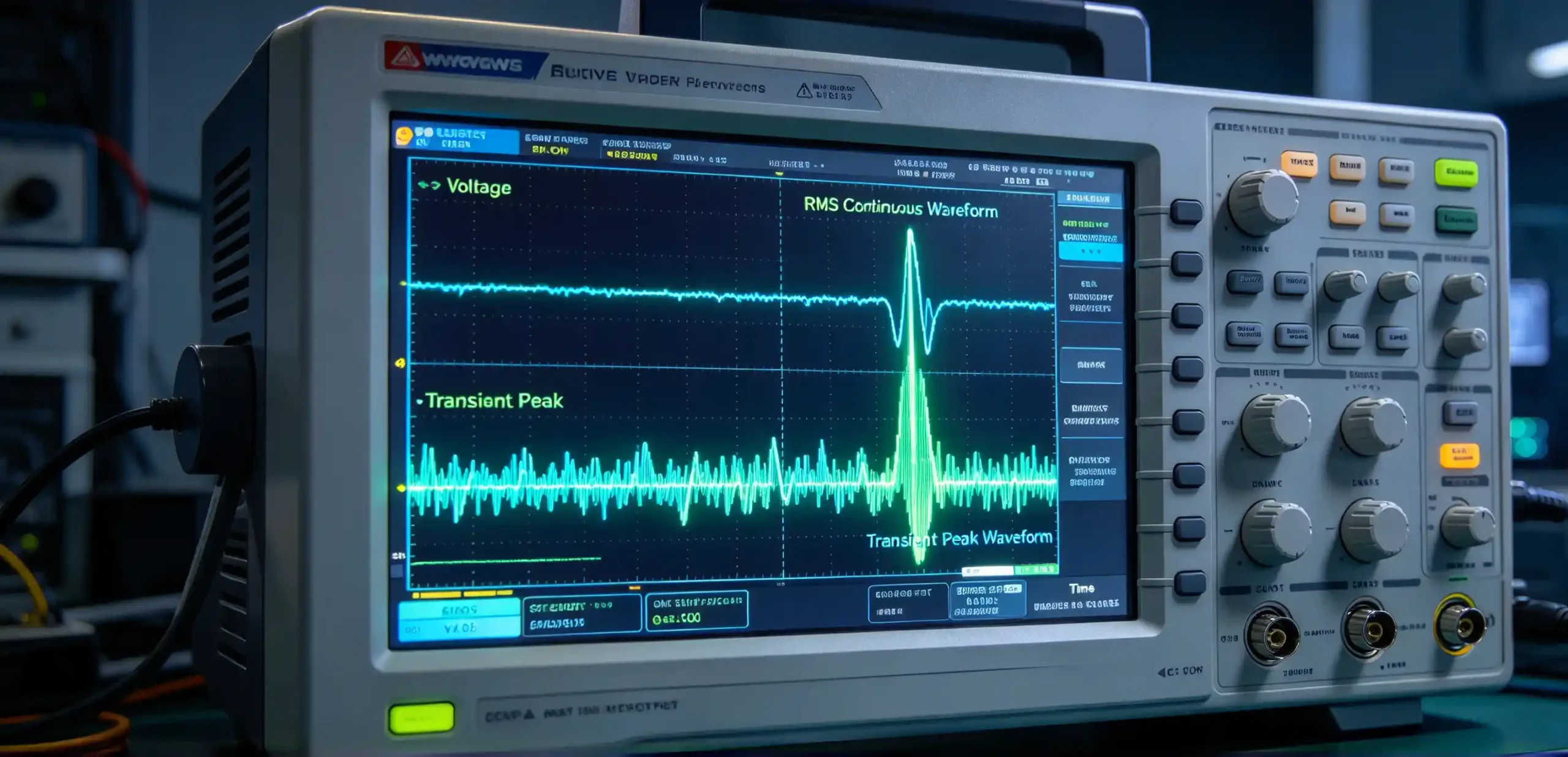
RMS and peak power are the two metrics that show up most often on amplifier datasheets. Conflating them is the single most common sourcing mistake in this category.
| Specification | What It Indicates | What Buyers Should Check |
|---|---|---|
| RMS or continuous power | Commonly used to describe sustained output under specified test conditions | Load impedance, supply voltage, frequency range, THD, and number of channels |
| Peak or maximum power | A maximum output figure defined by the manufacturer’s measurement method | How the figure was measured and whether the method is documented |
| Power per channel | Output rating assigned to an individual amplifier channel | Number of channels and whether all channels were driven during testing |
| Total power | A combined figure that may aggregate multiple channels | Whether it represents measured output under the stated conditions |
RMS Power
RMS power is commonly used as shorthand for an amplifier’s continuous power capability under specified test conditions
Peak Power
Peak or maximum power refers to a higher output figure defined by the manufacturer’s measurement method, which may not represent sustained operating performance. Buyers should compare power ratings only when the load impedance, supply voltage, distortion limit, frequency range, and measurement method are clearly stated.
Practical Sourcing Implication
The practical sourcing implication follows directly from this distinction. Compare RMS values across suppliers, not peak numbers. For more on amplifier integration, see our car stereo amplifier integration guide. A car amplifier RMS vs peak power comparison that relies on peak figures will consistently overstate real capability. This can happen by a wide margin. Buyers who anchor procurement decisions to peak numbers tend to end up with underpowered systems. That is relative to what they thought they were ordering.
Rated Output Power vs Maximum Advertised Power
Rated Output Power
Rated output power is tested, specified, and reproducible under standard conditions. It is a number a buyer can actually verify through independent testing.
Maximum Advertised Power
Maximum advertised power, on the other hand, is frequently inflated for marketing purposes. It often bears little relationship to what the hardware delivers in continuous use.
A Recognized Pattern
For example, a hypothetical product advertised with a 1000W maximum-power figure might have a much lower continuous output rating. Buyers should verify the actual RMS output and measurement conditions rather than assuming that the advertised maximum represents sustained performance.
Direct Business Risk
For B2B buyers, this is not just a labeling quirk. It is a direct business risk. Inflated specs create mismatched expectations between what a dealer sells and what an end customer experiences. That gap generates after-sales complaints, returns, and in some cases reputational damage. It affects everyone in the distribution chain, not just the original manufacturer. Reviewing the full specification is the only reliable way to separate a genuine spec from a marketing figure. That means checking RMS power per channel, test conditions, and impedance against common automotive audio benchmark conventions.
Built-in Head Unit Amplifier versus External Amplifier
What Changes
Whether an audio system relies on a head unit’s built-in amplifier or adds a standalone external one changes what output and performance a buyer should realistically expect.
| Factor | Built-in Head Unit Amplifier | External Amplifier |
|---|---|---|
| Integration | Integrated into the head unit | Installed as a separate component |
| Design constraints | Shares space and thermal limits with other head-unit components | Can use a dedicated chassis and thermal design |
| Typical application | Mainstream systems and standard speaker upgrades | Higher-output or more demanding audio configurations |
| Evaluation priorities | Documented channel output, supported load, and thermal performance | Continuous output, channel configuration, supported load, and installation requirements |
Built-in Head Unit Amplifier
A built-in head unit amplifier is compact by necessity. That caps how much RMS output it can sustainably deliver. It is adequate for standard factory-style speakers. But it is not designed to drive a demanding audio system.
External Amplifier
An external amplifier has its own dedicated power supply and considerably better thermal management. For more on DSP audio processing, see our DSP amplifier in car stereo guide. It delivers meaningfully higher sustained output. It also handles heat buildup far better during extended use.
Practical Sourcing Distinction
The practical distinction for sourcing is use-case fit. Built-in amplification suits mainstream upgrades. These are customers who want better sound than stock without a full system overhaul. External amplification is the right call for higher-output audio builds. That includes subwoofers, multi-channel systems, and premium sound packages. Even a head unit with an unusually high-RMS built-in amplifier does not fully replace what a dedicated external amplifier delivers in demanding builds. The two serve different tiers of the market. Matching amplifier type to target market audio expectations is a sourcing decision worth making deliberately. Do not default to whichever spec looks better on paper.
Key Factors That Influence Actual Car Stereo Audio Power Output
Printed Specs vs Real-World Output
Printed spec sheets describe output under controlled test conditions. But a handful of real-world variables change what an amplifier actually delivers once it is installed in a vehicle.
Vehicle Electrical Supply
Voltage stability, alternator capacity, and wiring gauge all affect how much clean power actually reaches the amplifier. For more on power supply design, see our car stereo power supply guide.
Thermal Conditions
Heat buildup during extended use reduces sustained output. This is exactly why thermal management differs so much between built-in and external amplifiers.
Speaker Load and Impedance
Speaker load and impedance are a major determinant of actual delivered power. This is covered in more detail below.
Source Signal Level and Gain Settings
Source signal level and gain settings affect perceived loudness. They also affect how much of the amplifier’s rated headroom actually gets used.
Testing Validation
Voltage stability testers and aging tests are how manufacturers confirm that rated output holds up under realistic conditions. This is better than just a one-time bench measurement.
Combined Effect
These factors compound rather than operate independently. A well-rated amplifier running on unstable vehicle voltage, paired with mismatched speaker impedance, will underperform its datasheet figures. This happens regardless of how accurate that figure was to begin with. For buyers, this is a reminder that a strong RMS rating on paper is a starting point. It is not a guarantee of in-vehicle performance.
Speaker Impedance and Amplifier Power Compatibility
What Is Speaker Impedance?
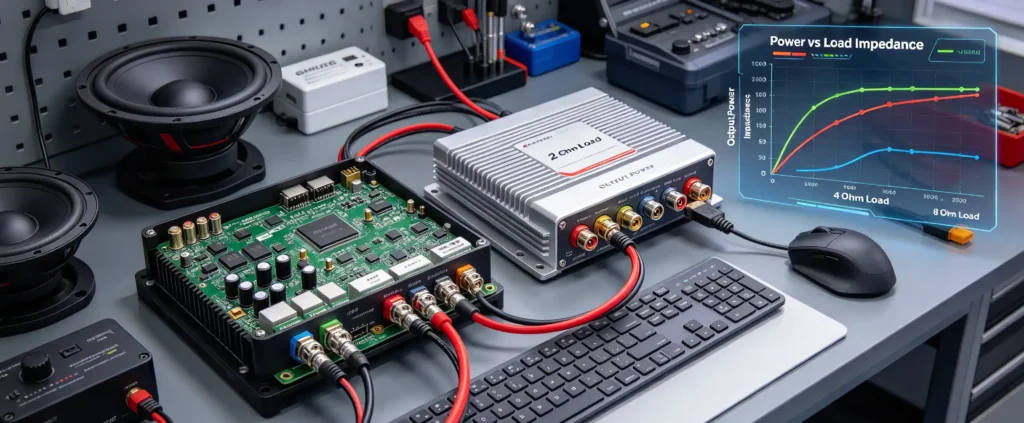
Speaker impedance, measured in ohms, describes the electrical load a speaker presents to the amplifier. Getting this mismatched is one of the more common, and more damaging, compatibility errors in car audio sourcing.
| Nominal Speaker Impedance | General Consideration |
|---|---|
| 2Ω | Can demand more current; use only if the amplifier is rated to support the load |
| 4Ω | A common nominal impedance in automotive audio applications |
| 8Ω | May result in lower output than a lower-impedance load on some amplifiers, depending on the design |
Lower Impedance
Lower impedance increases current draw and heat generation. This can push an amplifier beyond its safe operating range if it is not rated to handle that load.
Higher Impedance
Higher impedance, conversely, reduces the actual power delivered relative to the amplifier’s full rated capacity.
Mismatch Consequences
Mismatched impedance between amplifier and speaker does not just reduce performance. It can cause audible distortion, overheating, or trigger the amplifier’s built-in protection shutdown entirely. For more on amplifier and speaker compatibility, see our car stereo amplifier integration guide.
What to Verify
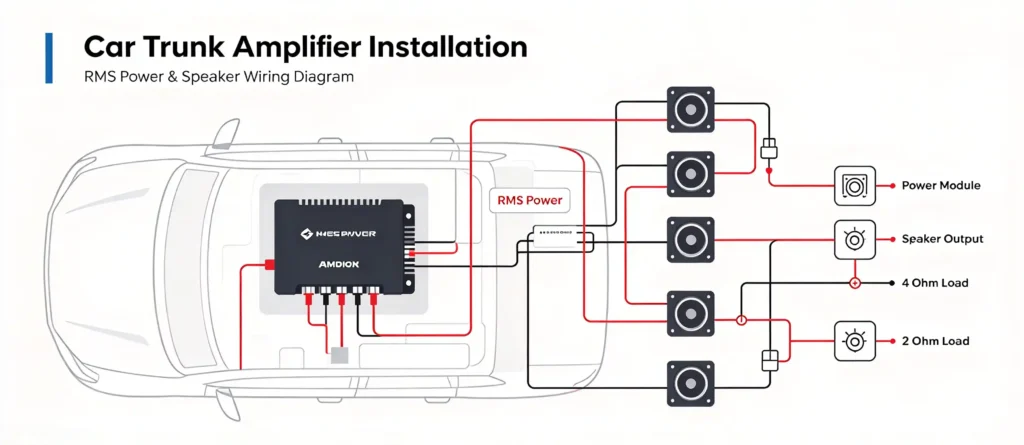
Before finalizing a build or sourcing decision, verify the rated impedance range directly on the amplifier’s datasheet. Confirm the amplifier’s supported impedance range, commonly 2Ω to 8Ω. Match that range against the speaker load the system will actually use. Treat impedance compatibility as a hard requirement, not a flexible spec.
FAQ
Should buyers rely on peak-power numbers when comparing car stereo head units?
Not on their own. Peak or maximum power may be measured differently from continuous output. Compare documented continuous-power ratings under equivalent conditions and review the supporting specifications.
Can a high-RMS head-unit built-in amplifier replace an external car amplifier?
It depends on the speaker load, required output, amplifier design, and application. A built-in amplifier may be sufficient for a standard audio system, while a more demanding configuration may require a separate amplifier. Compare documented performance against the actual system requirements.
How does speaker impedance affect amplifier output?
The connected impedance influences the electrical load and current demand. A load outside the amplifier’s supported range can cause excessive heat, distortion, or protection shutdown. Output differences depend on the amplifier design, so consult the product datasheet rather than applying a universal wattage formula.
What power-rating red flags should wholesalers watch for on supplier datasheets?
Watch for maximum wattage figures without a clearly documented measurement method, missing continuous-power information, and absent load, voltage, frequency, or distortion conditions. Ask the supplier to clarify these points before comparing products or placing a volume order.
What is the right RMS power rating for a mainstream aftermarket car stereo?
There is no single figure that suits every vehicle and speaker configuration. The appropriate rating depends on the intended application and the amplifier’s operating conditions. Buyers should compare documented output against the target system requirements instead of relying on an arbitrary wattage threshold.
Conclusion
Amplifier power ratings are one of the easiest specs to misread. They are also one of the most common sources of after-sales disputes when the advertised number does not match real-world output. Use the evaluation checklist above to screen suppliers before committing to volume.