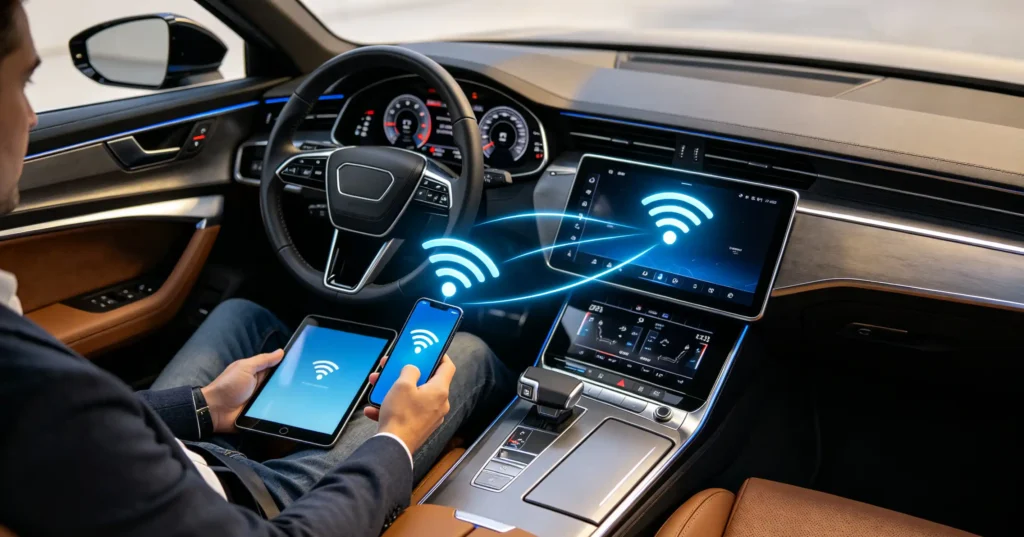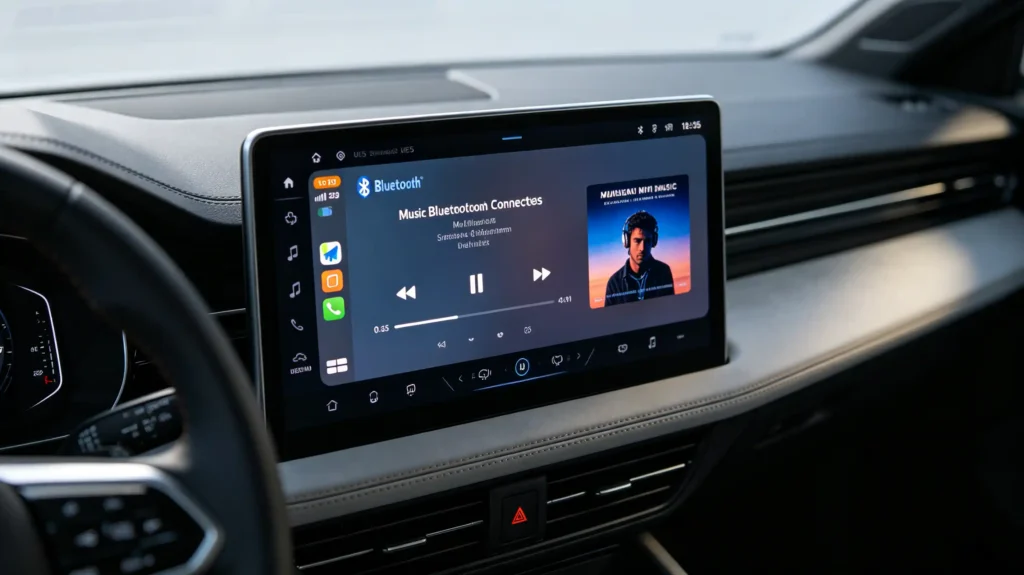
Ask a customer what OBD-II means. Most will say “the thing that reads the check engine light.” That is accurate. But it only covers a small part of what the standard actually does. For dealers and wholesalers working in automotive electronics, OBD-II shows up constantly. In diagnostic tools, fleet tracking devices, and increasingly in head units that display real-time vehicle data on the dashboard screen.
This guide covers what OBD-II actually is. It covers how that data gets used. It also covers where it fits into the broader vehicle electronics business.
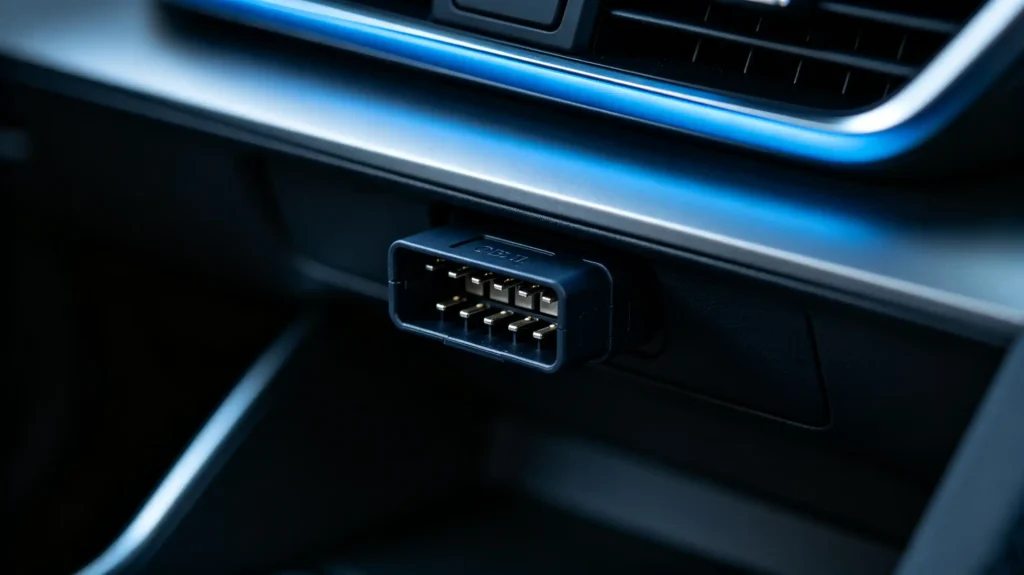
What Is OBD-II?
Definition
OBD-II stands for On-Board Diagnostics, second generation. It is a standardized system built into virtually every gasoline vehicle sold since the mid-1990s. It monitors engine and emissions performance. It reports that data through a common physical connector.
Before OBD-II
Before OBD-II, manufacturers used proprietary diagnostic connectors and protocols. A technician needed different tools for different brands. Standardization solved that by requiring all manufacturers to use the same 16-pin connector. It also required a common set of diagnostic protocols, regardless of the vehicle’s make.
Why OBD-II Matters Commercially
This standardization is exactly why OBD-II matters commercially. A single diagnostic tool, aftermarket dongle, or head unit accessory built around the OBD-II standard can work across a wide range of vehicle makes and models. It does not require brand-specific hardware for every vehicle a dealer services. This cross-compatibility is a large part of why OBD-II based tools remain a staple in independent repair shops and multi-brand dealerships. These shops cannot justify stocking manufacturer-specific diagnostic equipment for every vehicle line they service.
How OBD-II Data Gets Used in Vehicles
Two Broad Categories
The OBD-II port gives access to two broad categories of vehicle information. Understanding the distinction helps explain why the standard is used so widely across different applications.
Diagnostic Trouble Codes and Engine Data
When something goes wrong — a sensor reading out of range, an emissions component underperforming — the vehicle’s engine control unit stores a diagnostic trouble code. This is typically formatted as a letter followed by four digits (like P0301). It identifies the specific fault. This is what a technician retrieves when a customer brings in a car with the check engine light on. It is the foundation of most modern vehicle diagnostic work.
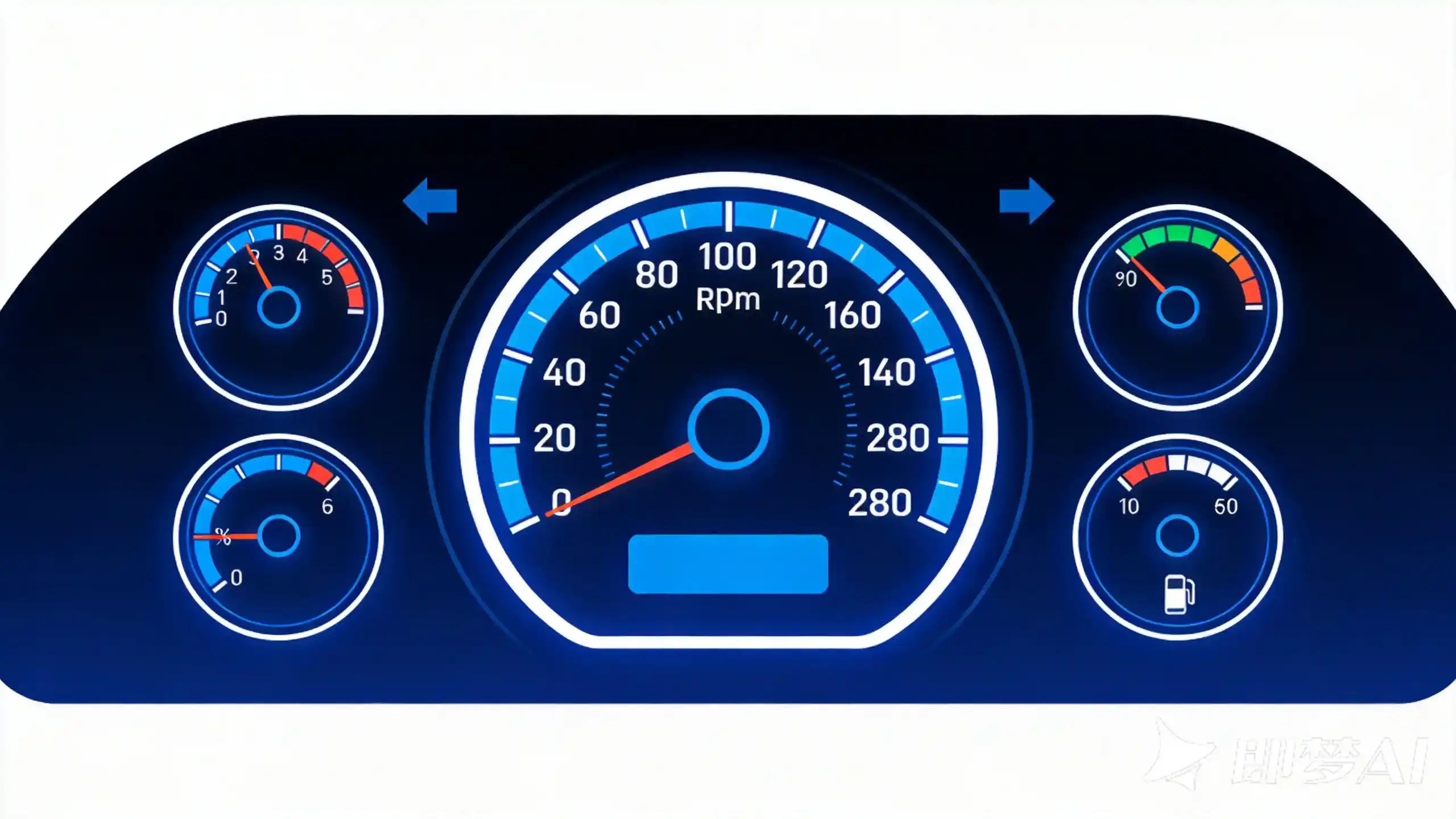
Beyond stored fault codes, OBD-II also provides live data through standardized parameter IDs. These cover values like engine RPM, vehicle speed, coolant temperature, and fuel level. This live data stream is what powers real-time dashboards and monitoring tools. It is separate from the trouble-code diagnostic function.
OBD-II and Aftermarket Head Unit Integration
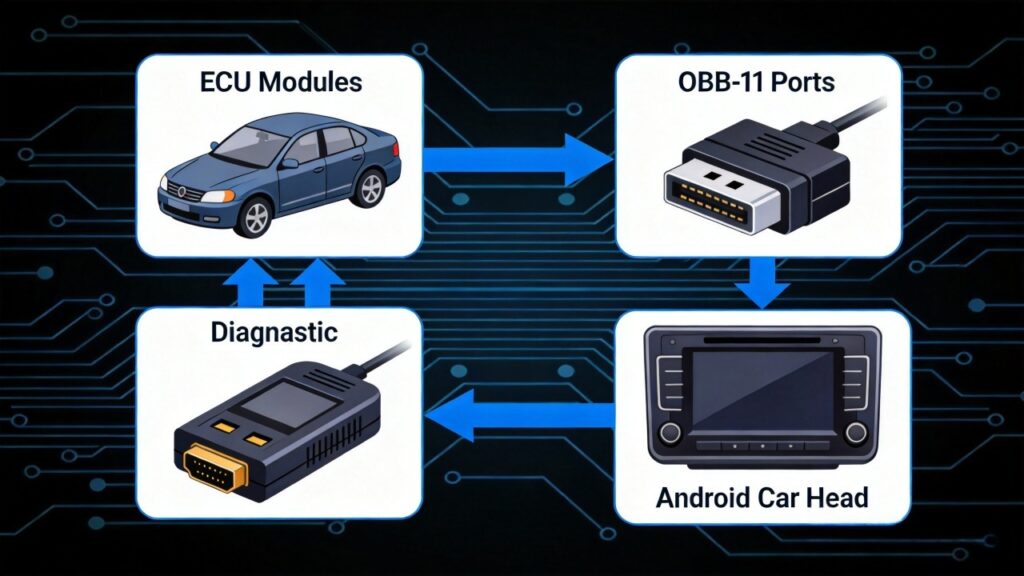
This live data stream is increasingly relevant to the infotainment side of the business too. Some Android head units can read OBD-II data. They do this through a connected dongle or, on some vehicles, through the CAN Bus protocol that carries this information over the same underlying wiring. They display it directly on the head unit screen as a real-time dashboard. This shows fuel economy, engine temperature, or driving behavior metrics. This turns a navigation and media device into something with genuine diagnostic and monitoring value for the driver. It is no longer a feature limited to media playback and turn-by-turn directions.
OBD-II versus CAN Bus: What’s the Difference?
Used Interchangeably but Different
These two terms get used almost interchangeably by customers. But they describe different layers of the same system.
OBD-II
OBD-II is the diagnostic standard. It defines the physical connector, the required data categories, and the regulatory framework that mandates manufacturers support it.
CAN Bus
CAN Bus, short for Controller Area Network, is one of the communication protocols vehicles use to transmit that data internally. It happens to be the protocol most modern vehicles use across the OBD-II connector.
Practical Implication
In practical terms, a head unit or diagnostic tool reading data from the OBD-II port on most vehicles built in the last decade is very likely communicating over CAN Bus to do it. But CAN Bus itself extends well beyond the OBD-II port. It is the same underlying network that also carries steering wheel control signals, factory amplifier data, and various other vehicle systems. These have nothing to do with emissions diagnostics. Understanding this separation helps explain why a head unit’s CAN Bus decoder handles more than just diagnostic data pulled through the OBD-II connector.
Common Use Cases for OBD-II in the Automotive Electronics Business
Beyond Basic Engine Diagnostics
Beyond basic engine diagnostics, OBD-II data supports a range of commercial applications that matter to dealers and wholesalers.
Fleet Management Systems
Fleet management systems use OBD-II dongles to track vehicle location, driving behavior, and maintenance needs across a vehicle fleet.
Insurance Telematics
Insurance telematics programs sometimes rely on OBD-II data to assess driving habits for usage-based insurance pricing.
Emissions Testing
Emissions testing stations use OBD-II readiness monitors to verify a vehicle’s emissions systems are functioning correctly before issuing a passing inspection.
Value-Add for Dealers
For dealers stocking Android head units with OBD-II or CAN Bus data display features, this represents a genuine value-add for customers. It appeals to those who want more than navigation and media from their infotainment system. This is particularly true for fleet operators or customers interested in monitoring fuel efficiency and driving habits directly from the dashboard. A fleet operator running a mixed-brand vehicle lineup, in particular, benefits from a head unit that reads consistent OBD-II data across different makes. They do not need separate monitoring hardware for each vehicle type in the fleet.
B2B Considerations for OBD-II-Related Sourcing
More Than a Feature Checkbox
For dealers and wholesalers evaluating navigation and infotainment products with OBD-II or vehicle data display capability, a few sourcing factors matter more than a simple feature checkbox.
CAN Bus and Protocol Compatibility
The buyer needs a head unit whose data integration actually works reliably across the specific vehicle models a dealership services. OBD-II implementation details and available data parameters can vary between manufacturers despite the shared connector standard. Companies usually evaluate whether a supplier’s CAN Bus decoder development covers a broad enough range of vehicle protocols to deliver consistent data display. They do not want something that works well on some models and poorly on others.
Supplier Evaluation Factors
Buyers comparing head units with vehicle data display capability tend to check a consistent set of things. Which vehicle protocols the CAN Bus decoder actually supports. Whether the displayed data has been verified for accuracy against real vehicle testing rather than assumed from generic OBD-II standards. How the supplier handles new vehicle model support as a dealer’s customer base expands. Whether after-sales technical support is available for troubleshooting data display issues on specific vehicles.
The Roadmap Question
This last point becomes more important the broader a dealer’s vehicle coverage grows. A supplier that only supports a handful of common vehicle protocols today may become a bottleneck once a dealership starts servicing brands outside that initial range. Asking about the roadmap for expanding protocol support — not just what is covered right now — is worth raising during the sourcing conversation.
FAQ
Is OBD-II the same thing as CAN Bus?
No, though they are closely related. OBD-II is the diagnostic standard. It defines the physical connector and required data categories for emissions and engine monitoring. CAN Bus is a communication protocol. It is the method most modern vehicles use to transmit that data internally, including through the OBD-II port. A head unit reading OBD-II data on a recent vehicle is very likely doing so over CAN Bus. But CAN Bus also carries data unrelated to OBD-II diagnostics.
Can any Android head unit display OBD-II data on the dashboard?
Not universally. This depends on whether the head unit includes the software and CAN Bus decoder support needed to interpret vehicle data streams. This is sometimes paired with a connected OBD-II dongle. Buyers looking for this feature should confirm it explicitly with a supplier. Do not assume every Android head unit supports real-time vehicle data display by default.
Why does OBD-II diagnostic support vary between vehicle brands despite being a standard?
The physical connector and core data categories are standardized. But individual manufacturers implement additional proprietary data parameters and diagnostic depth beyond the baseline requirement. This means a generic OBD-II tool reads standard data reliably across brands. But manufacturer-specific diagnostic depth can vary. This is why some diagnostic tools support extended functionality only for certain vehicle brands.
What should I check before sourcing head units with OBD-II or vehicle data display features?
Confirm which vehicle protocols the CAN Bus decoder actually supports. Ask whether displayed data has been tested against real vehicles rather than assumed from the OBD-II standard alone. Clarify how the supplier handles new vehicle model requests as your customer base grows. For OEM or ODM orders, this compatibility question is worth resolving before committing to a full production run.
Conclusion
If your customers want more than navigation and media from their infotainment system, matching CAN Bus decoder support to the vehicle models you actually service makes real-time vehicle data display genuinely useful rather than an inconsistent feature.