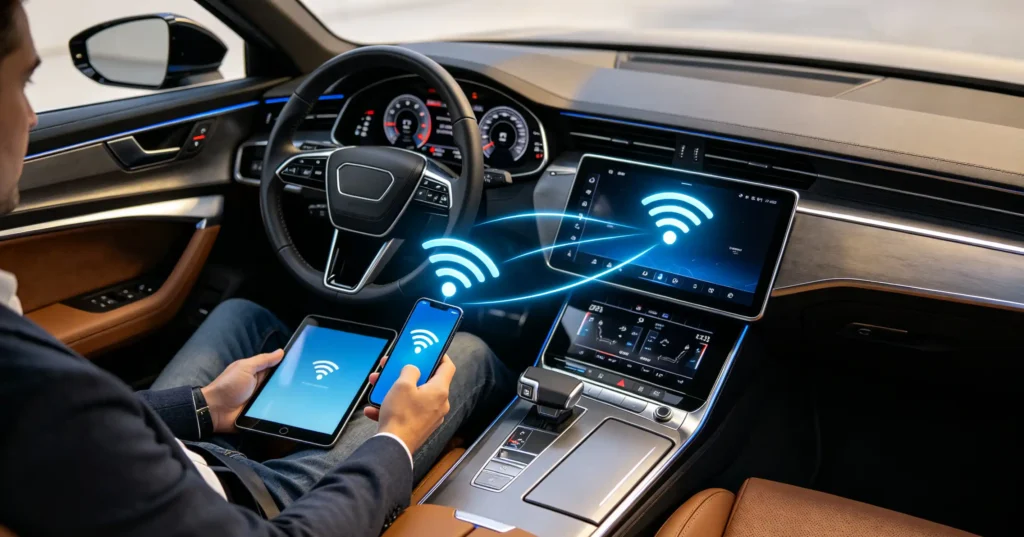
A head unit that performs flawlessly on a showroom demo can still reboot randomly after three months in a customer’s vehicle. It can freeze in cold-start winter mornings. It can develop screen flicker after a summer of dashboard heat.
IVI system reliability is what separates a product line that generates repeat business from one that generates warranty claims. Unlike most spec-sheet metrics, it is shaped by hardware, software, thermal, and electrical factors working together. It is not shaped by any single number.
For dealers, wholesalers, automakers, and 4S dealerships sourcing infotainment systems, understanding these factors matters. Knowing what to actually ask a supplier for is what separates an informed sourcing decision from a guess based on a glossy datasheet.
This pillar page lays out the full framework. What reliability means for automotive infotainment. The factors that drive it. The practical evaluation criteria to apply before committing to a bulk order. For a full view of all hardware decisions, see our car stereo hardware components overview.
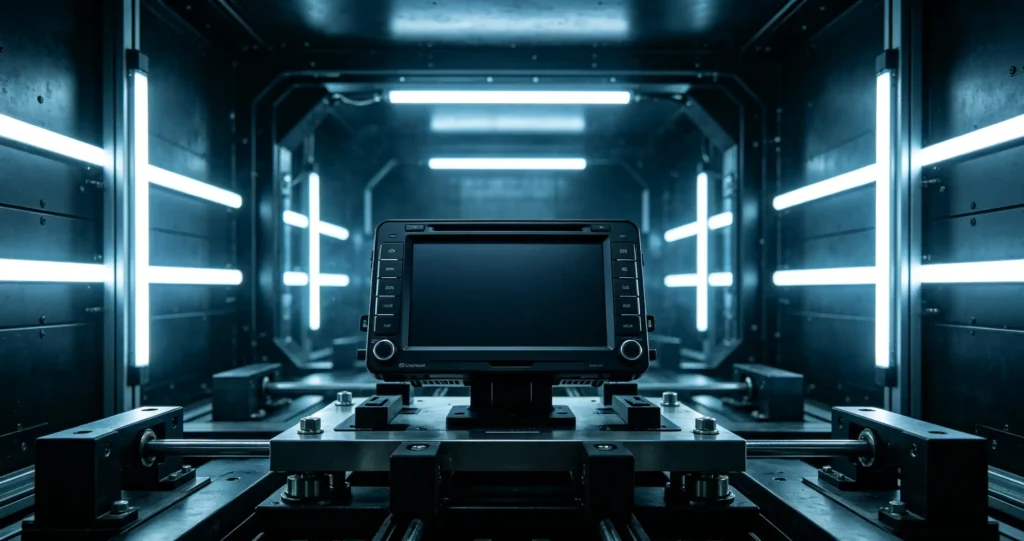
IVI System Reliability – Core Definition
What Is IVI System Reliability?
IVI system reliability is the ability of an in-vehicle infotainment system to perform its required functions consistently over time. It must do this under real-world automotive operating conditions. Temperature extremes. Constant vibration. Electrical fluctuations that a consumer electronics device would never need to withstand.
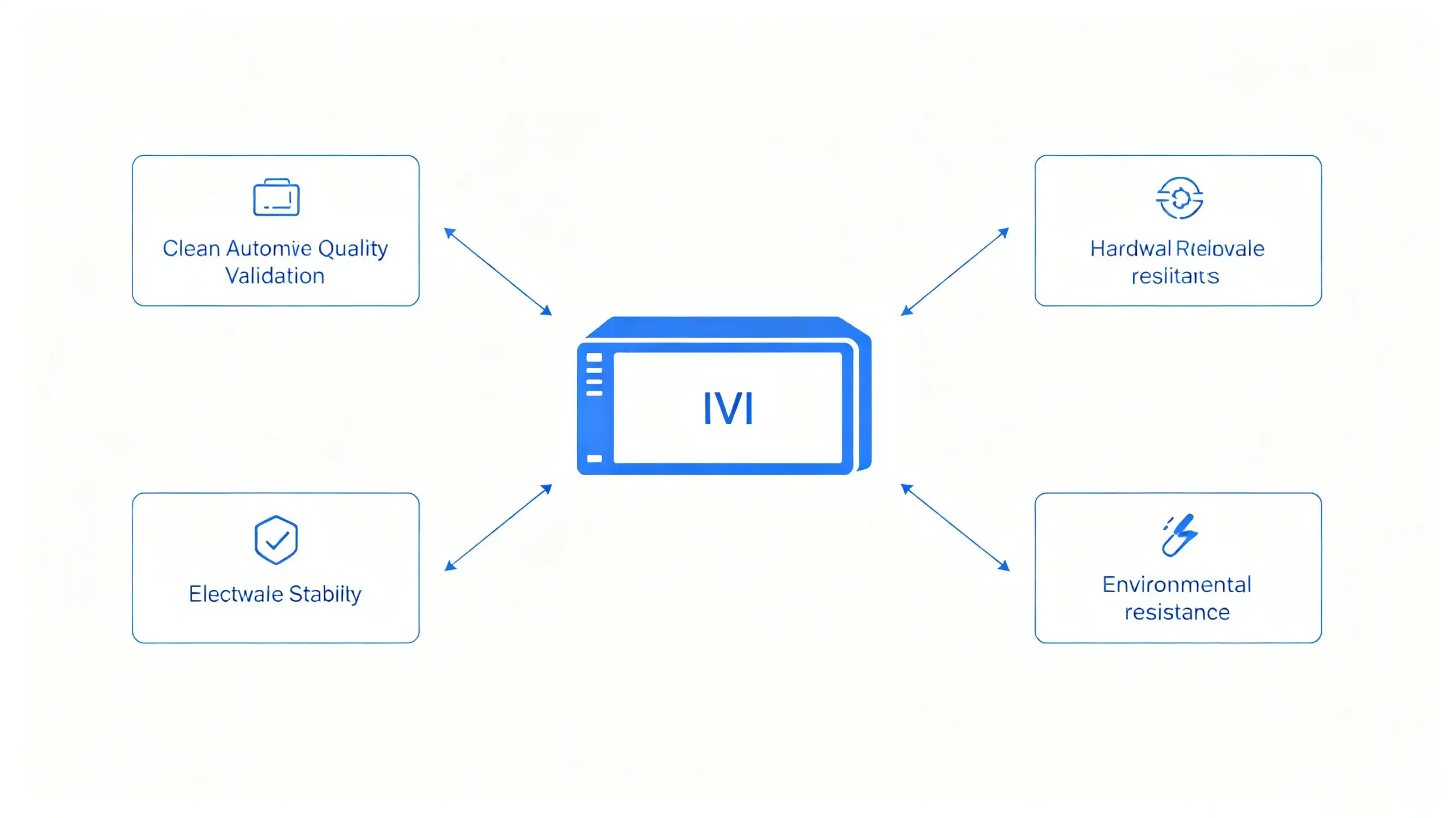
Four Core Dimensions
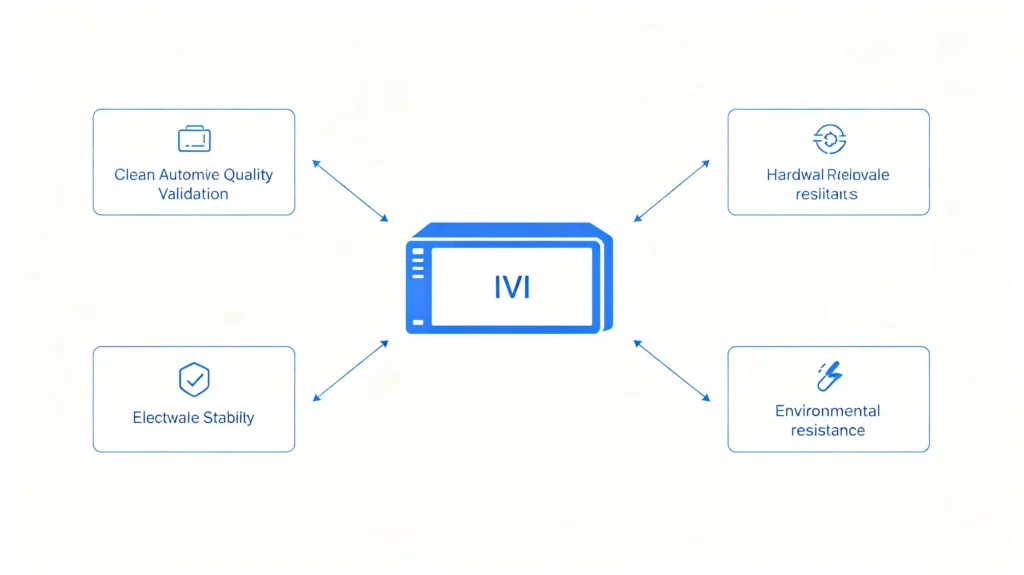
It spans four core dimensions. Hardware reliability, covering component and mechanical build quality. Software stability, covering firmware quality and OS optimization. Environmental resilience, covering thermal and vibration tolerance. Electrical stability, covering power supply behavior and transient protection.
Concrete Stakes for B2B Buyers
For B2B buyers, the stakes are concrete rather than abstract. Field failures generate customer complaints and returns. Random reboots create driver frustration and, in some situations, genuine safety concerns. High failure rates drive up after-sales support costs that eat directly into margin. Repeated reliability issues damage a brand’s reputation in ways that reduce competitiveness well beyond the immediate warranty cost. Warranty claims, negative reviews, and lost repeat business all compound from the same root cause.
A Primary Differentiator
This is exactly why reliability functions as a primary differentiator between budget and premium suppliers. This holds even when their spec sheets look similar on paper.
Hardware-Driven Reliability and Component-Quality Factors
Component Selection
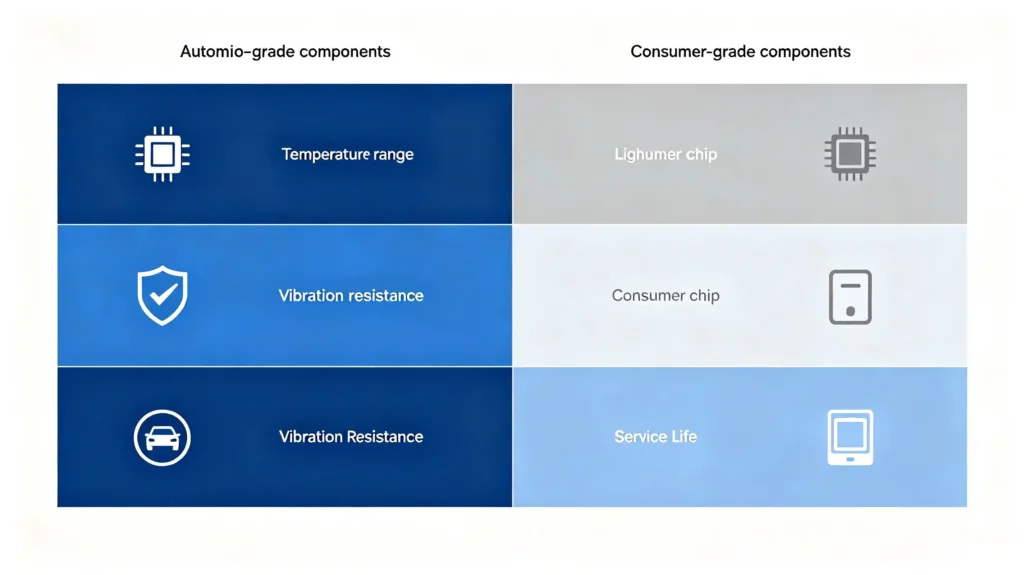
Hardware reliability starts with component selection. Automotive-grade components are built to withstand a wider temperature range and longer operational lifespan than consumer-grade parts. Sourcing from established component suppliers for chips, displays, and capacitors matters more than it might seem. Component derating — running parts below their maximum rated limits — extends usable life considerably compared to running components near their ceiling.
Bill of Materials Quality
Bill of Materials quality is the layer buyers rarely think to ask about directly. Component traceability — whether a supplier can document exactly where every component came from — matters. BOM consistency across production batches matters too. Both protect against the quiet risk of counterfeit or substituted parts finding their way into a production run.
Mechanical Build Quality
Mechanical build quality rounds this out. Multi-layer PCB design with proper soldering and conformal coating. Connectors that resist corrosion and stay securely seated. Housing built with heat-dissipating design rather than just a sealed enclosure. Processor thermal performance and memory quality feed into this too. Display panel reliability does as well — panel type, backlight lifespan, and how the panel ages under real environmental exposure.
What to Verify
None of this shows up as a single spec-sheet line. This is exactly why component quality is one of the more consequential things to verify directly with a supplier rather than assume.
Software-Related Stability and System-Performance Influences
Firmware Quality
Hardware quality alone does not guarantee a stable system. Firmware and software implementation carry equal weight. Firmware quality shows up in how quickly a manufacturer responds to and fixes bugs. It shows up in whether the software has gone through genuine long-duration stability and stress testing. It shows up in whether recovery mechanisms like watchdog timers and automatic restart are in place to catch the system if something does go wrong.
OS-Level Tuning
OS-level tuning matters just as much. Proper memory management prevents the crashes and slowdowns that come from apps competing for limited resources. Correct process priority keeps critical functions like navigation and camera display running smoothly even under load. Sound background service management avoids the resource exhaustion that eventually degrades overall responsiveness.
System-Level Indicators
At the system level, several practical indicators point to underlying software maturity. Consistent boot behavior without intermittent failures. Smooth multitasking without crashes when switching between apps. Stable operation of third-party apps.
OTA and Security
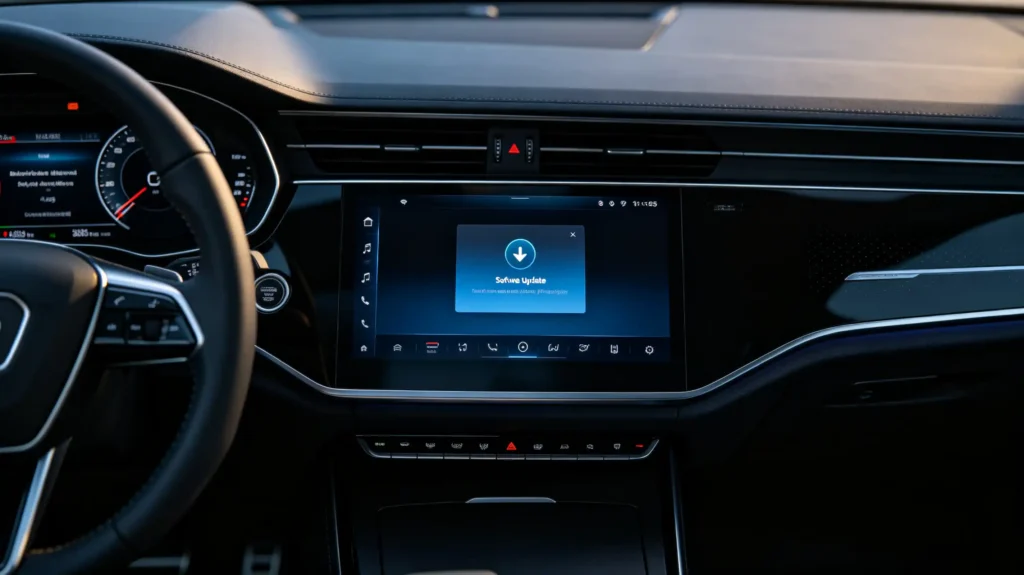
Software issues discovered after units ship do not have to be permanent. OTA capability allows post-delivery bug fixes without a physical return. How frequently a manufacturer actually ships firmware updates says something real about their ongoing commitment to support. For a complete guide on OTA, see our IVI OTA software updates guide Security vulnerabilities sit within this same category too. They are one subset of the broader reliability picture rather than a separate concern.
Treat Software as Equally Consequential
Buyers evaluating suppliers should treat software quality as equally consequential as hardware quality. It is not a secondary consideration.
Thermal Management and Vehicle Operating-Environment Impacts
Extreme Temperature Swings
Vehicle cabins put infotainment hardware through temperature swings that most electronics never encounter. In direct summer sunlight, dashboard temperatures can reach 70–80°C. A cold winter start can drop below –30°C. The repeated cycling between these extremes accelerates component aging in ways a single temperature reading will not reveal.
Heat Dissipation Design
Heat dissipation design determines how well a unit manages this. Passive cooling through heat sinks, thermal pads, and ventilation pathways is the standard approach in head units. Active cooling with fans remains uncommon in this category. Without adequate dissipation, thermal throttling kicks in. The processor deliberately slows down to avoid overheating. The visible result is a real-time performance drop exactly when the cabin is at its hottest.
Component Aging from Heat
Sustained heat also accelerates component aging in specific, predictable ways. Capacitors degrade faster at high temperatures. Display panels lose brightness over their service life. Any battery present in the system degrades more quickly under heat exposure.
Why Testing Exists
This is exactly why high-temperature operating tests and thermal cycling tests exist as standard reliability benchmarks. A unit that has not been validated against sustained heat is a real risk in any market with hot summers or vehicles parked in direct sun for extended periods. For more on power considerations, see our car stereo power supply guide.
Power-Supply and Electrical-System Stability Constraints
A Harsh Electrical Environment
A vehicle’s electrical system is far from the clean, stable power source a consumer electronics device expects. Normal voltage typically sits in a 10V–14.5V range. Engine cranking can pull that down to 8–10V or lower momentarily. Voltage varies further as other electrical loads switch on and off around the vehicle.
Transient Spikes
On top of that baseline variability, transient spikes are a real hazard. A load dump, occurring when the battery disconnects while the alternator is charging, can spike past 60V. Inductive spikes from motors, relays, and ignition systems add further unpredictable noise to the power line.
Grounding
Grounding is a quieter but equally important factor. Proper grounding prevents ground loops and electrical noise. Poor grounding shows up as system instability or audible noise in the audio output.
Power Supply Design
On the design side, a well-built power supply handles several things. Voltage regulation to maintain stable internal voltages regardless of what is happening on the vehicle side. Filtering to reduce electrical noise. Protection circuitry against overvoltage, undervoltage, and reverse polarity conditions.
Why This Matters
Robust power design is what stands between a vehicle’s genuinely harsh electrical environment and a head unit that keeps running through it. This is worth asking suppliers about directly. It is rarely detailed on a standard spec sheet.
Testing and Quality-Control Considerations for IVI Products
Four QC Checkpoints
Documented testing is the clearest external signal of a supplier’s actual reliability commitment. It typically runs across four checkpoints. Incoming material inspection (IQC) verifies components before they ever reach production. In-process inspection (IPQC) checks quality during assembly itself, catching issues before they propagate through a full production run. Function testing (FQC) verifies complete functionality on finished units. Pre-shipment inspection (OQC) applies random sampling to a batch before it ships, catching anything that slipped through earlier stages.
Environmental Stress Testing
Environmental stress testing adds another layer on top of functional checks. A continuous aging test that burns in finished units over an extended run. High-temperature testing that simulates sustained summer cabin heat. Vibration testing that simulates real road conditions to check for loose components or failed connections.
Documentation
Proper documentation ties all of this together. Traceability. Retained test records. Consistency verification across production batches.
What Suppliers Signal
For a B2B buyer, a supplier with documented, multi-stage QC testing is signaling something concrete about reliability commitment. A supplier who cannot produce that documentation on request is signaling something too.
B2B Evaluation Criteria for IVI System Reliability and Quality
Sourcing Checklist
Turning this framework into an actionable checklist, buyers should assess seven dimensions before finalizing a sourcing decision.
- Component quality — confirming automotive-grade parts and reputable component sources
- BOM traceability — requesting documentation on where components actually come from
- Software stability — testing long-duration runtime and multitasking directly rather than trusting a brief demo
- Thermal performance — testing high-temperature operation and watching for throttling
- Electrical stability — testing behavior under voltage fluctuation
- QC documentation — requesting actual test records covering aging, temperature, and vibration testing
- Sample stress testing — running thermal, electrical, and long-duration tests on physical samples before committing to volume
What to Prioritize
Prioritizing suppliers who can produce documented reliability testing and genuine component traceability is the most reliable way to avoid a reliability problem. Do not rely on marketing claims alone.
FAQ
Can high datasheet component specifications guarantee good real-world IVI system reliability?
No. A datasheet confirms a component’s rated capability under ideal conditions. It says nothing about BOM consistency across production batches. It says nothing about how well the unit is assembled. It says nothing about whether the finished product has actually been validated against real thermal, vibration, and electrical stress. Two units built with identically specified components can perform very differently in the field depending on build quality and testing rigor. This is why documented QC testing matters as much as the component specs themselves.
How can B2B buyers tell whether field failures stem from hardware defects versus software-stability issues?
Hardware failures tend to be consistent and physical. A unit that will not power on. A screen with visible defects. A connector that has failed entirely. Software-related instability usually shows up as intermittent behavior instead. Random reboots. App crashes. Freezing that does not correlate with any physical symptom. It may only appear under specific conditions like extended runtime or multitasking. Tracking whether an issue is reproducible on demand or appears unpredictably is often the fastest way to narrow down which category it falls into.
What impact does a high-temperature vehicle-cabin environment exert on aftermarket IVI long-term reliability?
Sustained heat accelerates the aging of core components. Capacitors degrade faster. Display panels lose brightness more quickly. Processors are more likely to hit thermal throttling during extended sun exposure. Repeated cycling between hot daytime and cooler evening temperatures compounds this over time. Units without adequate heat dissipation design and without validated high-temperature testing are meaningfully more likely to show premature failures in hot climates. This is compared to units that have been properly tested against these conditions.
Why can two IVI units with identical advertised specs show very different reliability performance in fleet deployments?
The gap usually comes down to what a spec sheet does not show. Actual BOM consistency across production runs. Mechanical build quality. Whether the units went through genuine environmental stress testing before shipment. A manufacturer citing the same processor and RAM figures can still substitute lower-grade supporting components. They can skip rigorous QC steps. They can use inconsistent PCB and soldering quality. None of these appear in a basic spec comparison. All of them show up directly in fleet-scale failure rates over time.
Conclusion
Reliability is not a single spec. It is the combined result of component quality, software stability, thermal design, and electrical protection, backed by documented testing.