Two car stereos can share nearly identical spec sheets and still sound completely different to a customer’s ear. The variable that usually explains the gap is the amplifier — specifically, whether it includes a DSP chip or just boosts volume.
This guide defines what a DSP amplifier actually does and compares it against a regular amplifier. It also walks through the RCA versus optical output decision, plus sourcing criteria and red flags for bulk orders. For a complete overview of audio within the broader hardware system, see our car stereo hardware components guide.
What Is a DSP Amplifier in a Car Stereo? Core Definition & Working Principle
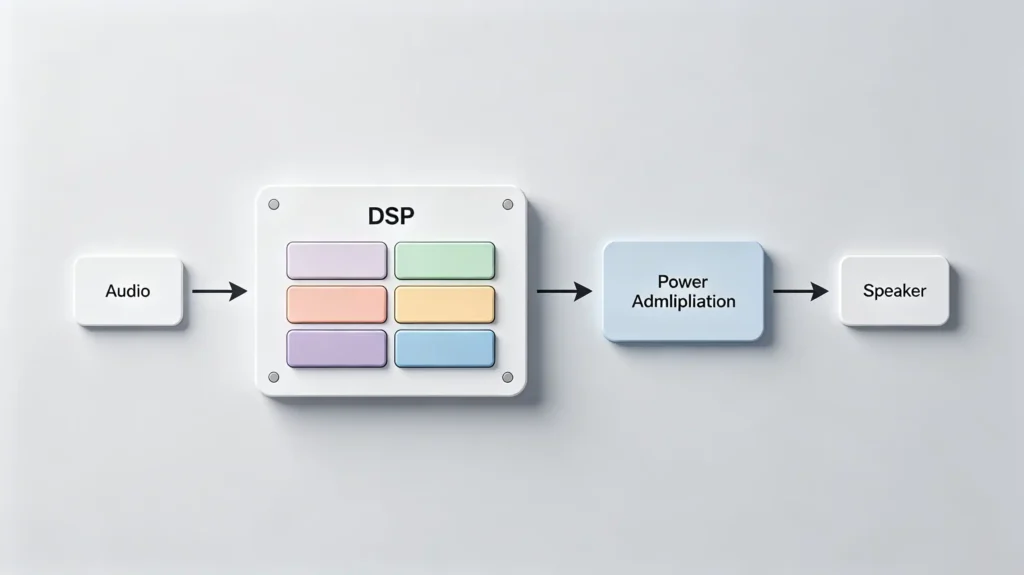
A DSP amplifier combines a traditional power amplifier with a Digital Signal Processor (DSP) chip. That chip processes and tunes audio signals in real time, before amplification happens.
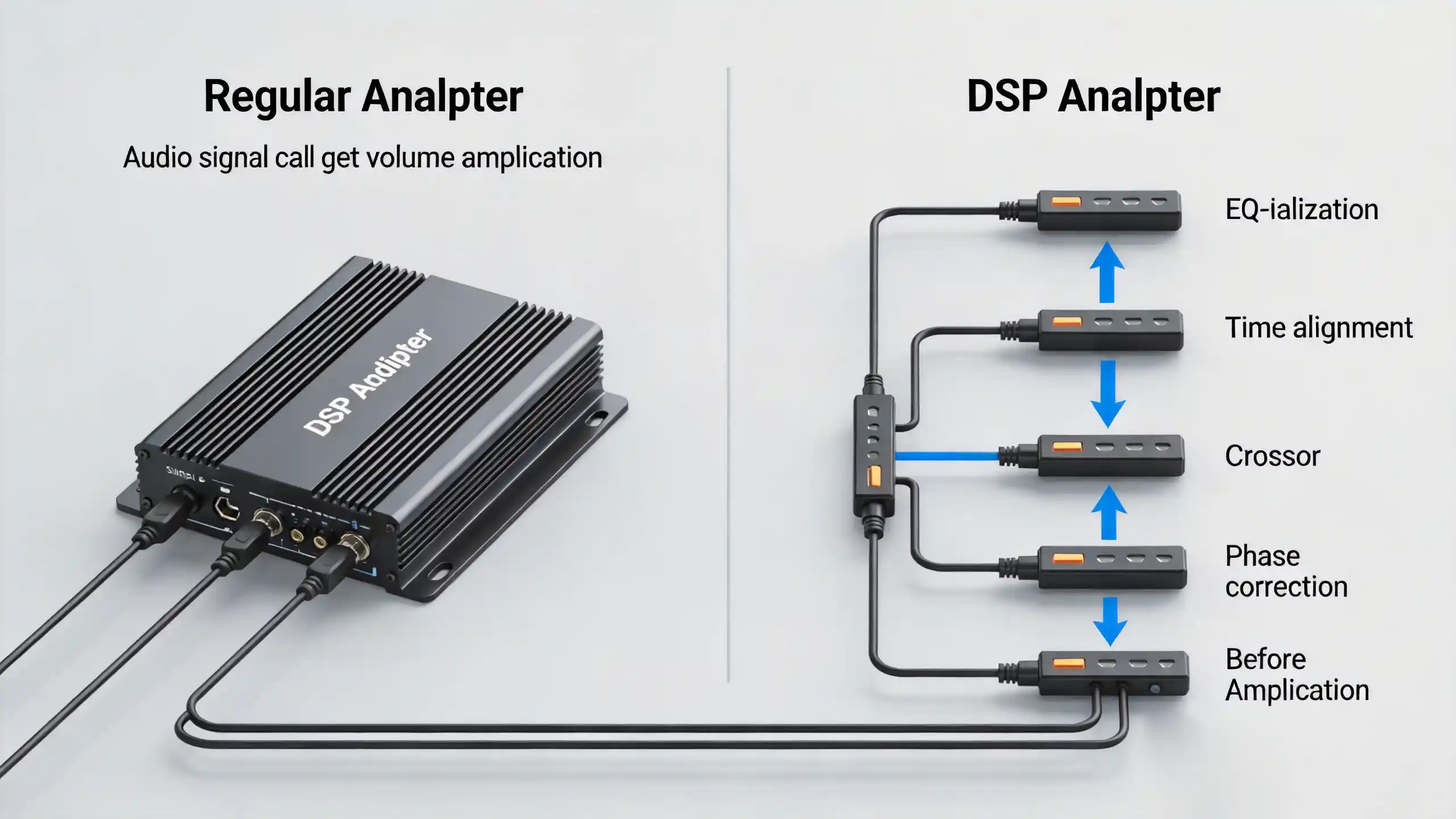
The working principle follows a clear chain: audio signal enters the DSP chip, which applies equalization, crossover routing, time alignment, and phase correction. The processed signal then passes to the power amplifier stage, which drives the speakers.
This matters specifically in cars because vehicle interiors have genuinely difficult acoustics. Glass reflections, seat absorption, road noise, and asymmetric speaker placement all distort sound in ways a living room never does. A DSP chip compensates for these imperfections digitally, something a standard amplifier simply can’t do.
That’s the core distinction worth remembering: a regular amplifier only boosts signal strength, making sound louder. A DSP amplifier boosts volume and shapes sound quality at the same time. In the signal chain, the DSP amplifier receives audio from the head unit, processes it digitally, then sends the refined signal out to the speakers.
DSP Audio Technology: Core Advantages for In-Car Sound Experience
DSP’s value becomes concrete once you break it down into what it actually corrects.
- Equalization (EQ) — adjusts frequency response for each speaker independently, fine-tuning bass, midrange, and treble to match vehicle acoustics. he processor driving this audio processing is covered in our Qualcomm vs MediaTek for car stereos comparison. This corrects factory audio imbalances that a generic amplifier can’t touch. For a full comparison of audio processing platforms in car stereos, see our guide on
Qualcomm vs MediaTek Car Stereo. - Time alignment — adjusts signal timing so sound from every speaker reaches the listener’s ears simultaneously, creating a coherent soundstage where instruments and vocals appear to come from specific locations rather than a blurred wall of sound.
- Crossover control — routes the correct frequency ranges to the right speakers: bass to the subwoofer, mids to door speakers, highs to tweeters. This also protects speakers from frequencies they weren’t built to handle.
- Phase correction and sound staging — corrects phase issues that cause cancellation or muddiness, building a “virtual center” soundstage for a noticeably more engaging listening experience.
Commercially, DSP-equipped car stereos command higher retail prices and stronger margins. The technology is a genuine product differentiator. DSP audio capability is a key selling point in premium Android head units, and Hi-Fi sound quality is a feature audio-conscious buyers will pay more to get.
DSP Amplifier vs Regular Car Stereo Amplifier: Key Differences
The functional gap is straightforward: a regular amplifier only makes sound louder, while a DSP amplifier makes sound better and louder at the same time.
Sound quality control is where this shows up most clearly. DSP allows precise tuning of frequency response, time alignment, and crossover behavior. Regular amplifiers offer nothing beyond basic gain and tone controls — there’s no way to correct for acoustic problems, only to boost or cut overall volume and tone.
Installation flexibility follows the same pattern. A DSP amplifier can compensate for poor speaker placement and difficult vehicle acoustics through digital correction. A regular amplifier can’t fix any physical limitation in the installation — what you install is what you get.
Price reflects this gap directly. DSP amplifiers typically cost more, but that premium is justified through superior, tunable sound quality that regular amplifiers simply can’t match. Regular amplifiers remain sufficient for entry-level and price-sensitive buyers. DSP amplifiers are the right fit for premium audio systems, 4S dealership upgrades, and any buyer who prioritizes sound quality over base price
Key Audio Interfaces: RCA Output vs Optical Output for DSP Systems
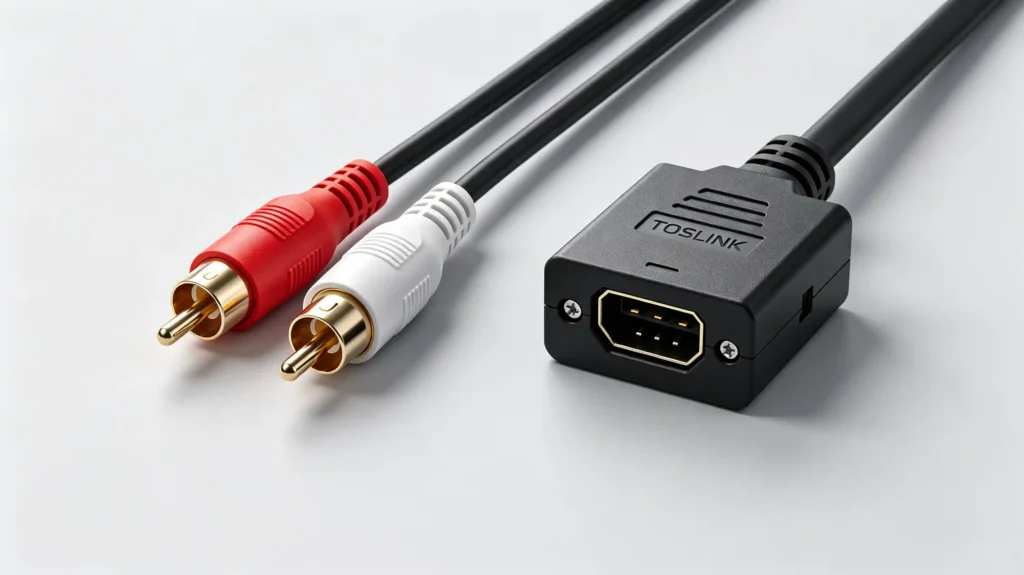
RCA output is an analog audio connection using coaxial cables — the familiar red and white connectors — transmitting analog signals from the head unit to the amplifier. For more on display technology that pairs with premium audio, see our IPS vs QLED display technology guide.
Optical output (TOSLINK) works differently. It’s a digital connection using fiber optic cable, transmitting digital audio signals with no electrical interference at all.
The signal quality difference is meaningful. Optical delivers a pure digital signal free of electrical noise or ground loop interference, while RCA’s analog signal can pick up interference in the electrically noisy environment of a vehicle. On compatibility, RCA remains far more common — most car stereos include it, while fewer support optical. DSP amplifiers often support both, so confirming compatibility between your head unit and amplifier before sourcing is worth the extra step.
For most standard installations, RCA is perfectly sufficient. Optical is the better recommendation specifically for high-end Hi-Fi systems where maximum signal purity is the priority. Both interfaces are commonly supported on DSP-equipped units built for this market.
How to Choose a Car Stereo with DSP Amplifier for Your Business
- Audio interface compatibility: RCA is standard and widely supported; optical is preferred for premium systems. Confirm the head unit and amplifier support matching interfaces before ordering.
- DSP tuning flexibility: Some DSPs offer preset tuning modes (pop, rock, classical), which suit end-users who want simplicity. Others offer full parametric EQ, better suited to professional installers and premium builds.
- Power output (watts): Higher wattage produces louder, cleaner sound with less distortion. Confirm the amplifier has enough power for your target vehicle’s speaker configuration. For guidance on processor performance that complements high-power audio, see our best car stereo processor guide.
- Target market positioning: DSP amplifiers are essential for premium 4S dealership upgrades, particularly in mature markets like the EU and North America. They’re optional for entry-level wholesale in emerging markets, where customers often prioritize price over sound quality.
- Installation support: DSP amplifiers require more tuning knowledge than regular amplifiers. Consider whether your customers have access to professional tuning, or need a simpler, preset-based solution instead.
Common DSP Audio Sourcing Risks & Quality Red Flags
- “DSP” in name only — some suppliers advertise DSP while only including basic EQ presets, without genuine time alignment or crossover processing. Verify actual DSP capabilities through direct testing, not the product description.
- Poor sound tuning out of the box — units that sound noticeably bad on default settings usually indicate poor DSP configuration. Test sound quality directly during sample evaluation, not just on paper.
- Excessive distortion at higher volumes — a sign of insufficient amplifier power or poor power supply filtering. Test across a range of volume levels, not just at moderate listening levels.
- Overheating issues — DSP amplifiers generate real heat, and poor thermal management leads to shutdown or failure in hot conditions. Confirm high-temperature testing at 60°C has actually been conducted.
Before bulk orders, request audio performance test reports, listen to samples across different volume levels, and verify thermal management documentation directly with the supplier. A 48-hour aging test combined with 60°C high-temperature testing catches most of the defects that lead to after-sales complaints. Mismatched tuning, poor thermal handling, and high distortion rates are the usual culprits.
FAQ
How much higher is the procurement cost of a car stereo with a DSP amplifier compared to a regular amplifier model?
DSP-equipped units typically cost more than regular amplifier models, though the exact premium varies by tuning flexibility and power output specifications. For most B2B buyers, that premium is recoverable through higher retail pricing on premium product lines. Audio-conscious customers can hear the difference and are willing to pay for it.
What are the power supply requirements for DSP amplifiers in car stereos?
DSP amplifiers need a stable, well-filtered power supply to avoid distortion and processing errors, since the DSP chip itself and the amplifier stage both draw power under load. Confirm the unit’s power supply design handles voltage fluctuations common in vehicle electrical systems, particularly during engine start and stop-start driving conditions.
Which audio interface is better for high-end Hi-Fi systems: RCA output or optical output?
Optical output is generally the better choice for high-end Hi-Fi systems, since its digital signal avoids the electrical noise and ground loop interference that can affect RCA connections in a vehicle’s electrically busy environment. RCA remains perfectly adequate for standard installations, but optical is worth prioritizing when signal purity is the primary goal.
Do car stereos with DSP amplifiers require additional tuning equipment for installation?
Not necessarily. Many DSP amplifiers include preset tuning modes accessible through the head unit interface, requiring no extra equipment. Units with full parametric EQ benefit from professional tuning software and a trained installer. Confirm which tuning approach your DSP unit supports before assuming installation complexity either way.
How can I test the sound quality performance of DSP amplifiers in bulk orders before shipment?
Request samples and listen across a range of volume levels, checking specifically for distortion at higher output. Ask for documented thermal testing (60°C is a reasonable benchmark). Confirm the DSP includes genuine time alignment and crossover processing, not just basic EQ presets marketed under the DSP label.
Conclusion
A DSP amplifier changes what a car stereo can actually do with sound, not just how loud it can play. Understanding the gap between DSP and regular amplifiers is the first step. Choosing the right audio interface and verifying genuine DSP performance before a bulk order protects both your margins and your after-sales reputation.
Sourcing car stereos with genuine DSP audio performance? Contact our team to discuss DSP configurations and audio interfaces for your target market, or explore our current Hi-Fi audio product lineup.