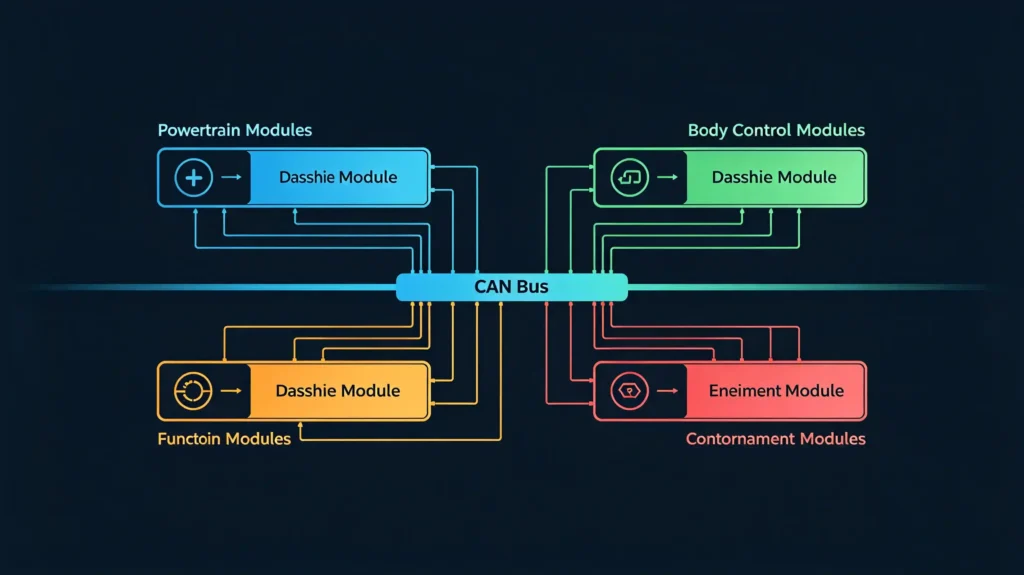
CAN Bus is a vehicle communication network that allows electronic control units (ECUs) and other electronic modules to exchange data in modern vehicles.
For B2B buyers of aftermarket head units and automotive electronics, understanding CAN Bus is important because vehicle communication affects whether functions such as steering wheel controls, reverse camera triggers, climate information, parking sensors, and vehicle speed signals can be retained after an aftermarket system is installed.
This guide explains what CAN Bus is, why it is used in vehicles, how it relates to aftermarket head units, and what B2B buyers should consider when evaluating CAN Bus decoder solutions.
What Is CAN Bus? Core Definition
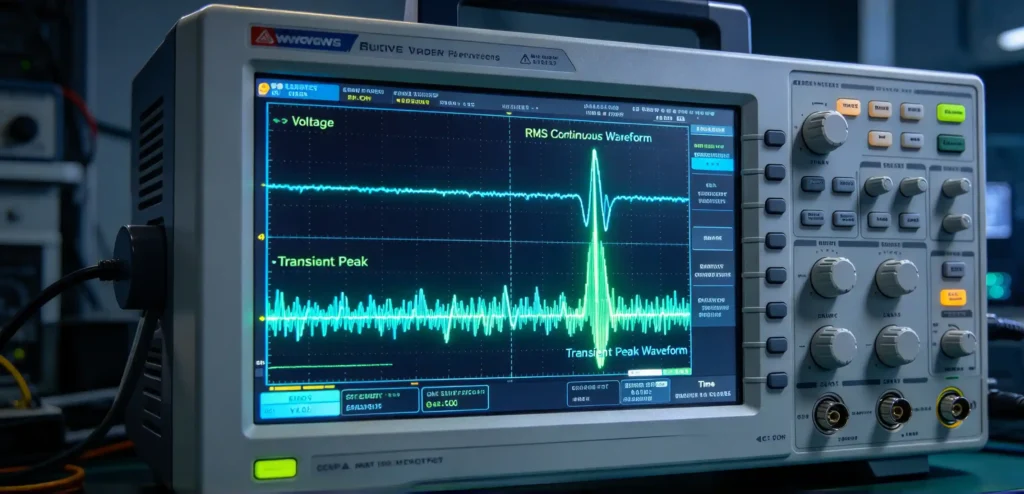
CAN Bus (Controller Area Network) is a multi-master serial communication protocol originally developed for automotive use. It allows microcontrollers and ECUs to communicate directly without a central host computer managing every message. The protocol is built on internationally recognized automotive networking standards.
Why CAN Bus Matters in Modern Vehicles
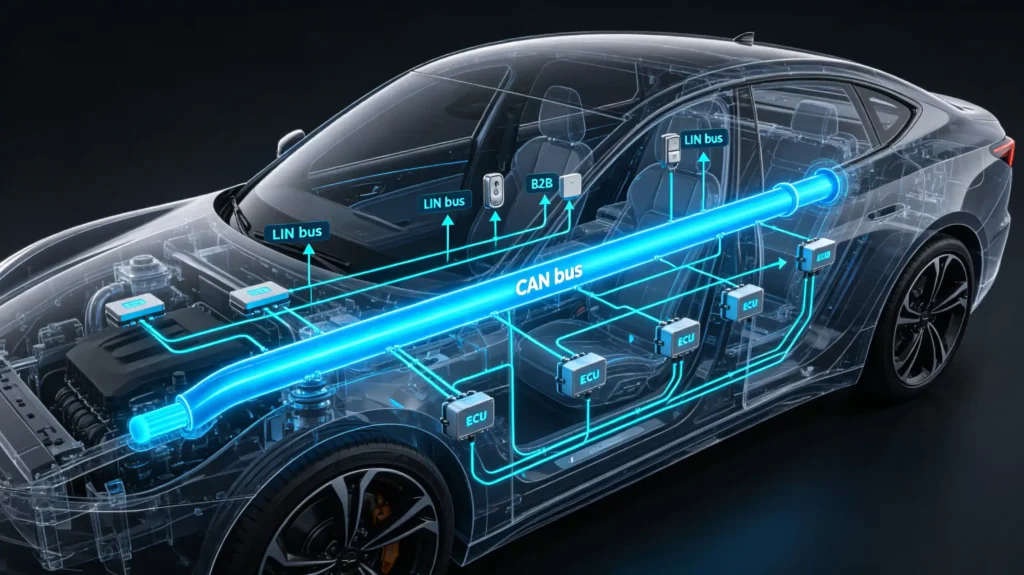
CAN Bus exists because vehicles needed a better solution than a heavy, complex wiring harness. A single shared network lets dozens of ECUs — engine, transmission, ABS, airbags, steering, climate, infotainment — talk over one line instead of dozens. It is the nervous system of the modern vehicle
CAN Bus vs LIN Bus vs MOST Bus
Modern vehicles layer several networks. CAN Bus handles critical vehicle functions (engine, braking, steering).
LIN Bus is a lower-cost, lower-speed network used for non-critical functions like window controls and seat adjustment.
MOST Bus is a higher-bandwidth multimedia bus for infotainment and audio, though newer vehicles are shifting to Ethernet for these high-speed tasks.
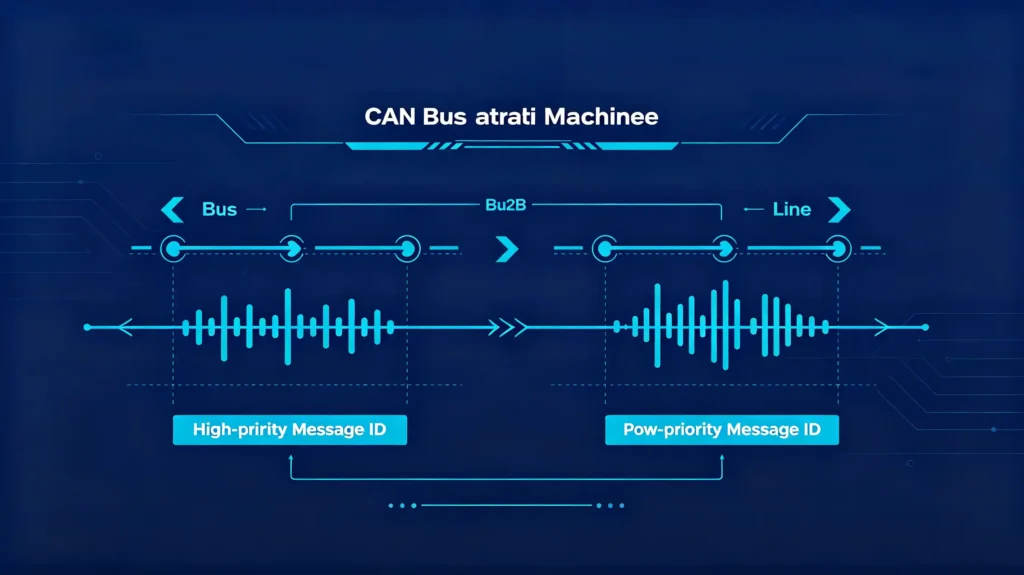
CAN Bus and OBD II: Diagnostic Access
OBD II is the standardized diagnostic system providing a connector for reading diagnostic trouble codes. CAN Bus is the communication protocol modern vehicles use internally. The OBD II connector is simply the standardized access point into that network for diagnostic tools. CAN Bus is the language; OBD II is the access point for reading it.
CAN Bus for Aftermarket Head Units
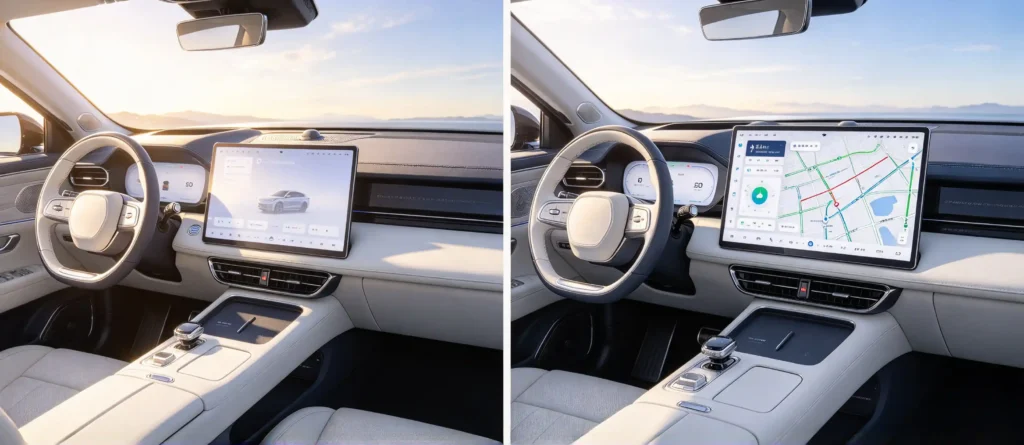
Factory-original head units are built directly into the vehicle’s CAN Bus network. Replacing one means the aftermarket unit needs to “speak” the same protocol to retain original vehicle functions. Proper CAN Bus integration enables support for steering wheel controls, reverse camera triggers, vehicle speed signals, climate status display, and parking sensor audio.
Steering Wheel Control and CAN Bus
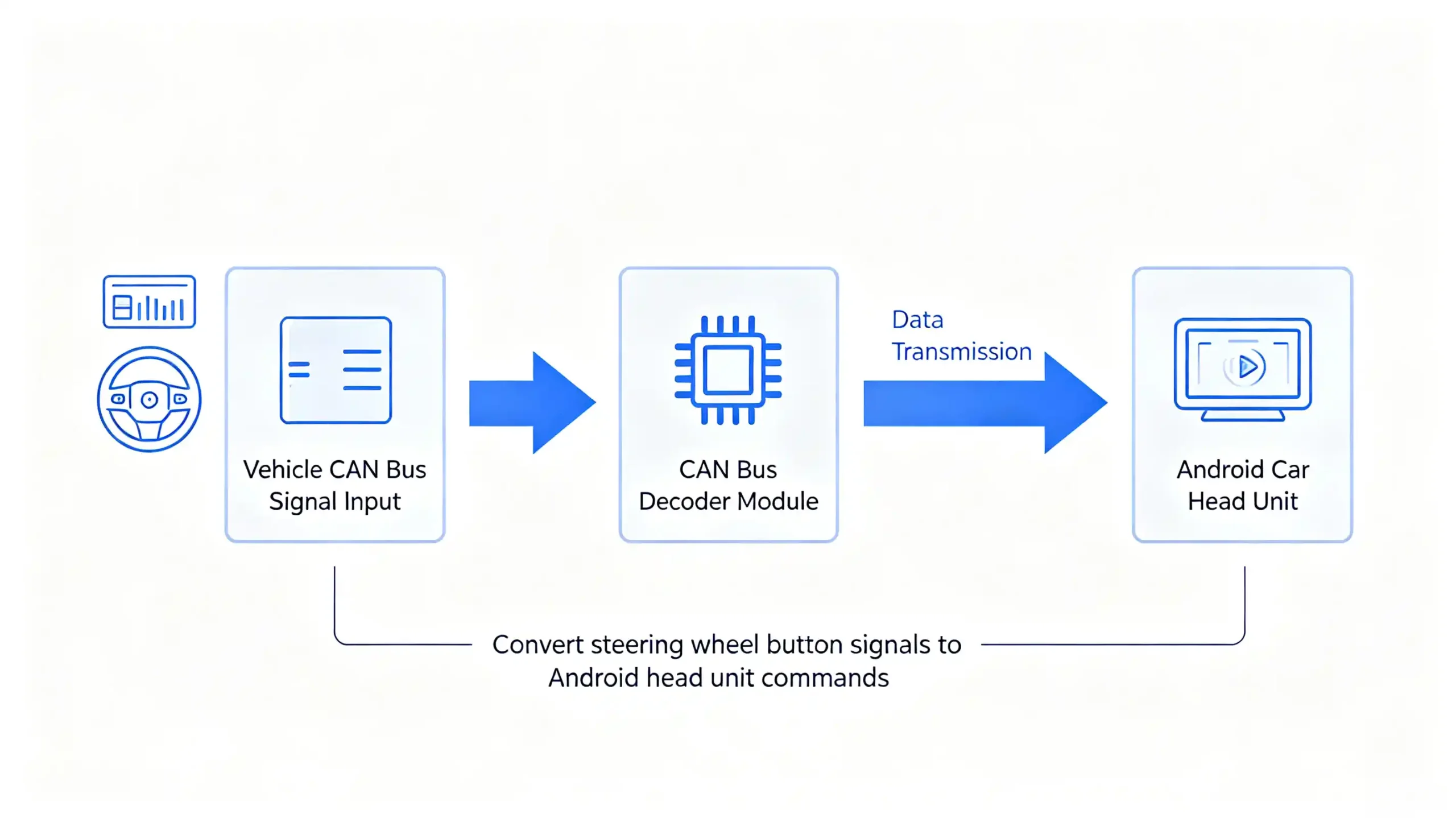
Steering wheel buttons send button-press signals into the vehicle’s CAN Bus network as specific CAN messages. When the factory head unit is removed, those same CAN messages need interception and interpretation by the aftermarket unit. A CAN Bus decoder handles that job. For a practical guide on steering wheel controls, see our steering wheel control integration guide.
For a deeper explanation of how CAN Bus communicates through nodes, messages, arbitration, frames, and physical wiring, see our CAN Bus Protocol Explained guide.
What a CAN Bus Decoder Does
A CAN Bus decoder translates vehicle-specific CAN Bus messages into signals the aftermarket head unit can understand. Decoder quality directly determines how many original functions survive that translation. Integration depth varies by vehicle brand, so decoders must often be vehicle-specific. For information regarding adapters, please refer to our car audio CAN bus adapter guide.
How to Evaluate CAN Bus Decoder Suppliers
A handful of factors separate a dependable CAN Bus product supplier from a risky one.
Vehicle Model Coverage
How many brands and models does the decoder support? Verify against your specific target lineup.
Protocol Development Capability
In-house development adapts faster to new vehicle models than third-party solutions.
Function Retention Completeness
Confirm which original functions are preserved: steering wheel controls, reverse camera trigger, climate display, door status, speed signal.
QC and Testing
Verify the supplier runs CAN Bus protocol validation and aging tests before shipment.
Customization Capability
Can the supplier develop new protocols for less common vehicle models on request?
FAQ
What is CAN Bus in simple terms?
CAN Bus is a multi-master serial communication protocol that lets ECUs and other electronic modules share data over a common network.
Why does CAN Bus matter for aftermarket head units?
It determines whether an aftermarket unit can keep original vehicle functions such as steering wheel controls, reverse camera trigger, climate display, door status, and vehicle speed signals.
What does a CAN Bus decoder do?
It translates vehicle-specific CAN Bus messages into signals the aftermarket head unit can understand.
How do I check vehicle compatibility before a bulk order?
Request the supplier’s vehicle compatibility list, confirm your specific models and years are included, and test samples on real target vehicles before committing to volume.
Is CAN Bus the same as OBD II?
No. CAN Bus is the communication protocol vehicles use internally. OBD II is the standardized diagnostic system and connector that gives external tools access to that network.
Conclusion
Conclusion
CAN Bus is a fundamental communication system in modern vehicles, allowing electronic control units and other vehicle modules to exchange information across a shared network.
For aftermarket head unit integration, CAN Bus affects whether important factory functions such as steering wheel controls, reverse camera triggers, climate information, parking sensors, and vehicle speed signals can be retained.
For B2B buyers, understanding CAN Bus also helps when evaluating decoder compatibility, protocol development capability, testing, customization, and supplier support.
If you want to understand the technical side of CAN Bus—including message arbitration, CAN frames, CAN_H and CAN_L, termination, and network wiring—see our CAN Bus Protocol Explained: Frames, Nodes & Wiring guide.