What Is an Android-Based IVI System?
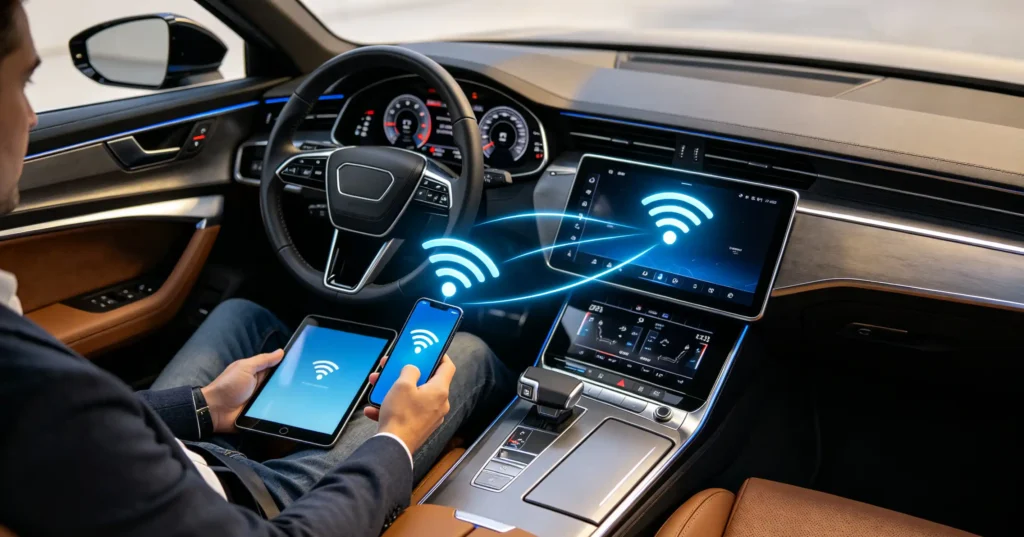
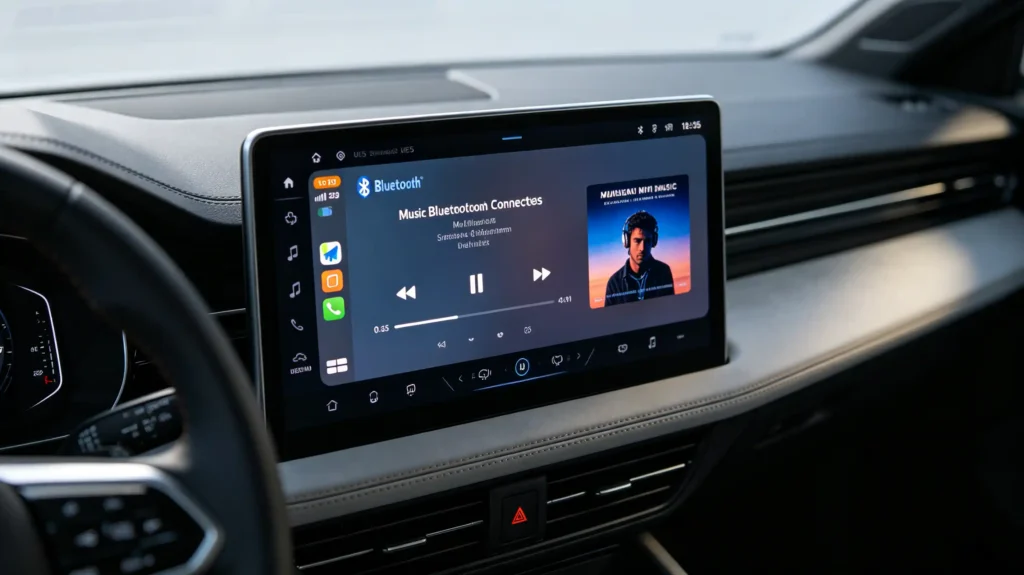
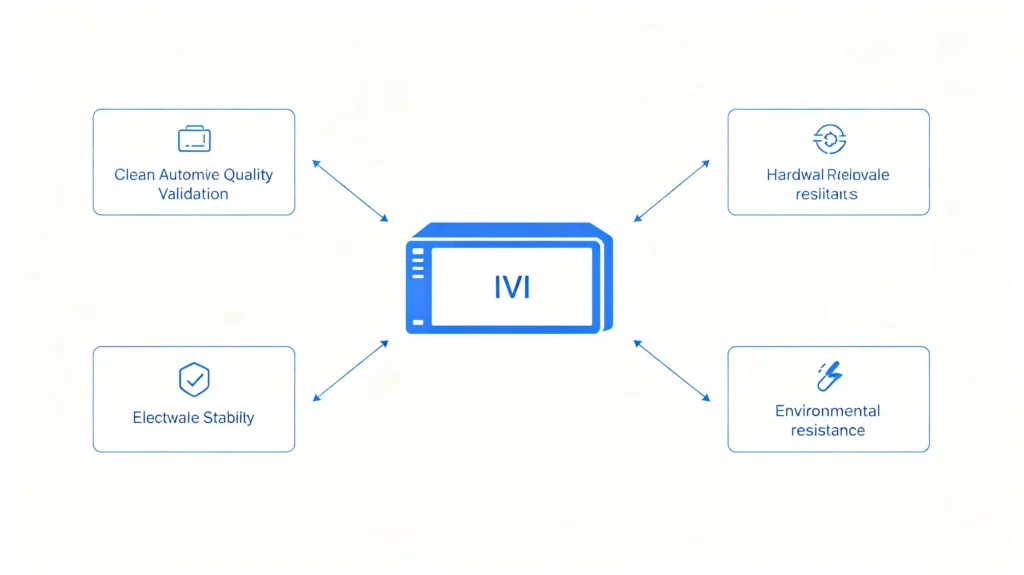
An Android-based IVI system runs a full Android operating system as the foundation for every core function. These functions include navigation, media, vehicle data display, and connectivity. Android is not treated as a layer for phone mirroring alone. For a technical overview of the hardware platform, see our What Is an Android Head Unit guide.
The Four-Layer Architecture
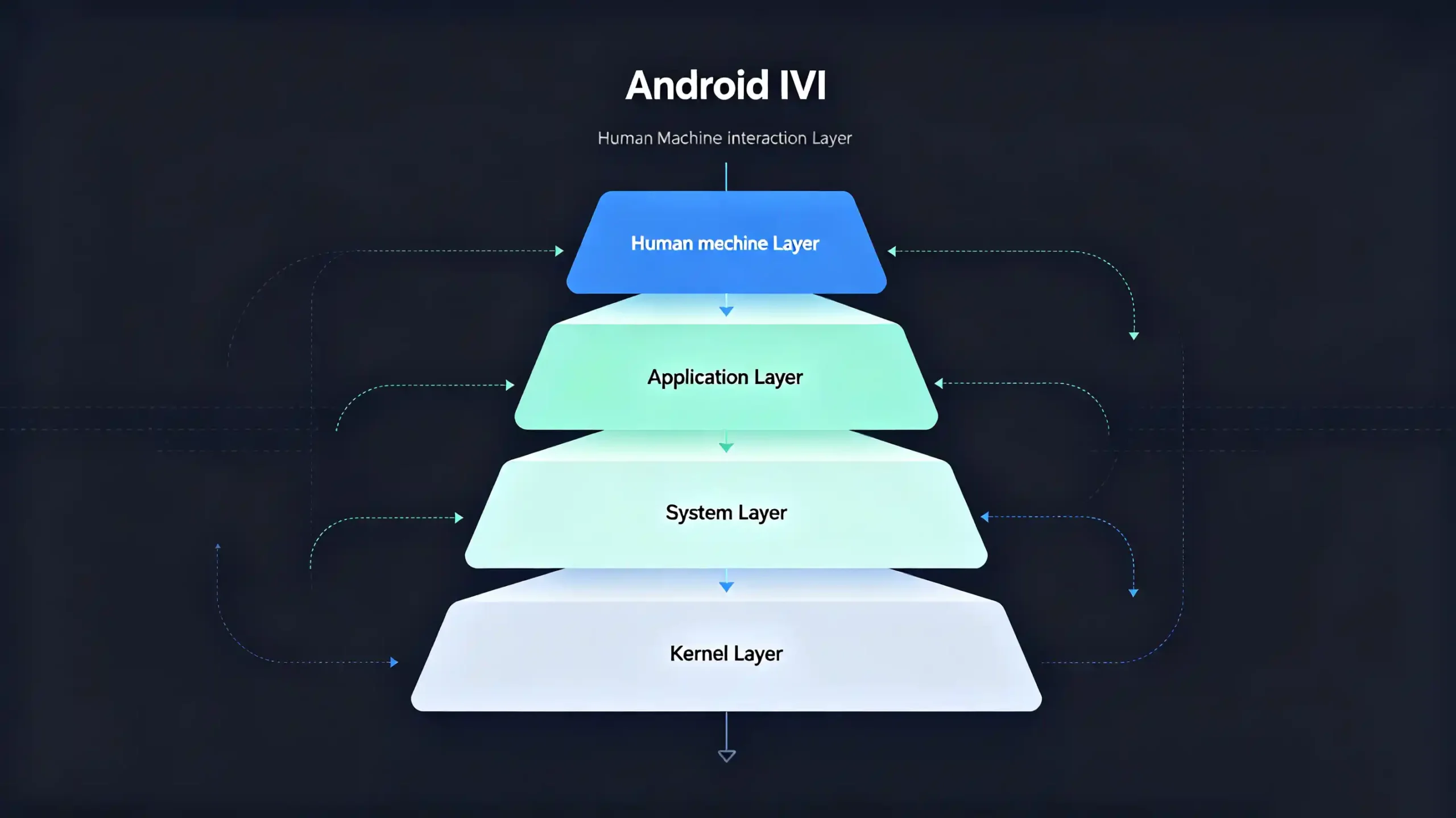
The architecture is organized in four layers:
- Kernel layer — handles the Linux kernel, hardware drivers, and CAN bus interface
- System layer — contains the Android framework and system services
- Application layer — runs navigation, media, and vehicle settings apps
- Interaction layer — covers the touchscreen UI, voice control, and steering wheel input
Advantages Over Proprietary Platforms
Compared with proprietary infotainment platforms, this architecture gives buyers a more open ecosystem. Apps install rather than locking to a fixed feature set. It also offers faster innovation cycles and broader developer support.
Android 10 through 14 are all still common in the field. Generally, the newer the version, the better the performance and security baseline. Android has become the dominant platform for both aftermarket sourcing and OEM programs. It gives manufacturers room to customize without redesigning the system from scratch.
Android IVI Native App Support: Ecosystem and Functional Scalability
Direct App Installation
One of the practical advantages of a true Android IVI system is that apps can be installed directly. Users are not limited to whatever came preloaded at the factory.
Supported App Categories
This covers several categories:
- Navigation apps
- Media and streaming apps
- Communication tools
- Custom business applications (for B2B buyers specifically)
These custom apps can be built for fleet tracking, delivery route optimization, or vehicle monitoring. For more on connectivity features, see our smartphone integration in vehicles guide.
Why the Open Ecosystem Matters
This open ecosystem matters because new functionality can often be added by installing an app. Users do not need to wait on a full system update. This is a real advantage for buyers future-proofing a bulk order against feature obsolescence.
Important Considerations
Not every app behaves the same way in a vehicle, though. Some need an active connection (live traffic, streaming). Others work fully offline (offline maps, local media). Check against connectivity conditions in your target market.
Not every Android app is optimized for an automotive interface either. Prioritize apps built with in-vehicle use in mind.
Car Android OS Update Flow: System Upgrade Mechanism and Long-Term Maintenance
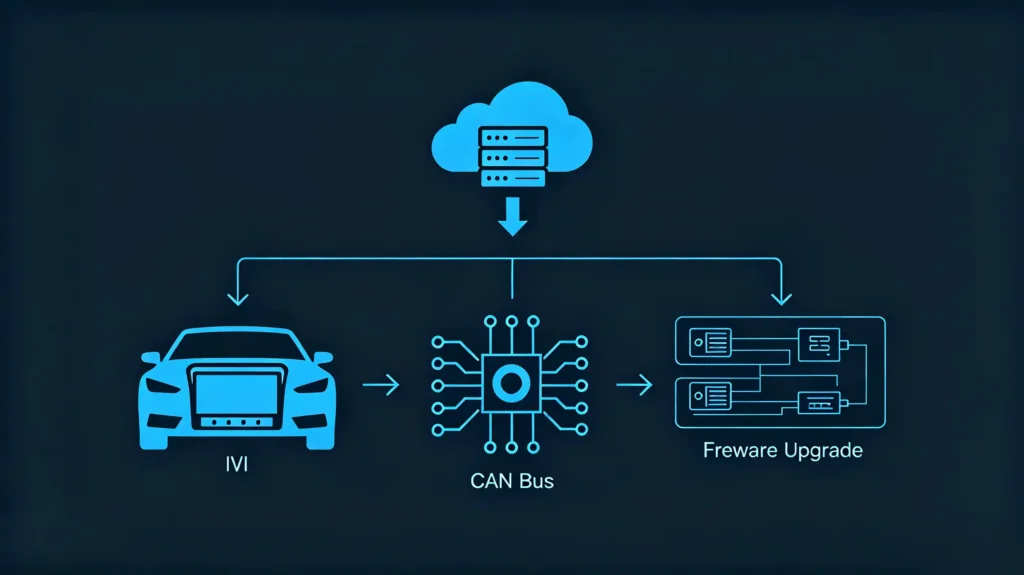
Why Updates Surprise Buyers
Update mechanism is one of the areas where buyers most often get surprised after the sale. Understanding how updates work is essential for long-term satisfaction.
OTA (Over-the-Air) Updates
OTA updates allow firmware, system UI, and CAN bus protocol packages to be pushed remotely. This cuts down significantly on after-sales costs. Units do not need to be returned for a firmware fix.
Manual Update Options
For units without a stable connection, manual USB or SD card updates remain the fallback option.
Types of Updates
Updates generally fall into a few categories:
- Major OS version jumps
- Security patches
- Bug fixes
- CAN bus protocol updates for newly released vehicle models
What to Expect
It is reasonable to expect ongoing security patches on a regular cycle. OS version support should extend several years past purchase. The processor supporting these updates is covered in our best car stereo processor guide.
The Real Risk
The real risk sits in interrupted updates. A failed OTA push can brick a unit if the manufacturer has not built in a recovery mechanism. Ask directly how update failures are handled before committing to volume.
Android IVI Chip Compatibility: Hardware Platform and Performance Stability
Why Chip Selection Matters
Chip selection determines whether a unit still feels responsive two years into ownership. This matters more than just day-one performance.
Processing Power Requirements
Android IVI systems need enough processing power — core count and clock speed. They also need adequate RAM and storage. 4GB or more is a reasonable baseline for RAM. 64GB or more is recommended for storage. This keeps the system fluent as apps and maps accumulate.
Newer Android Versions
Newer Android versions generally demand more processing headroom. Confirm a given chip platform will comfortably support both the current OS version and the update path committed to.
Automotive-Grade Requirements
Automotive-grade chips also need to hold up physically. They need consistent performance across a wide temperature range. They must resist vibration and remain stable in dashboard heat.
What to Ask Suppliers
When comparing suppliers, ask which chip platform they use. Confirm whether it is sourced from an authorized supplier. Verify whether it supports the features your market needs. These include 4K video, DSP audio, and smartphone screen mirroring.
Vehicle Android System Security: Data Protection and Functional Safety
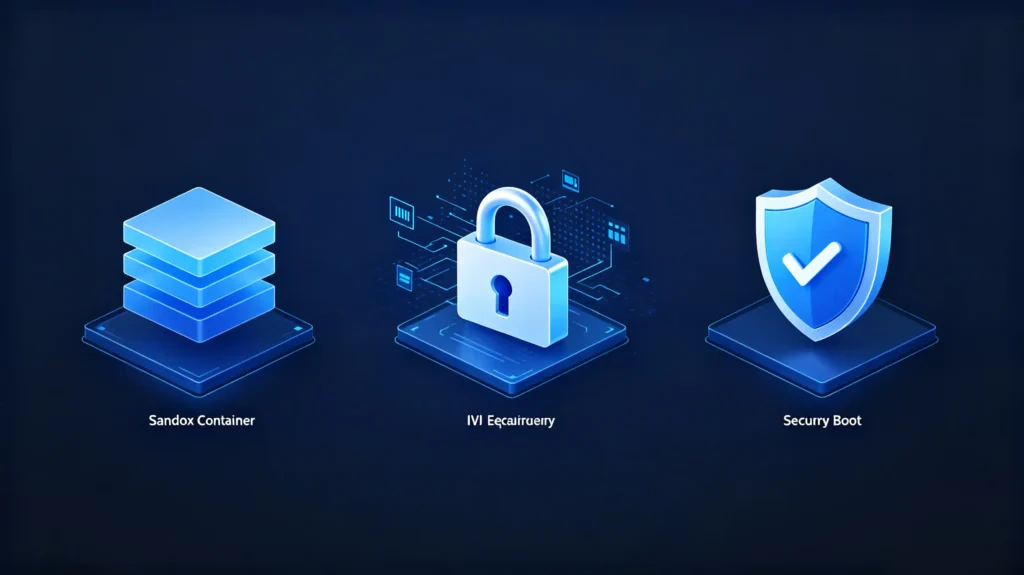
Beyond the Password Screen
Security expectations around in-vehicle Android systems have moved well past “does it have a password screen.” A reasonable security architecture includes several layers.
Core Security Components
Android app sandbox and permissions model — provides standard isolation between apps. Secure boot — prevents unauthorized OS modification. Encrypted storage — protects the data the system collects (contacts, call logs, navigation history).
Fleet-Specific Security Needs
For fleet applications, remote wipe capability matters. This is important if a vehicle changes hands.
Regulatory Compliance
Functional safety and cybersecurity standards are increasingly part of the conversation. This is especially true for buyers supplying the EU or other regulated markets. Vehicle cybersecurity regulation is becoming mandatory in many jurisdictions.
App Sourcing Security
On the app side, systems should only install from trusted sources. Ask a manufacturer what app signing and verification process they follow. A security gap in a bulk-ordered fleet is not just a support ticket. It is a liability and compliance exposure.
Android IVI OEM Customization: Brand Integration and Custom Development Capability
Why Automakers Choose Android
For automakers and brand clients, the appeal of an Android IVI platform is how much of it can be reshaped. This can be done without starting from zero.
UI Customization Options
UI customization typically covers:
- Boot animation with a brand logo
- Desktop themes, wallpaper, and icon sets
- Menu layout
This is enough to make the system feel like a proprietary product. It avoids looking like a generic head unit with a sticker on it.
System-Level Customization
On the systems side, customization can extend to:
- Dedicated vehicle protocol additions
- Fluency optimization
- Regional radio frequency adaptation
Brand Integration Beyond the Screen
Brand integration goes beyond the screen. It includes silk-screened or laser-engraved logos. It includes custom-branded packaging. The system UI consistently reflects a client’s visual identity.
Hardware Customization Options
Hardware customization can cover:
- Screen resolution
- RAM/ROM configuration
- USB/HDMI interface expansion
- Power modules for different regional voltage standards
Development Timeline and Supplier Capability
A realistic OEM/ODM timeline runs 15 to 20 working days. This depends on scope. Check a manufacturer’s in-house R&D headcount. Five or more dedicated engineers is a reasonable benchmark. This indicates a supplier that delivers custom work on schedule rather than subcontracting it out.
B2B Sourcing Guide: Android IVI System Evaluation and Risk Avoidance
Key Checkpoints Before Commitment
Bulk procurement decisions come down to a handful of checkpoints. Confirm these before you commit to volume.
1. System Stability
Ask for aging test results. A 48-hour continuous burn-in test is a reasonable standard. This catches hidden hardware faults.
2. OTA Update Capability
Confirm the OTA system works in practice. Get a clear commitment on how many years of support to expect.
3. Chip Platform Verification
Confirm the chip is automotive-grade. Verify it is sourced from an authorized supplier. Test performance under real-world conditions.
4. Security Compliance
Ask what certifications and audit documentation the manufacturer can provide. Make sure these apply to your export market.
5. Customization Support
Assess in-house R&D and UI design capability. Outsourced customization means longer timelines and less accountability.
Common Procurement Traps
Common traps to watch for:
- Chips that look fine on paper but underperform in real use
- OTA systems that fail silently
- Customization promises that outpace a supplier’s actual engineering capacity
Practical Advice
Request samples. Test app installation and update flow directly. Verify the chip model before a bulk order. This goes a long way toward avoiding a costly mismatch.
FAQ
Can any Android app run on an Android IVI system?
Not automatically. Most navigation, media, and communication apps install without issue. But not every Android app is optimized for an automotive touchscreen. It is worth testing key apps for your target market before finalizing an order. This is especially important for custom business apps built for fleet or delivery operations.
How does an Android IVI system differ from a proprietary system?
An Android-based system runs the full Android OS as its foundation. This gives it an open app ecosystem, broader developer support, and faster feature updates. A proprietary system runs closed, manufacturer-specific software with a fixed feature set. It cannot be expanded through app installation. This limits long-term flexibility for both dealers and end users.
What update support should I expect from a manufacturer?
Buyers should expect ongoing security patches on a regular schedule. OS-level update support should last for several years after purchase. Continued CAN bus protocol updates should be provided as new vehicle models are released. Ask a manufacturer directly what their commitment looks like. Do not assume it is indefinite.
What are the security compliance requirements for Android IVI systems?
Requirements vary by market and continue to evolve. Vehicle cybersecurity regulation in the EU is a key example. Rather than relying on general assurances, request specific documentation from your supplier. The documentation should cover the security practices and compliance standards relevant to your export countries.
What is typically included in OEM customization for Android IVI?
Typical OEM customization covers UI themes, boot animation, brand logo placement, and packaging. Hardware adjustments like RAM/ROM configuration and screen resolution are also common. Development usually runs 15 to 20 working days depending on scope. Clarify exactly what is included before the project starts.
Conclusion
Sourcing an Android IVI system requires evaluating chip platforms, update support, and OEM customization capabilities. The right supplier should speak specifically to each of these points. They should not rely on generalities. For guidance on choosing the right manufacturer, see our how to choose a car navigation system supplier guide. Contact our team to discuss your customized requirements, or request a quotation for OEM/ODM Android IVI solutions built around your target market.