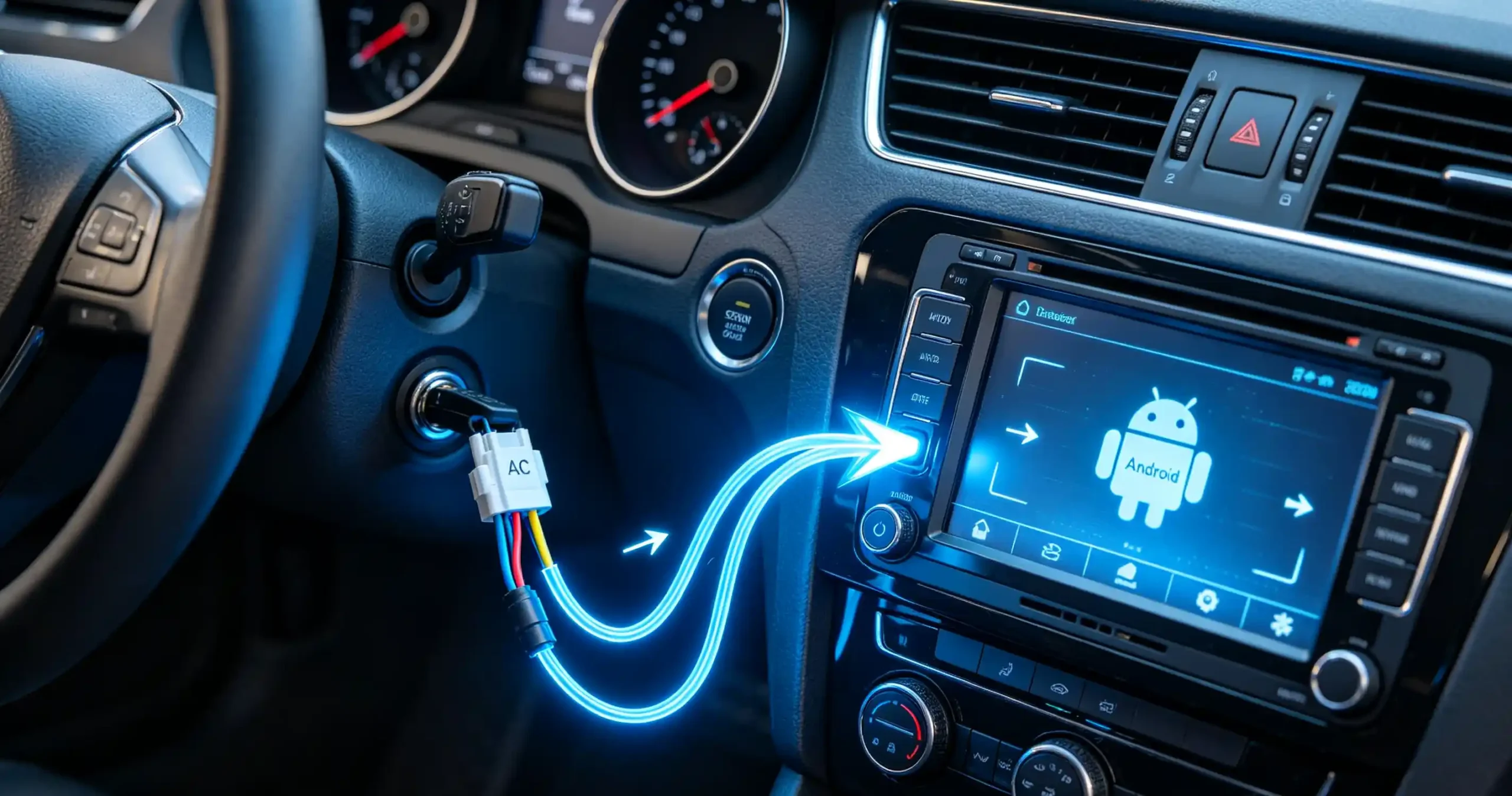
A head unit that stays powered on after the driver removes the key usually is not a defective unit. A head unit that refuses to turn on at all until the engine cranks usually is not defective either. It is a wiring problem. More often than not, it traces back to the ACC wire.
For dealers, wholesalers, importers, and automakers sourcing car stereo hardware, understanding what this one wire actually does matters. Understanding how it differs from the rest of the power harness is a small piece of technical knowledge. It prevents a disproportionate number of after-sales complaints.
This guide covers the ACC wire’s core function. It covers how it controls power-up and shutdown. It covers how it differs from constant-power and ground wires. It covers its relationship to the vehicle’s ignition switch. It covers where it sits in the overall power harness. It also covers what to check when sourcing head units for vehicles with non-standard ACC behavior. For a full view of all hardware decisions, see our car stereo hardware components overview.
ACC Wire – Core Definition for Car Stereo
What Is the ACC Wire?
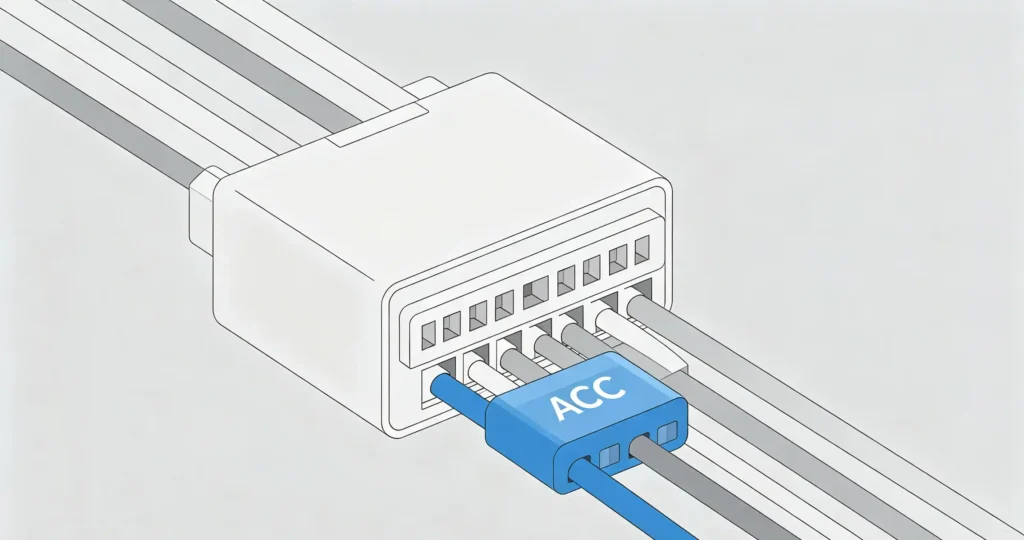
The ACC wire is the accessory-power signal wire in a car stereo’s wiring harness. It tells the head unit when to power on and off. It bases this on the vehicle’s ignition position. It is a low-current trigger signal. It is not the wire carrying the head unit’s operating power. That distinction trips up more installers and buyers than almost any other part of car stereo power wiring.
Where It Sits
Within the broader head-unit wiring ecosystem, the ACC wire sits alongside constant power, ground, and audio-signal connections. But it serves a narrower purpose than any of those. Signaling ignition state. Nothing more.
Problems from Getting It Wrong
For B2B buyers, getting this wire wrong at the harness or sourcing level creates predictable problems. Abnormal power-on or power-off behavior that looks like a hardware fault but is not. Battery drain from a head unit that never receives the signal to shut down. Unexpected behavior reports from end users that generate support tickets and returns.
Why It Matters
Getting ACC wiring right is not a minor detail. It is one of the more common root causes behind “the head unit will not turn off” complaints. These complaints land on a supplier’s desk after units are already in the field.
ACC Wire Functional Role in Car-Stereo Power Control
How the Trigger Works
The ACC signal works as a control trigger. When the ignition is turned to the ACC or ON position, the vehicle sends that signal to the head unit. The head unit interprets it as the cue to power on. When the key is turned off, the ACC signal disappears. The head unit reads that absence as the cue to shut down.
The Mechanism Behind Auto-Shutdown
This is the mechanism behind auto-shutdown behavior in aftermarket head units. The unit is not monitoring the engine or the key position directly. It is watching the ACC line. It powers down once that signal drops.
A Trigger, Not a Power Source
It is worth repeating that the ACC wire does not carry the current needed to actually run the head unit. It is strictly a trigger. The constant-power wire handles the real operating current alongside memory retention duties.
Why Correct Wiring Matters
In practice, this is exactly why aftermarket head units depend so heavily on correct ACC wiring for proper power sequencing. A head unit installed in a vehicle with a solid, well-defined ACC signal will power on and off cleanly with the ignition. One connected to a missing, delayed, or incorrectly routed ACC signal will either fail to power on when expected, or — more commonly — stay on indefinitely after the driver has walked away. It quietly drains the battery overnight.
ACC Wire vs Constant Power and Ground Wires
Three Core Wires
Three wires do the core work of powering a head unit. Each has a distinct job that should not be confused with the others.
Constant-Power Wire
The constant-power wire carries a permanent 12V feed. It is always live regardless of ignition position. Its main job is memory retention. Keeping presets, clock settings, and stored data intact between drives.
Ground Wire
The ground wire completes the circuit. It provides the electrical return path the system needs to function at all.
ACC Wire
The ACC wire, as covered above, is a low-current trigger tied to ignition state. It is not a power source in its own right.
Comparison Table
| Wire Type | Function | Current Type | Consequence of Mis-Wiring |
|---|---|---|---|
| ACC wire | Ignition-dependent power trigger | Low-current signal | Head unit fails to power on/off correctly |
| Constant-power wire | Memory retention, standby power | Continuous 12V | Battery drain if miswired to ACC pin |
| Ground wire | Circuit completion | Return path | System failure or unstable operation |
A Real-World Scenario
A real-world scenario that comes up more often than it should in bulk orders: a wiring harness connects the constant-power wire to what should be the ACC pin. The head unit then reads a permanently live signal as “ignition on” at all times. It stays powered indefinitely. It drains the vehicle battery after the key is removed. This problem looks like a defective unit but is actually a harness labeling error upstream. For more on wiring harness issues, see our car stereo wiring harness guide.
Relationship Between Vehicle Ignition Switch and Accessory-Power ACC Signal
Where the Signal Comes From
The ACC signal itself is generated on the vehicle side, at the ignition switch. The head unit simply receives it as an input.
Ignition Switch Positions
Most ignition switches cycle through four positions: OFF, ACC, ON, and START. The ACC signal is present in the ACC and ON positions. But it is deliberately suppressed during START — while the engine is cranking. This prevents the voltage drop that occurs during cranking from disrupting accessory circuits. This is a normal part of vehicle electrical design, not a wiring fault. It occasionally confuses installers troubleshooting a head unit that briefly loses power during engine start.
Two Common Compatibility Problems
Two problems account for most ACC-related compatibility complaints at the vehicle-harness level. Reversed wiring, where connections are swapped relative to the vehicle’s actual pinout. Vehicles where the factory harness simply does not expose a physical ACC output in the expected location. Both are vehicle-side issues rather than head-unit defects. This is an important distinction when triaging a compatibility complaint from a dealer or installer. For more on power wiring, see our car stereo power supply guide.
ACC Wire Within Complete Head-Unit Power-Wiring System
The Full Harness
Zooming out, the full head-unit power harness typically includes several things. Constant-power (12V). Ground. The ACC trigger. Speaker outputs. Various signal wires for peripherals.
Two Functional Categories
Within that harness, wires split into two functional categories. Signal wires — low current, carrying information rather than power. The ACC wire falls here. Heavy-power wires — constant 12V and ground, which carry the actual operating current.
During Power-Up and Power-Down
During the power-up and power-down sequence, the ACC wire’s state effectively gates whether the rest of the system is active. The constant-power and ground wires keep baseline functions like memory retention running regardless of ignition state.
Harness Labeling Accuracy
One practical issue worth flagging for B2B buyers: generic aftermarket wiring harnesses occasionally mislabel the ACC pin. This happens through inconsistent color-coding conventions or inaccurate documentation. A head unit with correctly designed hardware can still generate field complaints if the harness paired with it routes the ACC signal incorrectly. This is a reminder that harness quality deserves the same scrutiny as head unit specifications during sourcing.
ACC-Wiring-Related Vehicle-Compatibility Factors
No Physical ACC Wire
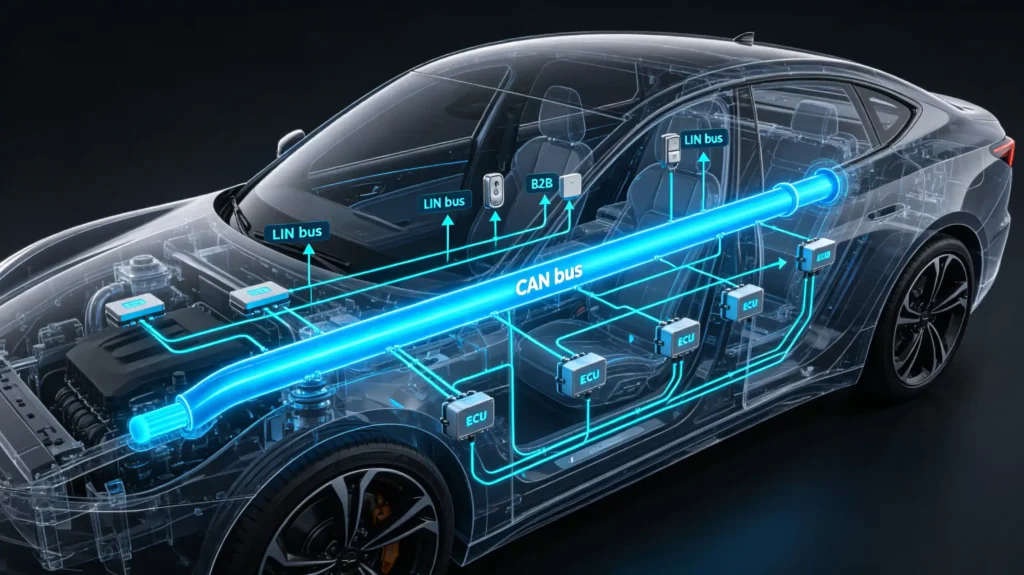
Not every vehicle exposes a straightforward physical ACC wire. This is where compatibility risk tends to concentrate for bulk sourcing projects. Many modern vehicle platforms do not include a physical ACC wire in the factory harness at all. Accessory power state is instead communicated digitally over the vehicle’s data network. For these vehicles, aftermarket head units typically need a CAN Bus adapter to derive a virtual ACC trigger signal from the vehicle’s CAN data. They do not read a dedicated physical wire.
Non-Standard ACC Signal Behavior
Non-standard ACC signal behavior shows up in a few recognizable patterns. A delayed-off signal that keeps accessory power live for a period after the key is removed. A pulse-width-modulated signal rather than a simple on/off state. Accessory power controlled entirely through the data bus.
A Common Real-World Scenario
A common real-world scenario: a newer vehicle with no physical ACC wire requires a CAN Bus adapter to generate the virtual ACC trigger the head unit needs. Skipping that step results in battery parasitic drain or a head unit that never properly auto-shuts-down. For foundational context on CAN Bus, see our what is CAN BUS guide.
B2B Evaluation Criteria for ACC-Wiring Specifications
Sourcing Checklist
Turning this into a sourcing checklist, here is what is worth verifying before placing a bulk order.
- RFQ documentation — request clear ACC pin definitions in the product’s BOM and harness datasheets, not just a general wiring diagram
- Sample validation — test ACC-triggered power-on and key-off auto-shutdown behavior directly on samples before committing to volume
- CAN Bus adaptation capability — confirm whether the supplier can support virtual-ACC generation for vehicle platforms lacking a physical ACC wire
- Harness labeling accuracy — ask how the supplier verifies pin labeling on harnesses, since mislabeling is a common source of field issues even with correct head unit hardware
- Firmware configurability — check whether ACC-trigger logic can be adjusted in firmware for vehicles with non-standard signal behavior
Documentation Rigor
Clear, accurate pin-definition documentation is the kind of practice that quality-focused suppliers treat as standard. It is in line with the documentation rigor expected under frameworks like IATF 16949 for automotive component traceability. It is worth asking suppliers directly how they document and verify ACC pin assignments. Generic aftermarket harnesses can mislabel this pin even when the underlying head unit hardware is sound.
FAQ
What will happen if constant-power 12V wire is incorrectly connected to the head-unit ACC input pin?
The head unit will read a permanently live signal as “ignition on” at all times. The ACC pin never sees the signal drop that should occur when the key is turned off. In practice, this means the unit stays powered continuously regardless of ignition state. This drains the vehicle battery over time. It is often noticed only after a customer reports a dead battery following an overnight parking. This is a wiring error, not a hardware defect. But it generates support tickets that look identical to one.
Some modern vehicles have no physical ACC-wire in factory harness; how can aftermarket head-unit get ACC trigger-signal?
For these vehicles, a CAN Bus adapter reads the vehicle’s data network. It derives a virtual ACC trigger signal from that data. Accessory power state is communicated digitally rather than through a dedicated wire. The head unit then treats this virtual signal the same way it would a physical ACC wire. Buyers sourcing for newer vehicle platforms should confirm CAN Bus adapter compatibility specifically. Do not assume a standard wiring harness will work.
Does ACC wire carry heavy-load operating-current for the whole head-unit or only a trigger-signal?
Only a trigger signal. The ACC wire is a low-current line. It tells the head unit when to power on or off based on ignition state. It does not supply the current needed to actually run the unit. That operating current comes from the constant-power wire, with the ground wire completing the circuit. Confusing the ACC wire for a power-carrying line is one of the more common misunderstandings in aftermarket wiring.
Why can identical head-unit show different power-on-off behaviour across different vehicle platforms due to ACC-signal differences?
The head unit’s behavior is only as consistent as the ACC signal it receives. That signal varies meaningfully across vehicle platforms. Some vehicles deliver a clean, immediate ACC signal drop at key-off. Others introduce a delayed-off period, a pulse-width-modulated signal, or route accessory power entirely through the data bus. The same head unit hardware will respond differently to each of these signal types. This is why platform-specific testing matters more than assuming uniform behavior across a product line.
Conclusion
ACC wiring is easy to overlook next to screen size or processor specs. But it is a common source of field complaints that trace back to sourcing decisions rather than head unit quality. Use the evaluation checklist above to screen suppliers and harnesses before committing to volume.