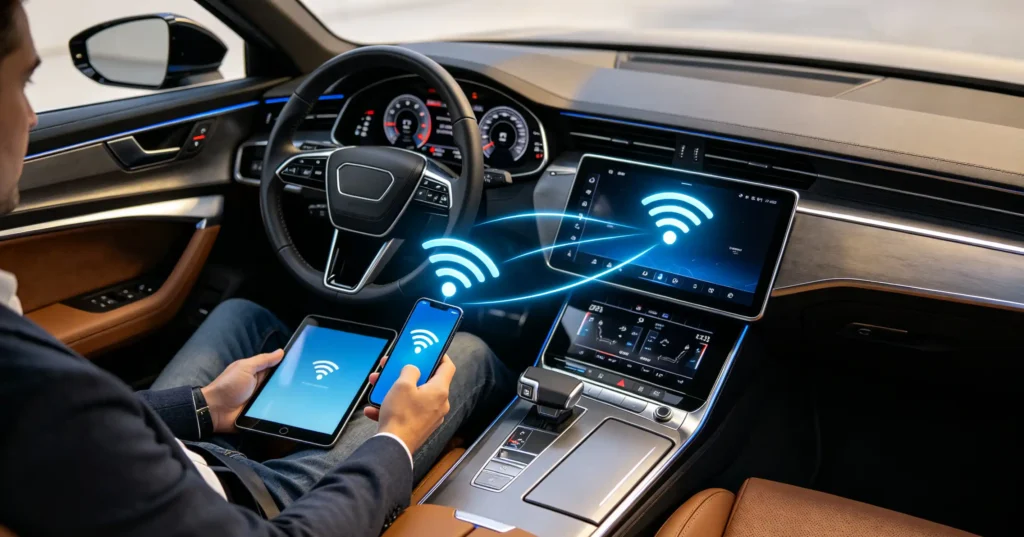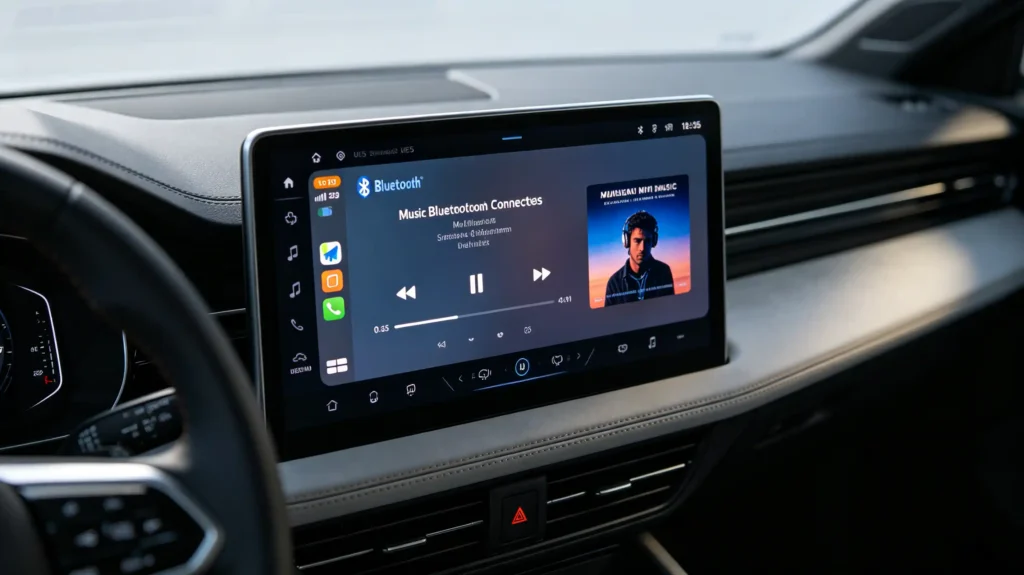
Android head unit or factory stereo? The answer changes depending on whether you’re sourcing for a production line, a warranty counter, or a retail upgrade bay. Each solves a different business problem, not just a different technical one.
This guide compares the two across integration, features, and cost, then maps each option to the buyer scenarios where it actually makes sense.
Core Definitions: Aftermarket Android Head Unit vs Factory OEM Car Stereo
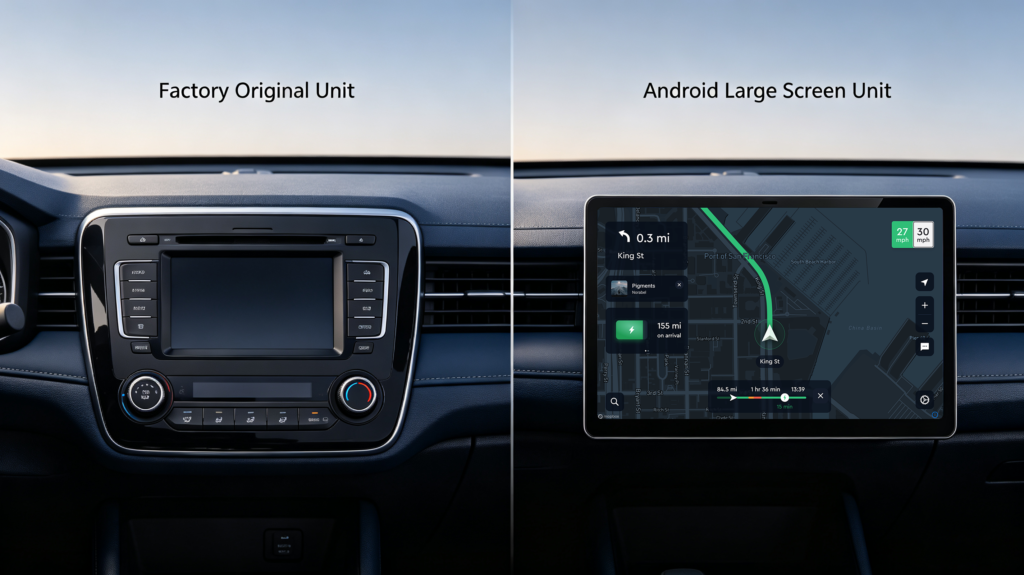
A factory OEM car stereo is the original infotainment system installed during vehicle production. Its hardware, software, and dashboard fit are engineered specifically for one make and model. It’s a closed system, with limited room for modification after the vehicle leaves the factory.
An aftermarket Android head unit works differently. It’s a replacement dashboard unit running a full Android operating system, designed to fit a broad range of vehicles through universal 2-DIN sizing or vehicle-specific trim kits. It’s an open system — app installation and customization come standard.
The core distinction: factory stereos are vehicle-first, built exclusively for one model. Android head units are product-first, built to fit many models with broad feature sets. For a complete technical breakdown of what an Android head unit is — including hardware, software, and sourcing considerations — read our pillar guide: What Is an Android Head Unit. This comparison covers the full infotainment system — multimedia, apps, connectivity, and vehicle integration — not just navigation.
Hardware Compatibility & Original Vehicle Integration Comparison
Integration depth is usually the first concern B2B buyers raise, and it’s where the two categories diverge most.
Factory stereos communicate over native CAN bus protocols. Steering wheel controls, the climate display, parking sensors, and other vehicle status data all work without adapters — full preservation of original function. Android head units need a CAN bus decoder instead. The decoder translates vehicle-specific protocols into signals the head unit can read, and decoder quality determines how many original functions survive. For a deeper look at CAN bus technology — how it works, why it matters, and what to look for in a decoder — read our guide on What Is CAN BUS.
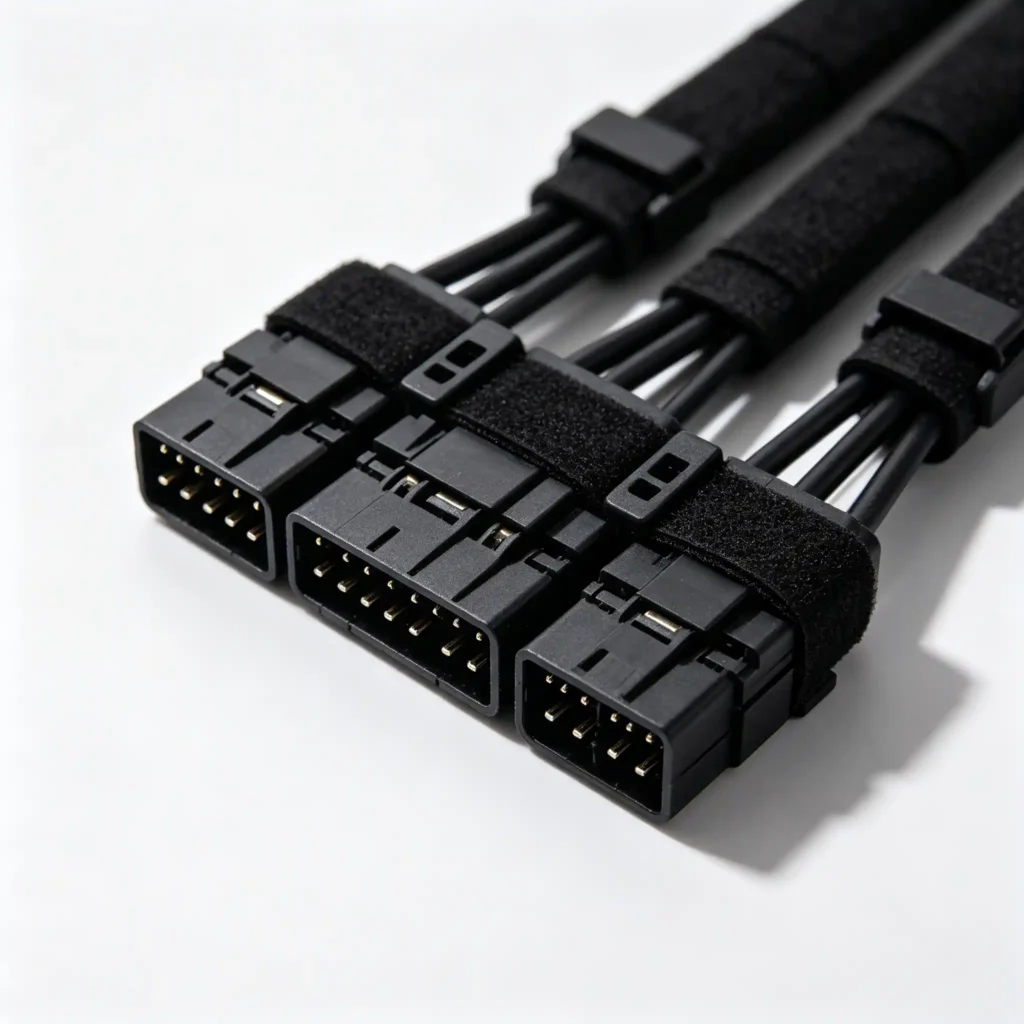
Hardware fit follows the same pattern. Factory stereos use vehicle-specific trim and mounting. Android head units rely on universal 2-DIN chassis or vehicle-specific mounting kits with trim rings. Installation differs too — factory units go in on the production line, while Android units are retrofitted and need physical installation labor.
In practice:
- Factory units preserve all original vehicle features by design
- Android units typically preserve 80–95% of original functions, depending on decoder development depth and vehicle model
- Rungrace’s in-house CAN bus decoder library covers 200+ vehicle models, which closes much of that gap — though matching the right decoder to the right vehicle still matters
Function, Performance & User Experience Side-by-Side Contrast
Beyond integration, the two categories take different approaches to software and daily usability.
| Dimension | Factory OEM Stereo | Aftermarket Android Head Unit |
|---|---|---|
| System openness | Closed, vehicle-optimized | Open — app installation supported |
| Navigation | Proprietary maps, dealer-updated | Google Maps, Waze, always-current |
| Multimedia | Basic, vehicle-focused | Broad — video, apps, streaming |
| Phonelink | Varies by automaker | Commonly supported |
| Updates | Dealer service visit | OTA firmware, app, and CAN bus updates |
| Customization | None, automaker-controlled | UI, logo, hardware configuration |
| Screen size/quality | Vehicle-standard | Often larger, higher resolution |
| Voice control | Vehicle-native only | Smartphone-level voice assistants |
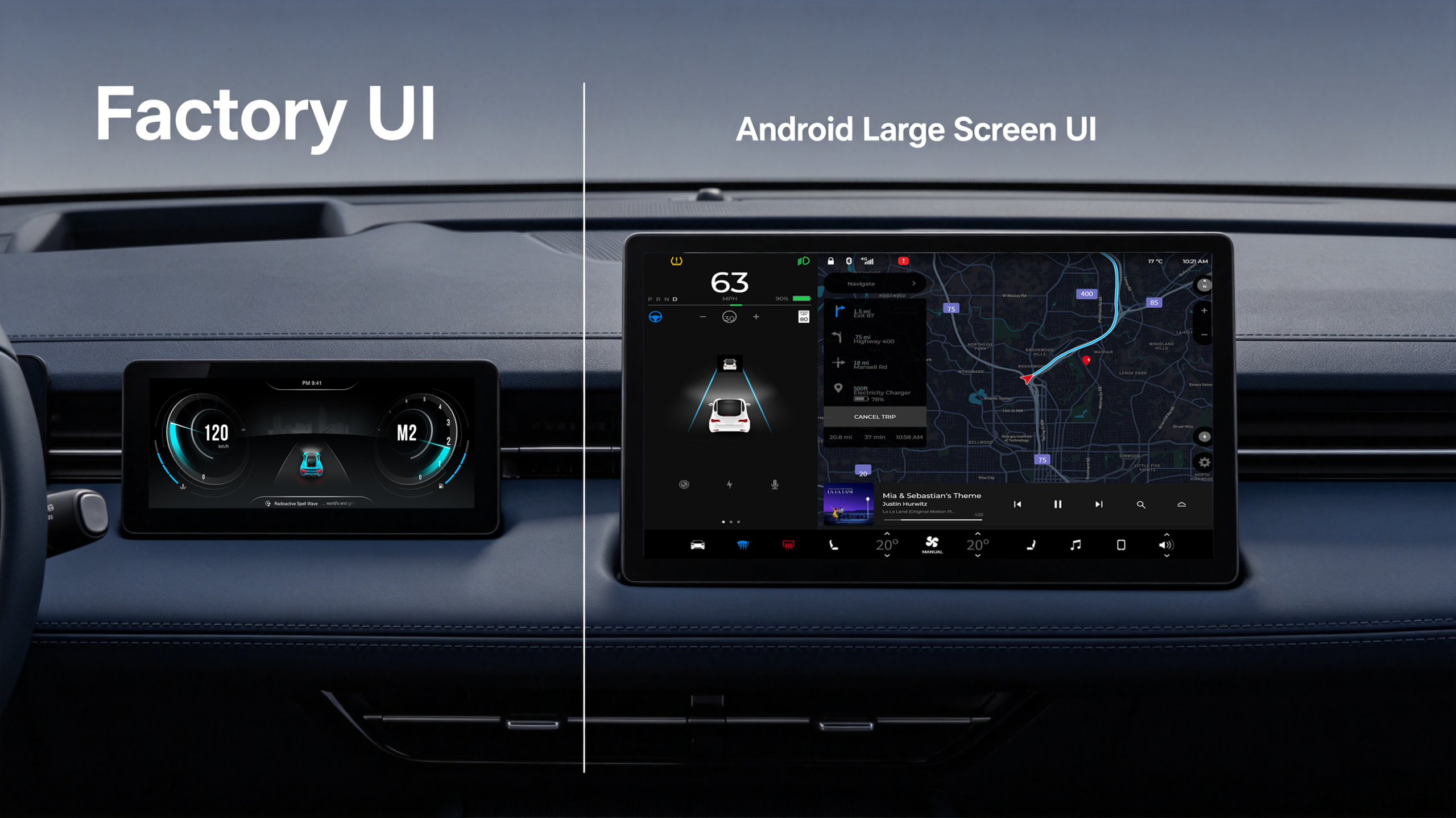
The pattern holds throughout. Factory stereos prioritize deep vehicle integration and driving-focused simplicity. Android head units prioritize feature richness, customization, and a more modern, smartphone-like interface.
Pros & Cons of Factory OEM Car Stereos for B2B Procurement
Factory stereos serve a specific slice of the market well, with trade-offs worth naming clearly.
Advantages:
- Complete vehicle integration, with all original features preserved
- Automotive-grade durability and reliability testing
- Warranty coverage aligns directly with the vehicle
- No compatibility guesswork, with a clean factory dashboard fit
Limitations:
- Higher unit cost, since design and tooling are vehicle-specific
- No post-production customization — locked to the original vehicle
- Updates run through dealer visits, often at a cost
- Feature set trails modern Android units
- Procurement lead times tie to automaker production schedules
Automakers building for the production line, Tier-1 suppliers, and 4S dealerships handling warranty or insurance replacements are the primary buyers. Sourcing at this level ties into automaker supply chains and requires meeting automotive-grade production standards.
Pros & Cons of Aftermarket Car Stereo Android Head Units
Aftermarket Android head units dominate the wholesale and retail upgrade market, for reasons that run in the opposite direction from factory units.
Advantages:
- Lower unit cost across most price tiers
- Rich feature set — apps, multimedia, navigation
- OTA updates without a service visit
- UI and logo customization, plus flexible RAM/ROM configuration
- Accessory ecosystem: cameras, DVR, TPMS
- Flexible MOQ for smaller trial orders
Limitations:
- CAN bus matching varies by vehicle model, so some functions may not carry over
- Installation labor is required
- Warranty concerns can arise depending on installation and vehicle policy
- Quality varies significantly between suppliers
Electronics wholesalers, cross-border importers, 4S dealerships running retail upgrades, and general dealers and installers make up the core buyer base. Quality ultimately comes down to three things: CAN bus decoder development depth, documented QC (48-hour aging and temperature testing among them), and firmware stability. Not all suppliers hold to the same standard. For a complete framework on matching Android head unit specs to your business scenario — including 4S dealerships, cross-border wholesale, and fleet operators — read our guide on how to choose an Android head unit.
B2B Sourcing Guide: Match Solution to Your Business Scenario
The right choice depends on your role in the supply chain, not on which product is “better” overall.
- Automakers and Tier-1 suppliers: Factory stereos are the only option for production-line installation, and they require suppliers who meet automotive-grade standards and production capacity.
- 4S dealerships (warranty and insurance replacements): Factory stereos are necessary here, since claims and repairs depend on OEM-spec parts.
- 4S dealerships (retail upgrades): Android head units offer better margins, custom UI and branding, and accessory bundling that impresses customers browsing an upgrade bay.
- Wholesalers, importers, and general dealers: Android head units are the primary aftermarket product. Supplier CAN bus coverage, QC testing, and customization capability matter most here.
The practical takeaway: choose a factory stereo for a factory-identical replacement. Choose an Android head unit for a feature-rich upgrade with stronger margin potential — and confirm your channel can support the installation work involved.
FAQ
Will replacing a factory stereo with an Android head unit reduce original car sound system quality?
Not inherently. Sound quality depends more on the vehicle’s speakers, amplifier, and wiring than on the head unit itself. A well-matched Android head unit can drive the same factory speaker system without a noticeable quality drop. Buyers should still confirm amplifier compatibility for vehicles with premium factory audio before installation.
Can aftermarket Android units fully retain factory steering wheel control functions like OEM stereos?
In most cases, yes, provided the CAN bus decoder is properly matched to that specific vehicle model. Retention rates typically run 80–95% depending on decoder development depth. It’s worth confirming steering wheel control support for your exact vehicle models before ordering, rather than assuming universal compatibility.
Which product delivers higher profit margins for 4S shop in-car upgrade services?
Android head units generally deliver stronger margins for retail upgrade services. Lower unit cost combined with custom branding and accessory bundling — cameras, DVR, TPMS — lets 4S shops position the upgrade as a premium package. That framing supports better pricing at the point of sale than a simple parts swap.
Do factory car stereos support third-party navigation app installation like Android head units?
Generally, no. Factory stereos run closed, vehicle-specific software that typically doesn’t support installing outside navigation apps like Google Maps or Waze. Android head units run open Android systems built for exactly this kind of app flexibility. That’s one of the main reasons buyers choose them over factory-spec replacements for feature upgrades.
Will installing an aftermarket Android head unit void the vehicle’s original factory warranty?
It depends on the vehicle’s warranty terms and local consumer protection law, so this is worth confirming directly rather than assuming either way. In many regions, a warranty can’t be voided solely for installing an aftermarket part. The exception is if that part caused a specific failure — but policies vary by manufacturer and country.
Conclusion
Factory stereos and Android head units aren’t competing for the same buyer. One delivers factory-identical integration for warranty and production-line needs. The other delivers customization, features, and margin for wholesale and retail upgrade businesses. Matching the choice to your actual business scenario is what makes sourcing decisions faster and reduces the risk of the wrong product line.
Sourcing Android head units or factory-spec stereos for your business? Contact our team to discuss CAN bus compatibility for your target vehicles, or explore our current Android head unit product lineup.