A customer’s first impression of a car stereo forms within the first three seconds of touching the screen.
If the interface lags, misregisters inputs, or becomes unreadable in sunlight, that impression sticks.
And it doesn’t stay a one‑off complaint.
It shows up later as returns and negative reviews.
This guide breaks down what truly defines a high‑quality touchscreen car stereo.
We cover the underlying touch technology.
We look at the display panel that drives it.
We examine the resolution it renders.
And we show you how to match all three to your specific sourcing scenario. For a full view of all hardware decisions, see our car stereo hardware components overview.
What Makes a Great Touchscreen Car Stereo?
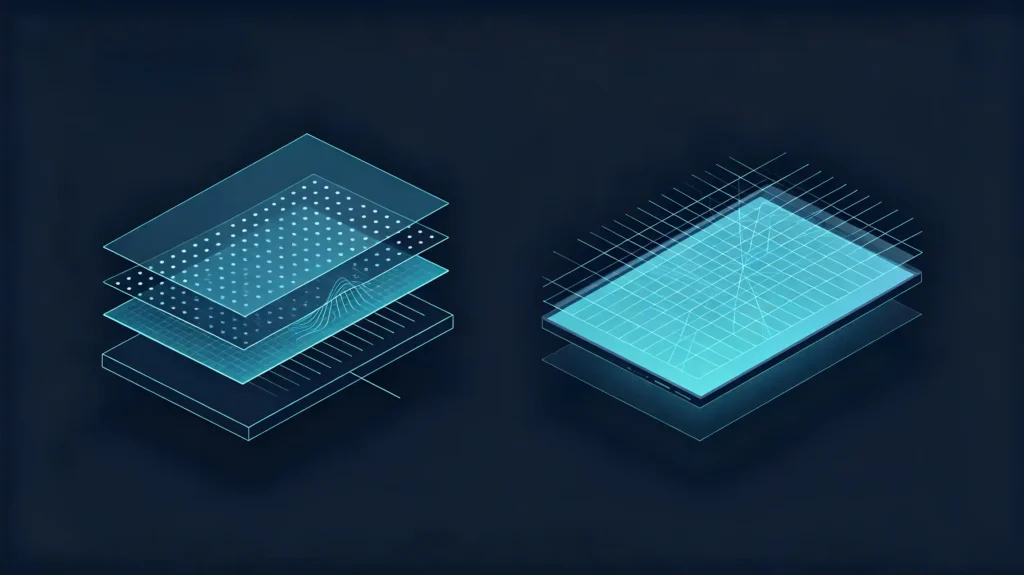
A genuinely “best” touchscreen car stereo combines four things.
It needs responsive touch technology.
It needs a high‑quality display panel.
It needs appropriate resolution for the screen size.
And it needs automotive‑grade durability that holds up over years of daily use.
The Touch Experience
At the touch level, that means capacitive touch rather than resistive.
It means multi‑touch gesture support.
It means smooth response with no lag.
It also means accurate registration across the entire screen.
And it means solid outdoor visibility.
None of this is cosmetic.
Touchscreen quality directly shapes end‑user satisfaction.
It affects product reviews.
It drives return rates.
In the wholesale market, that makes it a direct driver of brand reputation.
The Commercial Logic
The commercial logic is straightforward.
A high‑quality touchscreen justifies higher retail pricing.
It delivers better margins.
An inferior one generates exactly the complaints that drive up after‑sales costs.
Think unresponsive touch.
Think ghost touches.
Think screen flickering.
Buyers who cut corners here tend to pay for it later.
They just pay in a different column of the spreadsheet.
The Three Pillars
Three pillars determine touchscreen quality.
This guide covers each one.
First, touch technology: capacitive and multi‑touch.
Second, display panel: OLED versus IPS.
Third, resolution: HD versus FHD.
Touchscreen Technology: Capacitive and Multi‑Touch
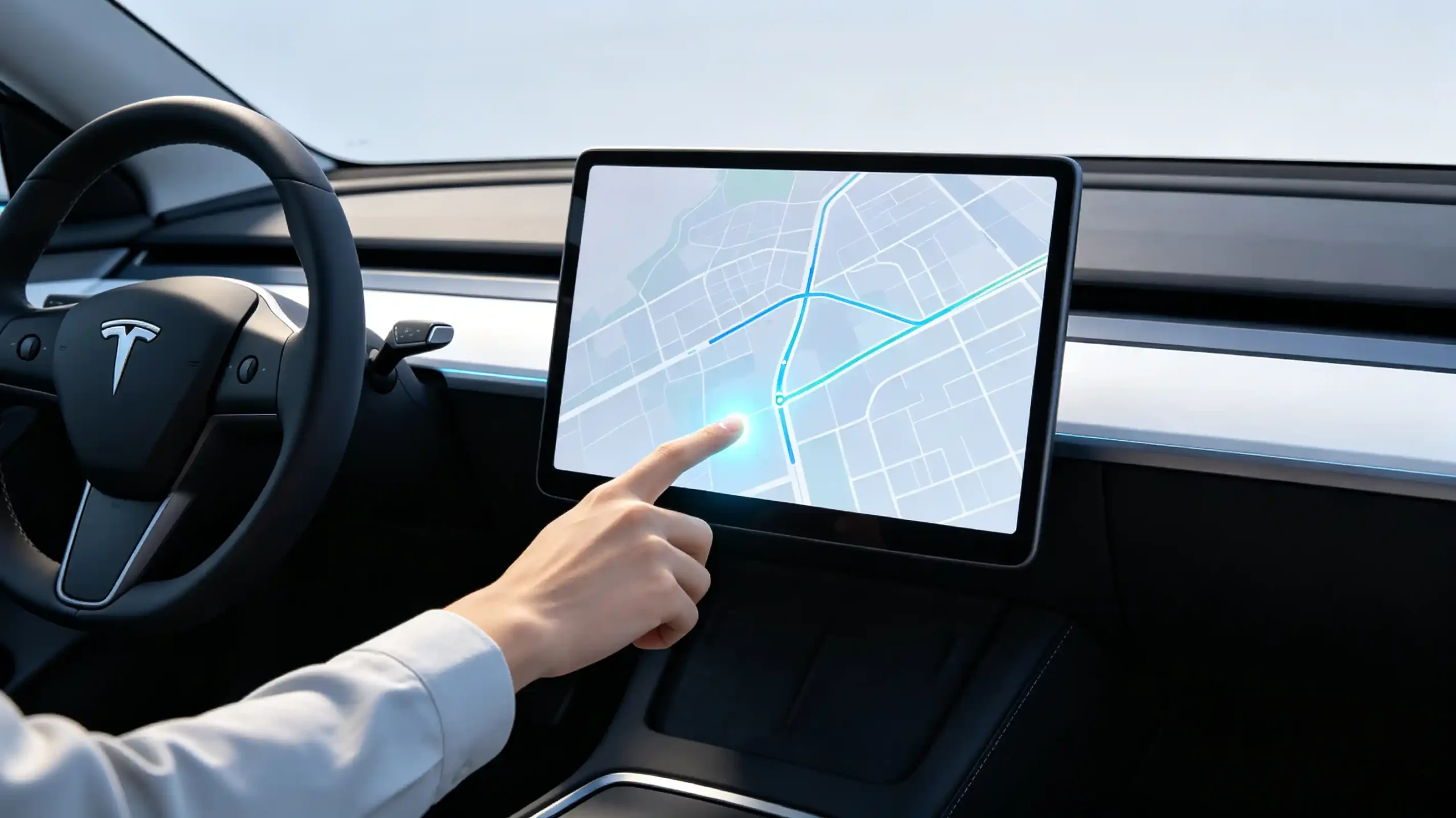
Capacitive touch uses the electrical properties of a human finger to detect contact.
It is highly responsive.
It supports multi‑touch gestures.
It holds up well against scratches.
That is why it is the industry standard for modern car stereos. For a technical deep dive, see our automotive touchscreen technology guide.
Resistive touch works differently.
It relies on physical pressure to register a touch.
It works with gloves or a stylus.
But the response feels noticeably less fluid.
It is older technology.
It is rarely found in modern premium car stereos anymore.
What Multi‑Touch Brings
Multi‑touch recognizes two or more simultaneous touch points.
That enables pinch‑to‑zoom on navigation maps.
It enables two‑finger gestures for media control.
It delivers smoother interaction across the interface.
In daily practice, the gap between single‑touch and multi‑touch is significant.
Single‑touch only supports basic tap and drag.
Multi‑touch enables the intuitive gestures modern drivers now expect.
Zooming a map feels natural.
Swiping through menus happens without a second thought.
Commercial Impact
Commercially, multi‑touch capacitive screens are essential today.
They are critical for competitive product positioning.
Resistive touch units read as outdated in mature markets.
Stocking them can undercut a distributor’s broader product image.
Display Panel Showdown: OLED vs IPS
IPS stands for In‑Plane Switching.
It is a liquid crystal display technology.
It offers wide viewing angles, up to 178 degrees.
It delivers accurate color reproduction.
It remains the most common panel in aftermarket car stereos. For a detailed IPS vs QLED comparison, see our IPS vs QLED display technology guide.
It is also the most cost‑effective.
OLED stands for Organic Light‑Emitting Diode.
It takes a different approach entirely.
Each pixel produces its own light.
That delivers perfect blacks.
That delivers essentially infinite contrast.
That delivers richer color saturation.
All at a meaningfully higher cost.
OLED Advantages
OLED’s advantages show up clearly in daily use.
Deeper contrast.
A wider color gamut.
Faster response time.
Thinner panel construction.
Better power efficiency when displaying darker content.
IPS Advantages
IPS counters with several strengths.
Lower cost.
Solid viewing angles.
A mature and reliable manufacturing process.
Consistent brightness across the panel.
A longer lifespan with no burn‑in risk.
Which One for Automotive?
For automotive applications specifically, OLED delivers a superior visual experience.
That is especially true for media and navigation viewed in bright sunlight.
IPS remains the more cost‑effective option.
It is a proven option for high‑volume wholesale orders.
IPS is the most common panel across standard product lines.
That is for exactly that reason.
OLED is positioned as a premium upgrade.
It targets 4S dealerships and higher‑end markets.
Display Resolution: HD vs FHD
HD stands for High Definition.
It typically runs at 1280×720 pixels.
It delivers clear, sharp images.
That is sufficient for most standard car stereo applications.
FHD stands for Full High Definition.
It typically runs at 1920×1080 pixels.
It delivers noticeably more detail.
Sharper text.
Better video quality.
A real improvement in navigation map readability.
Real‑World Differences
In practice, FHD displays show finer map details.
They show more vivid video content.
HD is perfectly adequate for daily use.
But it lacks the crisp, premium feel that FHD delivers.
That is especially true on larger screens.
Commercial Considerations
Commercially, FHD is becoming the expected standard.
That is the case in mature markets like the EU and North America.
HD remains an acceptable choice.
It works well for price‑sensitive markets.
It works well for budget fleet orders.
Screen size matters here too.
Larger displays, 9 to 10 inches and up, benefit noticeably more from FHD.
Smaller 7‑inch screens may not show a dramatic difference.
How to Choose for Your Business
Different scenarios call for different configurations.
Here is a practical breakdown.
4S Dealership Standard Upgrades
Choose an IPS panel.
Choose capacitive multi‑touch.
Choose HD resolution.
This offers a solid balance of cost and quality.
It works for most upgrade customers.
4S Dealership Premium Upgrades

Choose an OLED panel.
Choose capacitive multi‑touch.
Choose FHD resolution.
This targets customers who prioritize display quality.
These customers justify a higher retail price. The processor driving this display is covered in our best car stereo processor guide.
Cross‑Border Wholesale, Emerging Markets
Choose an IPS panel.
Choose capacitive multi‑touch.
Choose HD resolution.
Cost‑sensitive buyers prioritize affordability.
FHD or OLED may sit outside their budget.
Cross‑Border Wholesale, Mature Markets
Choose IPS or OLED.
Choose capacitive multi‑touch.
Choose FHD resolution.
Customers in these markets increasingly expect premium quality.
FHD is becoming the expected standard.
OEM/ODM Automaker Projects
Panel choice tracks vehicle segment.
OLED and FHD for premium vehicles.
IPS and HD for mass‑market vehicles.
Cost control matters most there.
Custom touchscreen configurations are available.
You can match specific vehicle segment requirements.
Common Quality Issues and Red Flags
Some issues show up again and again.
Here is what to watch for.
Unresponsive or Delayed Touch
This usually points to a poor touch controller.
It may also point to a low‑quality panel.
Test responsiveness across every zone of the screen.
Do not just test the center.
Do this during sample evaluation.
Ghost Touches or False Triggers
The screen registers touches that never happened.
This typically comes from poor sensor calibration.
It can also come from electrical interference.
This is one of the most frustrating issues for end‑users.
It drives disproportionate return rates.
Poor Outdoor Visibility
Low‑brightness panels wash out in direct sunlight.
Verify brightness specs directly.
IPS needs at least 400–600 nits minimum.
OLED needs 800+ nits.
Test under real sunlight.
Do not rely on indoor lighting.
Temperature‑Related Failures
Non‑automotive‑grade panels can fail outright in high heat.
Confirm automotive‑grade certification.
Ask whether high‑temperature QC testing at 60°C has actually been performed.
Misleading Spec Claims
Some suppliers use marketing language without the hardware to back it up.
Verify actual specifications through direct testing.
Do not trust the listing alone.
Before Bulk Production
Order samples.
Test responsiveness yourself.
Test viewing angles.
Test outdoor visibility.
Test temperature resistance.
Run a 48‑hour aging test.
Pair it with 60°C high‑temperature testing.
This catches most defects.
Otherwise, those defects surface only after units reach the field.
Frequently Asked Questions
What is the minimum panel quality for bulk export orders?
At minimum, look for genuine capacitive touch with multi-touch support, an IPS panel rated for automotive temperature ranges, and HD resolution as a baseline. Brightness should meet at least 400–600 nits for outdoor readability. Anything below this tends to generate the responsiveness and visibility complaints that drive return rates up in bulk export orders.
How does multi-touch support improve the user experience of in-car navigation and multimedia?
Multi-touch enables pinch-to-zoom on maps and two-finger gestures for media control, both of which feel natural to drivers accustomed to smartphone interaction. Single-touch panels limit users to basic tap and drag, which feels noticeably dated by comparison. For navigation specifically, quick zoom gestures matter for reading map detail at a glance while driving
Which display panel is more suitable for high-temperature and high-vibration automotive environments: OLED or IPS?
Both panel types are available in automotive-grade configurations rated for typical in-vehicle heat and vibration. IPS has a longer track record in this specific application due to its cost-effective, mature manufacturing process. What matters most in practice is whether a given unit has actually passed high-temperature and vibration QC testing, regardless of which panel technology it uses.
What is the cost difference between HD and FHD touchscreen car stereos in bulk procurement?
FHD panels generally cost more than HD due to higher pixel density and more demanding manufacturing tolerances, though the exact premium varies by screen size and supplier. For buyers targeting mature markets, that premium is usually recoverable through higher retail pricing, since customers increasingly expect FHD as the standard rather than an upgrade.
What is the difference between automotive-grade and consumer-grade touchscreen panels?
Automotive-grade panels are built and tested to withstand a wider temperature range, vibration from road conditions, and years of daily use without degrading. Consumer-grade panels, borrowed from tablets or phones, may perform well initially but carry higher risk of failure in a vehicle’s harsher operating environment. Requesting documented high-temperature test results is the most reliable way to confirm which category a given panel actually falls into.
Conclusion
The best touchscreen car stereo for your business is not necessarily the one with the highest specs.
It is the one where touch technology, display panel, and resolution are genuinely matched to your target market.
And it is the one where those specs are verified rather than assumed.
Getting this right upfront protects your margins.
It keeps after‑sales costs from eating into them later.
Sourcing touchscreen car stereos for your next order?
Contact our team to discuss panel and resolution configurations for your target market.
Or explore our current Android head unit product lineup.