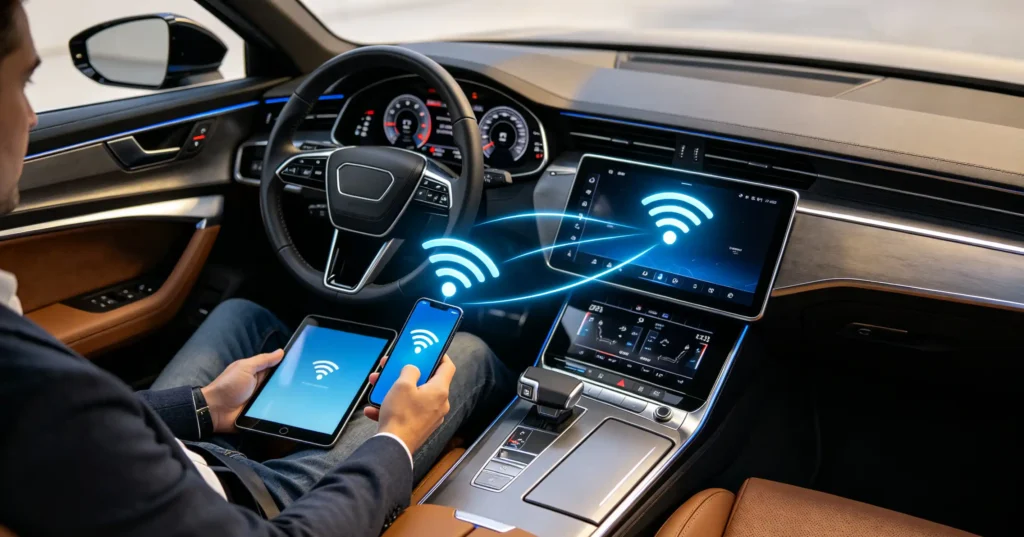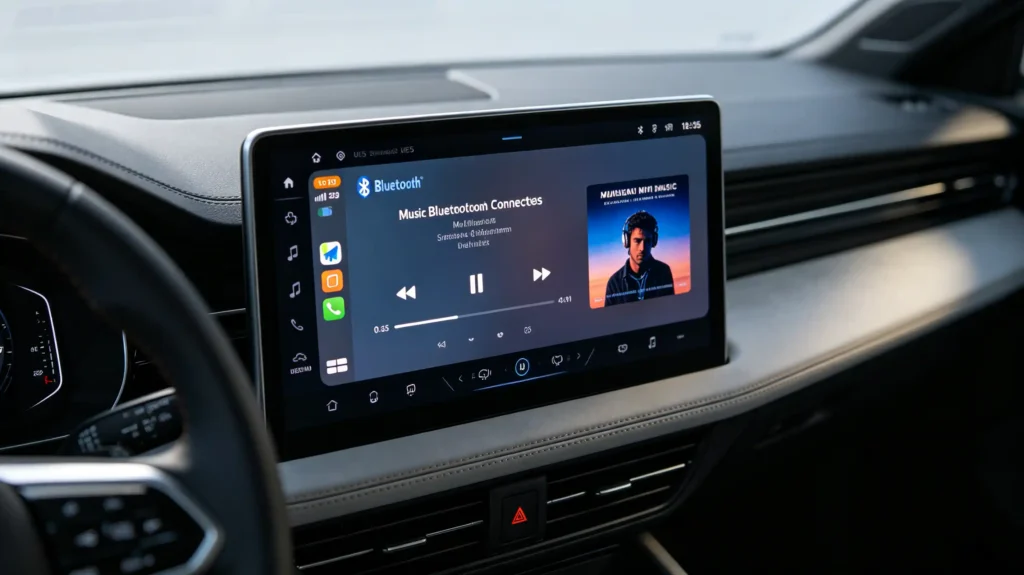
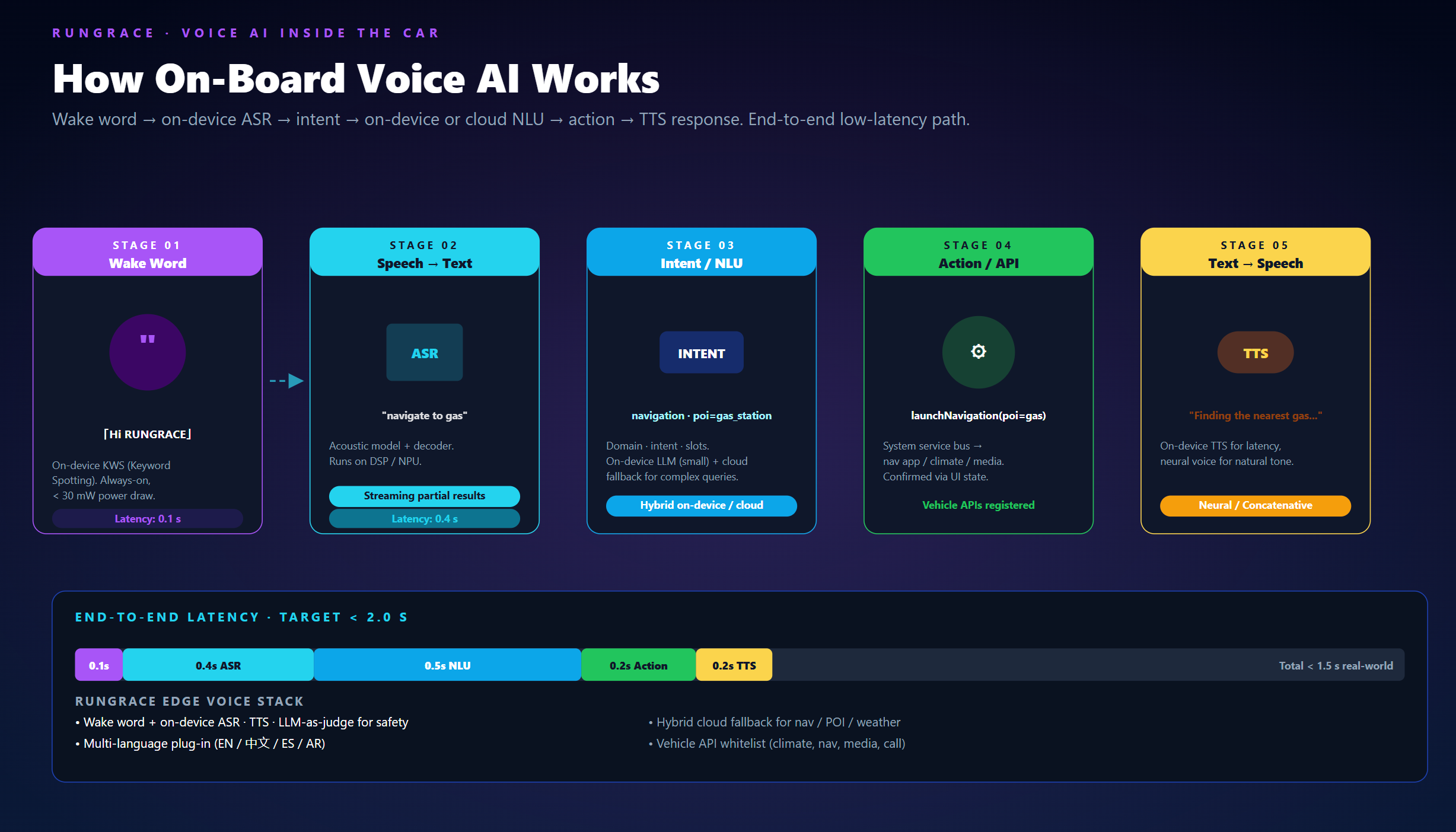
Choosing the right in-vehicle electronic hardware is a strategic decision for car dealers, automotive electronics wholesalers, importers, and 4S dealerships. As market expectations shift toward connected vehicular experiences, purchasing managers must decide whether to procure dedicated car navigation systems or integrated in-vehicle infotainment (IVI) platforms.
Understanding the functional boundaries, architectural differences, and procurement risks between these two categories allows commercial buyers to optimize inventory turnover, protect profit margins, and serve target markets effectively.
Core Definitions: Car Navigation System vs Infotainment System
A car navigation system is a dedicated in-vehicle device engineered primarily for satellite positioning, route planning, and real-time turn-by-turn driver guidance. While basic models may support simple audio playback, the system’s software and hardware architecture are tailored almost exclusively for location-based routing.
An infotainment system (In-Vehicle Infotainment or IVI) is a comprehensive automotive computing platform that merges navigation, multimedia playback, vehicle data telemetry, and advanced human-machine interaction (HMI) into a unified unit. For a complete technical overview of IVI system architecture, hardware components, and sourcing considerations, see our guide on in-vehicle infotainment systems.
+-------------------------------------------------------------+
|               IN-VEHICLE INFOTAINMENT (IVI)                 |
|                                                             |
|  +--------------------+   +------------------------------+  |
|  |  Car Navigation    |   |  Multimedia & Entertainment  |  |
|  |  (GPS/GNSS, Route  |   |  (Video, High-Res Audio)     |  |
|  |   Calculation)     |   +------------------------------+  |
|  +--------------------+   +------------------------------+  |
|                           |  Vehicle Data & Connectivity |  |
|                           |  (CAN Bus, Telemetry, HMI)   |  |
|                           +------------------------------+  |
+-------------------------------------------------------------+
The Inclusion Relationship
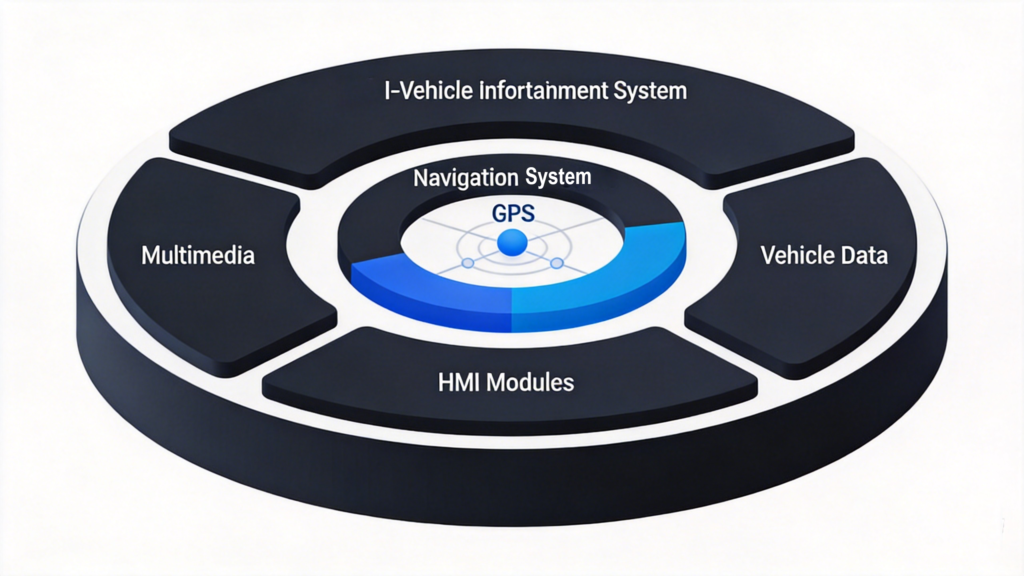
The architectural distinction lies in system scope: navigation is a core module within an infotainment system, rather than an equivalent, parallel category. An IVI platform contains full navigation capabilities alongside an expanded feature suite. Conversely, a standalone navigation system does not provide multi-source media processing, CAN Bus data decoding, or application ecosystems.
For B2B procurement, this structural relationship establishes clear buyer guidelines. Sourcing dedicated navigation units lowers upfront hardware expenditure for price-sensitive fleet orders. Procuring full IVI head units provides the multi-functional capability required by modern retail upgrades.
Functional Scope Comparison: Navigation-Exclusive Features vs Infotainment Multi-Media Capabilities
Comparing functional boundaries reveals clear operational differences between single-purpose routing units and full IVI hardware platforms.
| Feature Category | Standalone Car Navigation System | Integrated Infotainment System (IVI) |
| Primary Focus | GPS/GNSS positioning & route calculation | Navigation, entertainment & vehicle telemetry |
| Audio/Video Playback | Basic local audio via USB or SD card | Multi-format local & streaming audio/video |
| Phone Connectivity | Basic Bluetooth hands-free audio | Screen mirroring & advanced phone projection |
| Vehicle Telemetry | Isolated (Power and basic audio out only) | Integrated via CAN Bus decoder protocol |
| System Expansion | Fixed firmware with offline map storage | Multi-language app ecosystem with OTA updates |
Navigation-Exclusive Characteristics
Dedicated navigation systems prioritize simplicity and immediate utility. Featuring localized map storage and streamlined user interfaces, these units provide reliable turn-by-turn guidance without competing background tasks. However, they lack active connectivity, complex audio digital signal processing (DSP), and integration with original vehicle controls.
Infotainment Multi-Media Scope
An integrated IVI system functions as a centralized vehicular media hub. It manages multi-zone audio output, high-definition video rendering, hands-free phone screen mirroring, steering wheel controls, reverse camera integration, and over-the-air (OTA) updates.
Hardware & Architecture Comparison: Standalone Navigation vs Integrated Infotainment Systems
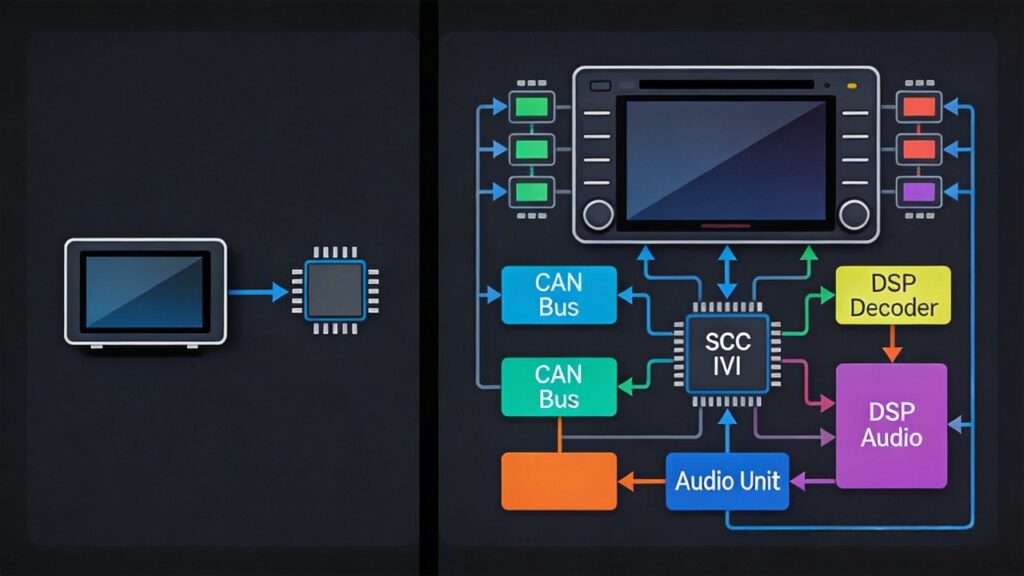
Hardware architecture dictates installation complexity, processing stability, and vehicle compatibility.
| Hardware Component | Standalone Navigation Architecture | Integrated Infotainment System Architecture |
| Processing Power | Single-core / low-tier SoC | Automotive-grade multi-core SoC (e.g., 4GB+ RAM) |
| Display Panel | 4 to 7-inch resistive or basic capacitive touch | 7 to 10+ inch high-res capacitive / Tesla-style screens |
| Vehicle Interface | Universal power harness (No CAN Bus) | Dedicated vehicle harness + CAN Bus decoder protocol |
| Audio Processing | Basic onboard amplifier | Onboard DSP with multi-channel pre-outs |
| Operating System | Lightweight single-purpose Linux / RTOS | Full-stack Android or customized Linux OS |
+-----------------------------------------------------------------------+
|                INFOTAINMENT SYSTEM HARDWARE LAYOUT                    |
|                                                                       |
|  +--------------------+   +--------------------+   +---------------+  |
|  | Automotive-Grade   |---| Audio DSP & Multi- |---| High-Res Touch|  |
|  | Multi-Core SoC     |   | Channel Output     |   | Display Panel |  |
|  +--------------------+   +--------------------+   +---------------+  |
|            |                        |                                 |
|  +--------------------+   +--------------------+                      |
|  | CAN Bus Decoder    |---| Steering Wheel /   |                      |
|  | Protocol Module    |   | Vehicle Controls   |                      |
|  +--------------------+   +--------------------+                      |
+-----------------------------------------------------------------------+
Hardware Integration and Vehicle Compatibility
Dedicated navigation hardware uses minimal peripheral wiring, bypassing vehicle communication lines entirely.
In contrast, IVI hardware utilizes dedicated protocol decoders to connect directly with the vehicle’s CAN Bus system. This communication link allows the unit to process speed signals, read door status, render air conditioning displays, and interpret steering wheel button inputs.
At Rungrace, our R&D team designs automotive-grade circuit boards and multi-layer PCBs built to withstand complex vehicle electrical environments. By integrating custom CAN Bus protocols into our Android head units, we help importers maintain seamless factory-fit compatibility across bulk orders. For a detailed technical breakdown of Android-based IVI systems, see our guide What Is an Android Head Unit?.
B2B Application Value & Scenario Matching
Evaluating downstream buyer demands helps determine the correct hardware inventory mix.
+------------------------------------------------------------------+
|                   B2B SCENARIO SELECTION MATRIX                  |
|                                                                  |
|  MARKET TYPE              RECOMMENDED SYSTEM      PRIMARY VALUE      |
|  --------------------------------------------------------------  |
|  Emerging Markets         Standalone Navigation   Low Unit Cost,     |
|  & Fleet Operations       or Basic Linux Units    Simple Turn-over   |
|                                                                  |
|  4S Dealerships &         Android / Linux IVI     High Margins,      |
|  Mature Retail Markets    Infotainment Systems    Upsell Potential   |
+------------------------------------------------------------------+
Scenario 1: Fleet Management & Budget Commercial Vehicles
- Recommended System: Standalone navigation or entry-level Linux units.
- Commercial Value: Low unit cost, simple inventory management, minimal installation labor, and immediate routing utility.
- Target Audience: Commercial fleets, taxi operators, and regional transport services requiring low-cost location tracking.
Scenario 2: 4S Dealership Upgrades & Regional Distributors
- Recommended System: Integrated Android or Linux IVI head units.
- Commercial Value: High profit margins, premium brand positioning, and accessory cross-selling opportunities (e.g., dash cams, rear-view cameras, TPMS).
- Target Audience: Franchise 4S shops, auto modification centers, and regional importers serving tech-conscious drivers.
Regional Market Dynamics
In emerging markets across Southeast Asia and South America, cost-effective navigation hardware and universal 2DIN units remain high-volume sellers. Conversely, mature markets in North America and Western Europe demand full IVI functionality, including multi-language UI support, wireless phone mirroring, and CAN Bus integration.
Procurement Cost & After-Sales Risk Comparison
Balancing initial unit costs against long-term operational risks is essential for bulk hardware sourcing.
+------------------------------------------------------------------------+
|                PROCUREMENT COST & RISK PROFILE                         |
|                                                                        |
|  +--------------------------+     +---------------------------------+  |
|  |   Standalone Navigation  |     |   Integrated Infotainment (IVI) |  |
|  +--------------------------+     +---------------------------------+  |
|  | Low Capital Requirement  |     | Higher Per-Unit Investment      |  |
|  | Basic Universal Fitting  |     | Requires CAN Bus Protocol Match |  |
|  | Simple Hardware QC Needs |     | 48-Hour Burn-in & Testing Essential |
|  +--------------------------+     +---------------------------------+  |
+------------------------------------------------------------------------+
Initial Capital Investment vs. Profit Margins
Standalone navigation units feature a low bill of materials (BOM), requiring less capital investment per shipment. However, their commodity status yields slim profit margins. Integrated infotainment units require higher upfront expenditure but yield significantly greater gross profit margins and stronger dealer customer retention.
After-Sales Risk & Quality Control Needs
After-sales risk profiles differ substantially between the two system types:
- Standalone Navigation Risks: Failures are primarily limited to isolated GPS antenna defects, power supply issues, or basic LCD hardware faults.
- Infotainment System Risks: Complex hardware ecosystems present risks such as CAN Bus protocol mismatches, software crashes, touchscreen unresponsiveness, and audio interference.
Manufacturing Quality Standard: To mitigate after-sales failure rates in bulk orders, high-complexity IVI systems must undergo rigorous quality assurance. At Rungrace’s 3,000m² Huizhou factory, every head unit passes IQC raw material screening, line-side IPQC checks, full FQC testing, and a continuous 48-hour power-on aging test before shipment.
How to Choose Between a Car Navigation System and Infotainment System for Your Business
When planning your bulk sourcing strategy, evaluate your purchasing decisions using these four operational parameters:
- Target Vehicle Age & Dashboard Integration: If the target vehicle fleet consists of older models without complex CAN Bus communications, standalone navigation or universal 2DIN head units provide a reliable fit. For post-2010 vehicles, customized IVI systems with vehicle-specific dashboards are necessary.
- Technical Support Capabilities: If your business lacks specialized installation technicians, sourcing universal navigation units minimizes technical support requirements. If your network can handle vehicle trim removal and wiring harness installation, integrated IVI systems yield higher revenue.
- Firmware and Software Adaptability: Sourcing IVI platforms requires a manufacturing partner capable of customizing software configurations. Ensure your supplier supports regional radio frequency adjustments, multi-language UI packs, custom boot logos, and over-the-air firmware updates.
- Supplier OEM/ODM Capacity: Partner directly with source manufacturers rather than trading intermediaries. Source factories offer flexible MOQs, stable component supply chains, and fast 15-day custom production lead times.
Frequently Asked Questions
What is the core difference between a standalone car navigation system and an infotainment system?
A standalone car navigation system is a single-purpose device designed for satellite positioning, map display, and route planning. An infotainment system (IVI) is a complete vehicular computing platform that integrates navigation as a software module alongside multimedia playback, phone projection, CAN Bus vehicle telemetry, and customizable touchscreen controls.
Can a standalone car navigation system integrate with steering wheel controls and factory vehicle data?
Typically, no. Standalone navigation units operate independently of the vehicle’s internal data network. Integrating factory steering wheel controls, climate control displays, or door status indicators requires an infotainment system equipped with a vehicle-specific CAN Bus protocol decoder.
Which system type has lower procurement costs for bulk orders?
Standalone navigation systems have a lower initial unit cost due to simplified hardware architecture and smaller display sizes. However, integrated infotainment head units generate higher retail profit margins and allow importers to bundle value-added accessories like DVRs and parking cameras.
What B2B commercial applications are best suited for standalone navigation systems?
Standalone navigation units are best suited for commercial fleet tracking, rental car operations, agricultural machinery, and price-sensitive emerging markets where basic turn-by-turn routing takes priority over advanced multimedia functionality.
What are the most common compatibility risks associated with bulk IVI orders?
The most common bulk procurement risks involve CAN Bus protocol mismatches, audio signal noise, and dashboard fitment errors. Working with a factory direct manufacturer that performs 100% full-function FQC inspection and 48-hour continuous power-on aging tests eliminates these protocol and hardware issues before dispatch.
Optimize Your In-Vehicle Hardware Sourcing
Sourcing the right automotive electronics requires balancing cost, technical functionality, and manufacturing quality. Rungrace provides factory-direct manufacturing solutions for both universal navigation devices and high-performance Android IVI head units. Backed by an in-house R&D team, 10 automated assembly lines, and a monthly output capacity of 50,000 units, we deliver custom OEM/ODM solutions tailored to your market.
Contact our engineering team today to discuss your OEM/ODM requirements or request a custom wholesale quotation.