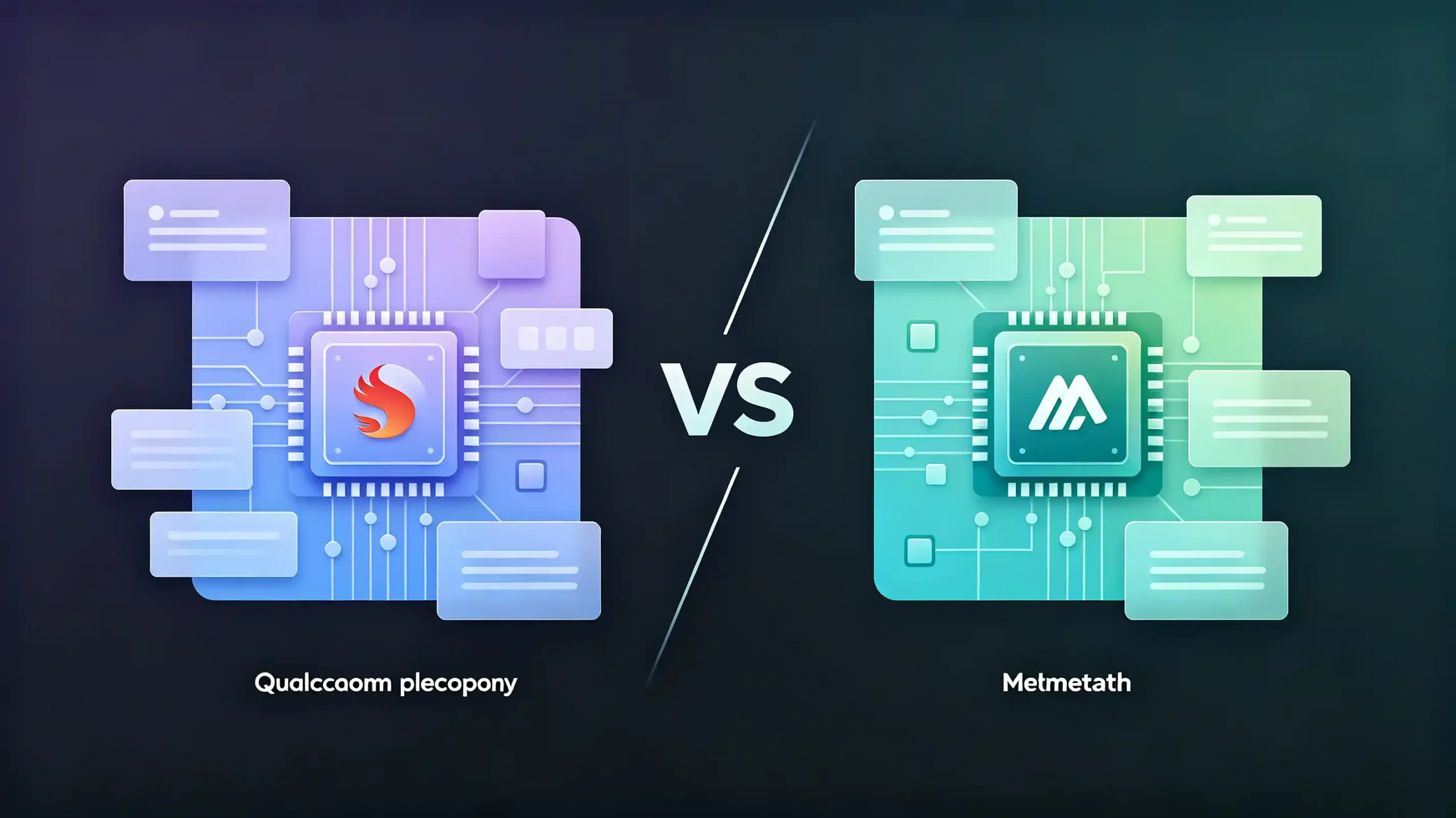
Two chip families quietly decide how every Android car stereo actually performs on the road: Qualcomm and MediaTek. The brand on the box matters less than which platform is actually inside, and that distinction shapes your product’s price tier, your target market, and your return rate.
This guide compares the two platforms on a neutral, data-grounded basis. It covers what each does well, how they stack up side by side, and which one fits your specific sourcing scenario. For a full view of all hardware decisions, see our car stereo hardware components overview.
Core Definitions: Qualcomm Snapdragon vs MediaTek Car Stereo Processors
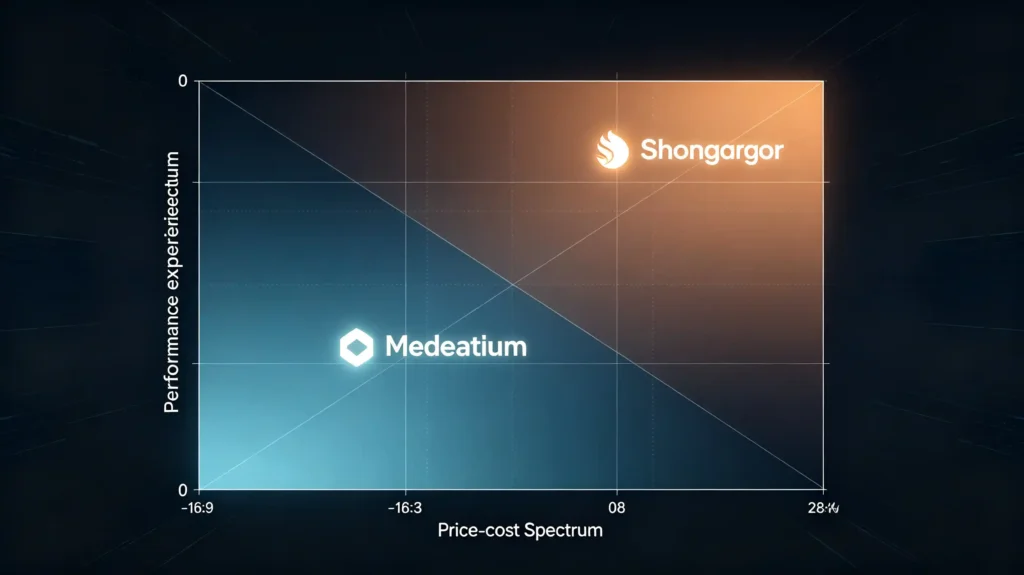
A car stereo processor — the System on Chip, or SoC — is the brain of the unit. It handles screen rendering, navigation calculation, and multitasking across every app running at once. Two platforms aren’t just brand names; they’re genuinely different chip architectures, and that difference shows up directly in user experience, product lifespan, and unit cost. CPU and GPU balance varies between platforms. See our CPU vs GPU guide for detailed guidance.
Qualcomm holds a traditionally premium position. Its Snapdragon automotive chips dominate high-end infotainment systems and share DNA with flagship smartphone processors, carrying that performance pedigree into the dashboard.
MediaTek occupies a different lane. It’s built a strong cost-performance reputation, and it’s especially popular across mass-market and emerging-economy wholesale channels where price sensitivity outweighs flagship computing power.
Both platforms have matured specifically for automotive aftermarket use — this isn’t a case of one being automotive-ready and the other being a stopgap. The difference is where each one sits on the performance-to-cost curve.
Qualcomm Snapdragon Car Stereo Platform: Core Strengths & Benchmarks
Snapdragon’s architecture leans hard into raw performance. High-performance CPU cores and a genuinely capable GPU handle smooth 3D navigation rendering and high-definition dual-screen output without the stutter that shows up on weaker platforms.
Automotive-grade certification is a real differentiator here. Chips carrying AEC-Q100 certification come with longer product lifecycle support. That correlates directly with lower hardware failure rates over the life of the unit — a meaningful factor when you’re placing a bulk order.
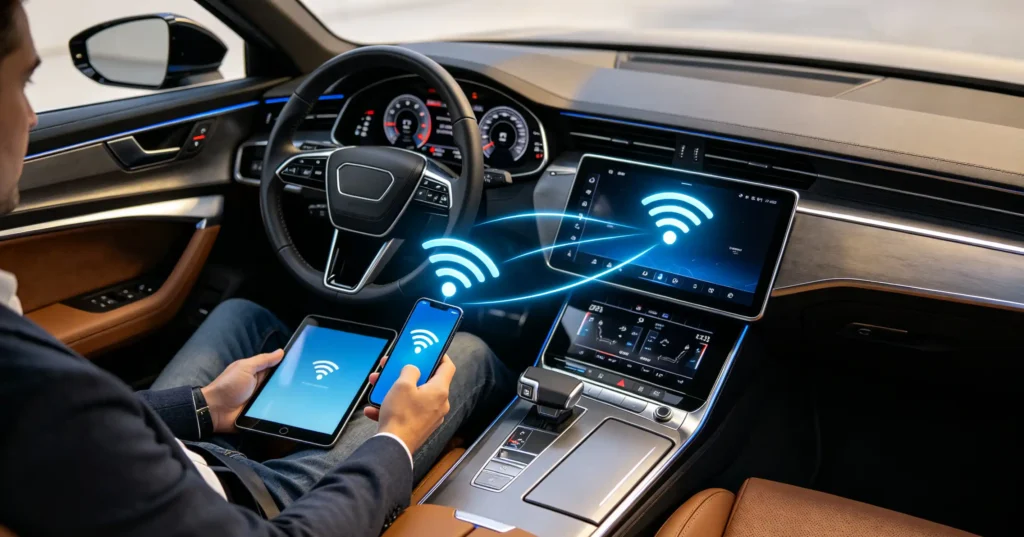
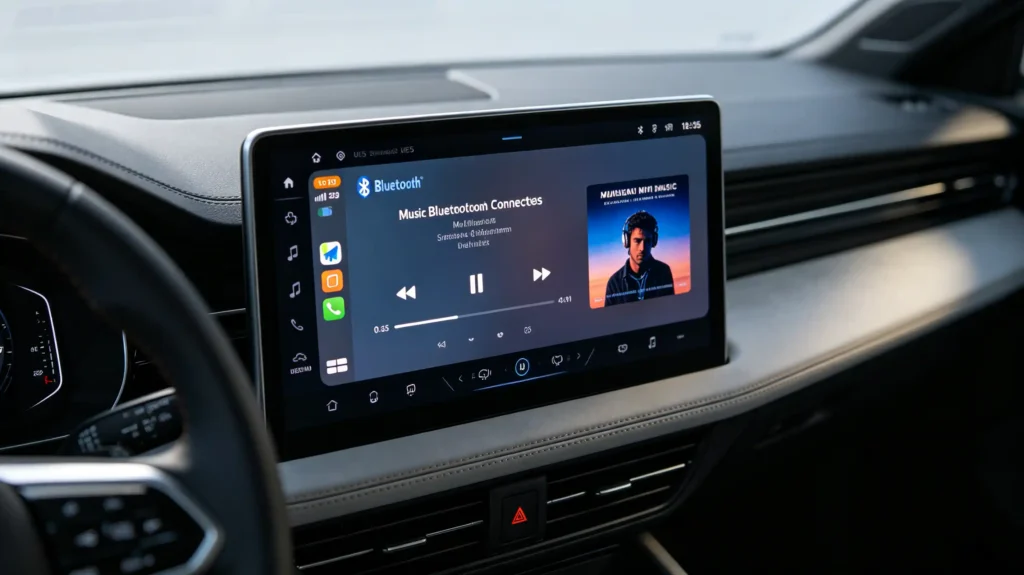
Newer Snapdragon platforms support faster wireless standards (Wi-Fi 6, Bluetooth 5.0). That matters increasingly for wireless smartphone integration and other wireless projection systems customers now expect as standard, not premium.
In practical terms, this translates to benchmarks that matter on the sales floor: faster app switching, and smoother multitasking even with 4K video decoding running in the background. That combination of raw power and automotive-grade reliability is what lets Snapdragon-based units command a premium retail price.
MediaTek Car Stereo Platform: Core Strengths & Benchmarks
MediaTek’s value proposition is straightforward: deliver performance that’s genuinely good enough for daily use, at a cost point that lets wholesalers compete hard on price in sensitive markets.
Real-world benchmarks back this up. Boot-up times remain fast, and processing power handles offline map navigation smoothly without lag for the vast majority of everyday driving scenarios. The platform doesn’t need flagship specs to satisfy typical customer expectations.
Platform maturity is worth noting too. MediaTek has iterated across several generations in the Android head unit space specifically. Drivers and the broader software ecosystem have had time to stabilize for mass production runs — this isn’t a young or untested platform in this category.
Thermal characteristics round out the picture. MediaTek platforms are generally optimized for power efficiency, which reduces heat generated inside the dashboard and can lower the need for expensive dedicated cooling hardware. Learn more about DSP audio processing as another component that benefits from efficient thermal design.
Qualcomm vs MediaTek: Full Side-by-Side Benchmark Comparison
| Dimension | Qualcomm Snapdragon | MediaTek |
|---|---|---|
| Target market | High-end, flagship-tier | Mass-market, commercial |
| Compute power (CPU/GPU) | Superior multi-core and multi-thread performance | Balanced, energy-efficient performance |
| Screen support | Strong support for high-resolution dual-screen setups (2K and above) | Stable support for standard 1080p HD screens |
| Automotive grade | Fully automotive-certified (AEC-Q100 compliant) | High-quality industrial-grade, suitable for daily driving |
| Ecosystem stability | Longer software maintenance and update cycles | Stable, mature drivers for standard apps |
| Price point (B2B) | Higher upfront cost | Highly competitive at bulk pricing |
The choice ultimately comes down to application versus budget. just as IPS vs QLED display technology depends on market positioning. If your target buyer expects flagship-level responsiveness and high-resolution output, Snapdragon justifies its cost. If your buyer prioritizes reliable, competitively priced volume, MediaTek delivers that without meaningfully compromising daily usability.
How to Choose Between Qualcomm and MediaTek for Your B2B Business
4S dealerships and premium car upgrades: Snapdragon is the recommended platform here. High-end car owners expect zero lag and future-proof wireless connectivity. A Snapdragon-based unit supports the kind of upgrade positioning that justifies a higher price point at the point of sale.
Cross-border wholesalers and emerging markets: MediaTek is the stronger fit. In markets across Southeast Asia, South America, and the Middle East, affordability and stable core functionality — GPS, Bluetooth, radio — outweigh the need for flagship computing power. This holds true for the large majority of buyers in these regions.
OEM/ODM customization: Custom hardware configurations are available across both platforms. A client requesting a premium “special edition” model can stick with Snapdragon; for standard, high-volume production, MediaTek is generally the smarter choice on cost. Manufacturers with a dedicated hardware engineering team can adapt and test either platform against custom casing and motherboard designs for OEM clients.
Common Processor-Related Sourcing Risks & Red Flags
A few recurring traps catch B2B buyers off guard, and each is worth checking for directly before a bulk order ships.
- Counterfeit or rebranded chips — some suppliers sell units labeled “Snapdragon” that actually run counterfeit or lower-tier rebranded chips, causing a severe, unexplained performance drop. Verify the actual chip model with a diagnostic tool on a sample unit.
- Inadequate heat dissipation — higher-performance processors, Snapdragon chips especially, generate more heat under load. Without proper heat sink design, units will throttle and slow down in hot conditions. Ask suppliers directly about their thermal design and request high-temperature test results. Testing at 60°C over an extended period is a reasonable benchmark to look for, rather than assuming any given unit handles heat well.
- Poor memory matching — a high-end processor performs poorly if paired with insufficient RAM, such as a Snapdragon chip with only 2GB RAM, which causes system crashes under normal multitasking. Always check the full spec sheet for balance, not just the processor name.
FAQ
What is the core difference between Qualcomm and MediaTek in terms of automotive-grade certification?
Qualcomm’s automotive-focused Snapdragon chips are more commonly associated with AEC-Q100 certification, a standard covering stability across a wide temperature range and extended operational lifespan. MediaTek chips used in car stereos are generally high-quality industrial-grade components suitable for daily driving conditions. Buyers should still confirm the specific certification status of any chip directly with the supplier, rather than assuming based on brand alone.
Which processor platform has historically shown lower long-term after-sales failure rates in bulk car stereo orders?
Genuine, automotive-certified Snapdragon chips tend to show lower failure rates over time, largely due to AEC-Q100 certification and stronger thermal tolerance. That said, failure rates in practice depend heavily on whether the supplier ran proper QC, including high-temperature and aging tests. Platform choice alone doesn’t guarantee reliability.
I am targeting emerging markets with price-sensitive buyers; which platform offers better profit margins for me?
MediaTek generally offers better margins for price-sensitive emerging markets. Its lower per-unit cost supports competitive retail pricing while still meeting the core functionality most buyers actually need — GPS, Bluetooth, stable navigation. That’s often enough without paying for flagship performance they won’t use.
What performance benchmarks must the processor meet to ensure navigation doesn’t lag when running multiple apps simultaneously?
Look for a processor capable of smooth multitasking under real-world load: maps, music, and video running together without stutter. This depends on the processor and GPU working alongside adequate RAM — 4GB or more is a reasonable baseline. Even a strong processor will lag if memory is insufficient for the combined workload.
Can the processor platform be customized or upgraded for OEM orders?
Yes, to a degree. OEM/ODM clients can typically select their preferred platform. Snapdragon suits premium positioning, MediaTek fits cost-controlled volume, and manufacturers with in-house hardware engineering can adapt the chosen platform to custom casing and motherboard designs. Processor selection is generally locked in at the design stage rather than upgradeable after production.
Conclusion
Qualcomm and MediaTek aren’t competing on the same axis — one leads on raw performance and automotive-grade certification, the other on cost-efficiency and proven platform stability at scale. Matching the platform to your actual buyer is what turns this comparison into a sourcing decision rather than a guess. That, plus verifying the chip and QC process behind any unit you source.
Sourcing Android car stereos with the right processor platform for your market? Contact our team to discuss Qualcomm or MediaTek configurations, or explore our current Android head unit product lineup.