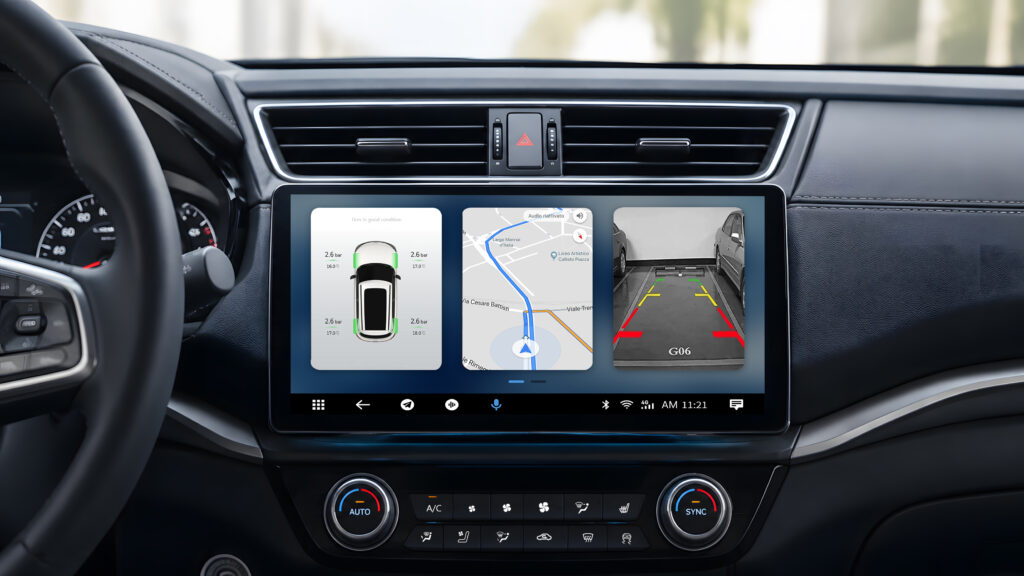
Car navigation has moved far beyond a dashboard accessory. Android head units, CANBUS integration, and OTA updates are now standard expectations, not premium add-ons. The vehicles rolling off dealer lots are judged partly on the navigation system inside them.
For car dealers, electronics wholesalers, importers, and manufacturers, understanding this equipment matters. Knowing exactly what a car navigation system is — and how it’s built — is the first step toward a sound purchasing decision.
This guide covers the core definition of a car navigation system, its hardware and software architecture, and how it works from power-on to turn-by-turn guidance. It also walks through the main product types on the market and the evaluation criteria B2B buyers should apply before committing to a supplier.
Whether you are sourcing for a 4S dealership network, a cross-border wholesale operation, or an automaker’s production line, the fundamentals covered here will help you ask sharper questions and compare suppliers more effectively.
What Is a Car Navigation System – Core Definition
A car navigation system is an integrated dashboard electronic unit that combines satellite positioning (GPS/GNSS), digital mapping software, and vehicle integration technology to provide real-time positioning, route guidance, and vehicle data display.
In simpler terms, it is the device mounted in a vehicle’s dashboard that tells the driver where they are, calculates how to get where they are going, and increasingly doubles as the control center for audio, climate readouts, and reversing cameras.
From Basic GPS to Full Navigation
The distinction between a basic GPS tracker and a full car navigation system is worth understanding clearly, especially for buyers sourcing at scale.
| Feature | Basic GPS Tracker | Full Car Navigation System |
|---|---|---|
| Function | Reports location only | Navigates, calculates routes, displays maps |
| Display | None or minimal | Full touchscreen |
| Vehicle integration | None | CANBUS communication |
| Multimedia | None | Audio, video, apps |
| Updates | None | OTA firmware and maps |
A basic GPS tracker only reports location. It has no route calculation, no map rendering, and no interface with the vehicle itself. A full-featured car navigation system goes much further: it processes satellite positioning signals, renders maps on a touchscreen, calculates routes, and communicates with the car’s CANBUS network to display steering wheel controls, air conditioning status, and door sensor data on the same screen. For a detailed comparison between standalone GPS and integrated navigation systems, read our guide on GPS vs car navigation system.
Who This Matters For
Different buyers interact with car navigation systems in different ways, and understanding your role in the supply chain shapes what you need from a supplier.
- OEM automotive buyers need partners capable of custom firmware and hardware work for factory installation — not just a GPS chip supplier. The integration must be seamless from day one.
- Aftermarket distributors need devices that integrate cleanly with dozens of vehicle models across multiple brands, with reliable CANBUS decoder support.
- 4S dealership networks need upgrade packages that combine navigation, multimedia, and accessory bundling to create compelling retail offers for new and used car buyers.
- Wholesalers and importers need consistent quality, export certifications, and flexible MOQ to serve diverse regional markets.
Each of these buyer types prioritizes different features. An automaker cares about production-line stability and vehicle-specific integration. A 4S dealership cares about fit, finish, and the customer’s in-car experience. A wholesaler cares about consistency across large order volumes and after-sales support costs. The best supplier for one may not be the best for another.
Three Pillars of Value
Put simply, a car navigation system’s value proposition rests on three pillars:
- Driver safety — reducing distraction through voice guidance and clear visual cues. A well-designed interface keeps the driver’s eyes on the road while still delivering the information needed for navigation.
- Route optimization — real-time recalculation based on traffic and road conditions. This saves time, fuel, and driver frustration, which adds up to meaningful cost savings for fleet operators.
- Vehicle integration — unifying navigation, entertainment, and vehicle data on one screen. When the navigation display also shows climate status, parking sensor alerts, and door warnings, the driver doesn’t need to look at multiple displays.
For fleet managers and dealership networks, these three pillars translate into measurable business outcomes: lower operating costs, higher customer satisfaction, and a stronger competitive position in the market.
Core Components & Core Technologies of Car Navigation Systems
Underneath the touchscreen, a modern car navigation unit is a fairly dense piece of engineering. Understanding its architecture helps buyers ask sharper questions during supplier evaluation.
Hardware Architecture
The main unit centers on a system-on-chip (SoC) processor handling core computing — this is effectively the brain of the system. It is paired with a display screen — typically LCD, IPS, or TFT — and a dedicated GNSS receiver module for satellite positioning.
Supporting this core are components buyers rarely see on spec sheets, though they determine long-term reliability:
- CANBUS decoder (or bus transceiver) — translates vehicle-specific data protocols into signals the head unit can read. Without a properly developed decoder, steering wheel controls and vehicle status data won’t sync correctly.
- Wiring harness — connects the unit to the vehicle’s electrical system. Quality harnesses use automotive-grade wire and connectors that withstand temperature cycling and vibration.
- Touchscreen digitizer — handles user input. Capacitive touch is standard on modern units, offering better responsiveness and multi-touch support than older resistive screens.
- Power management circuitry — regulates voltage from the vehicle’s electrical system, filtering out noise and surges that could damage the unit.
The quality of these components varies significantly between suppliers. A unit with a low-quality power management circuit might work fine in a test bench but fail prematurely in a vehicle with an aging alternator or inconsistent electrical supply. For a deeper dive into each hardware and software component, see our guide on components of a car navigation system explained.
Software Architecture
Software runs on either Android or embedded Linux, depending on target market and price point.
Android-based systems run a full navigation application layer plus system UI, giving buyers more flexibility for app installation, third-party integration, and customization. They support Google Play Store access (where regionally permitted), OTA updates, and a familiar interface that end users already know how to use.
Linux-based systems trade some of that flexibility for a leaner, more stable footprint. They require less memory and processing power, which makes them a common choice for cost-sensitive volume orders where reliability and unit cost outweigh raw feature count.
For B2B buyers, the choice between Android and Linux usually comes down to the target market’s expectations. Markets where end users expect app flexibility and smartphone-like experiences tend to favor Android. Markets where basic navigation and audio are the primary needs may find Linux systems more cost-effective.
Connectivity Technologies
Connectivity rounds out the picture, enabling everything from hands-free calling to real-time traffic data.
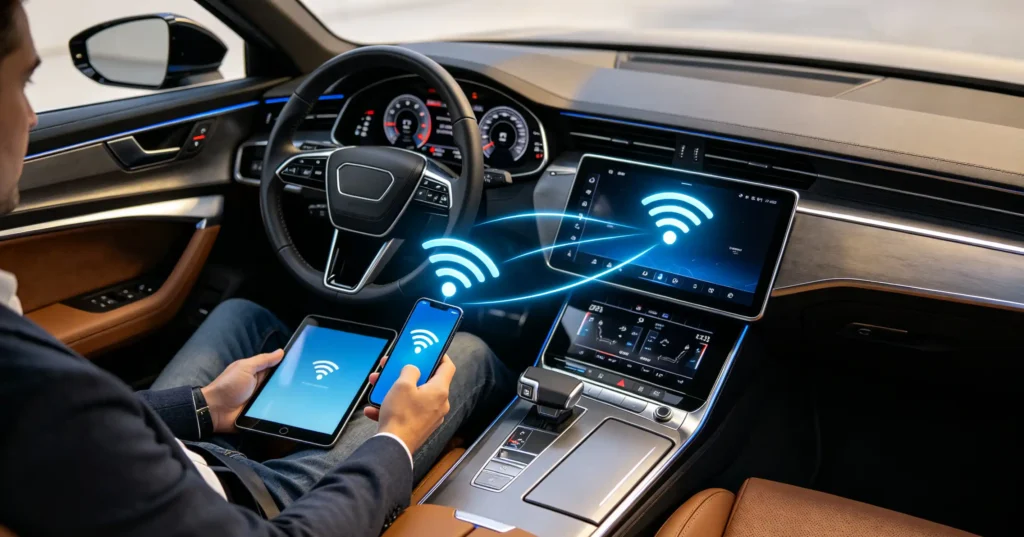
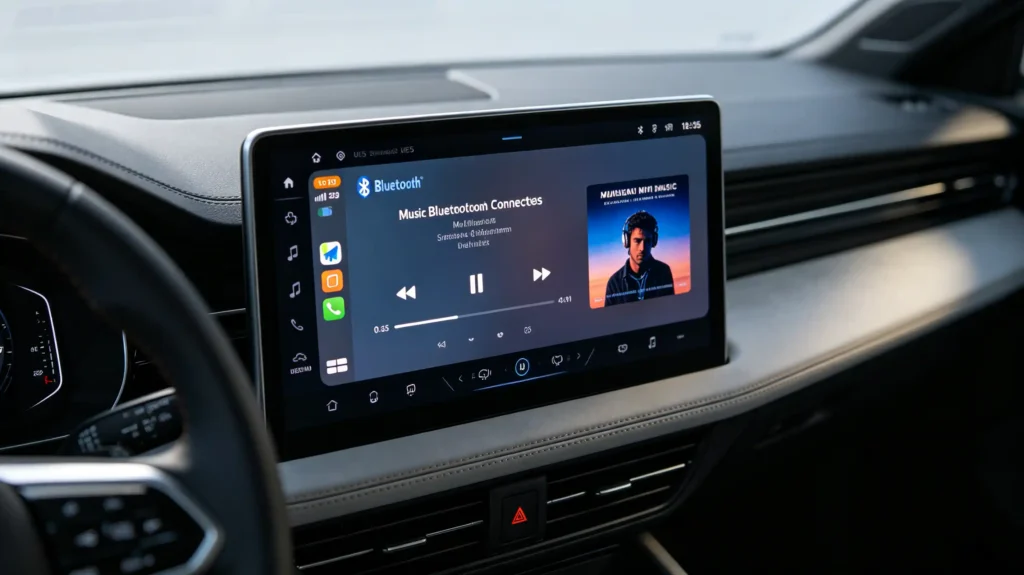
- Bluetooth — handles hands-free calling and audio streaming. Modern units support Bluetooth 5.0 for better range and lower power consumption.
- Wi-Fi — supports map downloads, app updates, and screen mirroring. Wi-Fi is also the primary channel for OTA updates in markets where cellular data is expensive.
- 4G/5G cellular — delivers live traffic data in some markets and enables real-time OTA updates without requiring a Wi-Fi connection.
- GPS/GLONASS — provides positioning accuracy. Support for multiple GNSS constellations (GPS, GLONASS, Galileo, BeiDou) improves accuracy in challenging environments like urban canyons and dense tree cover.
For fleet operators, connectivity features are particularly important because they enable real-time vehicle tracking, remote diagnostics, and driver behavior monitoring.
Component Sourcing and Customization
Reputable manufacturers source core components — SoCs, touch screens, CANBUS decoders — from long-term, authorized suppliers rather than the open spot market. This matters for consistency across large production runs. A manufacturer who changes component suppliers frequently is more likely to introduce quality variations that show up as warranty claims.
Customization is also standard practice in B2B procurement:
- RAM/ROM configuration — buyers can specify memory and storage capacity based on their target market’s needs. Markets requiring large offline map libraries may need more storage.
- Screen resolution and size — from standard 7-inch displays to large 15.6-inch vertical screens.
- Interface expansion — USB, HDMI, camera inputs, and other ports can be adjusted to match the vehicle’s requirements.
For buyers requiring custom UI, logo, or hardware configuration, OEM/ODM customization capabilities are available from manufacturers with in-house engineering teams.
Why Component Quality Matters for B2B Buyers
For a wholesaler importing hundreds or thousands of units, a 1% failure rate means dozens of returns, warranty claims, and frustrated installers. The initial cost savings from cheaper components are quickly erased by after-sales costs. This is why evaluating a supplier’s component sourcing and QC process is as important as comparing product specifications.
How Does a Car Navigation System Work Step by Step
The working process behind a car navigation system follows a consistent sequence, regardless of brand or platform. Understanding this sequence helps buyers diagnose performance issues and evaluate supplier claims about accuracy and responsiveness. For a step-by-step technical walkthrough from signal acquisition to turn-by-turn guidance, read our detailed guide on how does a car navigation system work.
Signal Acquisition and Positioning
It starts with GPS/GNSS signal acquisition. The antenna picks up signals from orbiting satellites, using several simultaneously to triangulate position. The more satellites the unit can lock onto, the more accurate the positioning.
From there, the system performs vehicle positioning and coordinate calculation, converting raw satellite data into a precise location. Modern units support multiple GNSS constellations — GPS, GLONASS, Galileo, BeiDou — which improves accuracy and reduces the chance of signal loss.
The quality of the GNSS receiver module determines how quickly the unit acquires a satellite lock (cold start time) and how well it maintains that lock in challenging environments like tunnels or dense urban areas.
Map Loading and Route Calculation
Once positioning is established, the unit moves to map data loading. It pulls relevant map tiles from onboard storage and displays the vehicle’s current position against the road network. Map data is stored on internal storage (ROM) or external SD cards, and larger map libraries require more storage.
When a driver inputs a destination, the system runs route calculation. Route calculation is a core navigation function. Read our route calculation and optimization guide for a complete breakdown. It evaluates possible paths based on distance, road type, and — where live connectivity is available — current traffic conditions. The speed of this calculation depends on the processor’s computing power and the efficiency of the navigation software.
Turn-by-Turn Guidance and CANBUS Sync
From there, the system delivers real-time turn-by-turn guidance, combining on-screen visual cues with voice prompts timed to upcoming maneuvers. The user interface design matters here: a well-designed UI presents information at a glance, reducing driver distraction.
In parallel, a well-integrated unit handles CANBUS communication. It pulls vehicle status data — steering wheel button presses, reverse gear signals, door sensor states — and syncs it with the display. This is how the navigation screen doubles as a vehicle information hub.
Why Integration Quality Matters
This last step is where integration quality separates systems meaningfully. A unit with shallow CANBUS support might only read basic signals. One with a properly developed decoder can synchronize dozens of vehicle-specific functions — which is precisely why CANBUS protocol depth is worth scrutinizing during supplier evaluation.
Main Types of Modern Car Navigation Systems
Wholesale car navigation systems on the market today break down along a few practical lines. Buyers typically need to make decisions across each of them. For a complete breakdown of how these systems are categorized by OS, integration method, and form factor, see our guide on types of car navigation systems.
By Operating System
The main split is Android-based versus Linux-based navigation.
- Android units offer broader app support, a more familiar interface, and easier customization. They are the dominant choice in markets where end users expect smartphone-like experiences.
- Linux units run leaner and suit budget-conscious volume orders where reliability and unit cost outweigh raw feature count. They are common in price-sensitive markets and basic fleet applications.
By Integration Method
Systems fall into OEM and aftermarket categories.
- OEM (factory-installed) — built into the vehicle during production. OEM units are designed for one specific vehicle model, with native CANBUS integration and factory-grade durability testing.
- Aftermarket (retrofitted) — installed after the vehicle leaves the factory, at a dealership or through a distributor network. Aftermarket makes up the bulk of the wholesale and import market most dealers operate in. For a detailed comparison of OEM vs aftermarket systems — including sourcing considerations for each — read our guide on OEM vs aftermarket car navigation.
By Form Factor
Options include:
- 1-DIN and 2-DIN standard sizes — the traditional form factors that fit most vehicles made in the last twenty years.
- Tesla-style vertical screens — popular on newer models, these portrait-oriented displays replace the entire center console area.
- Floating screen designs — screens that sit proud of the dashboard, often on a fixed or adjustable mount, common in premium aftermarket installations.
By Vehicle Compatibility
Buyers choose between:
- Universal 2-DIN units — fit a broad range of vehicles with a standard dash opening. One SKU covers many models, simplifying inventory management.
- Vehicle-specific custom-fit units — engineered around one model’s dashboard geometry and CANBUS protocol. These offer a cleaner finish and simpler installation at the cost of more complex inventory.
Core Functions & Practical Application Scenarios of Car Navigation
Beyond route guidance, modern navigation units carry a broad functional load. This shapes how they are marketed and sold.
Core Functions
GPS navigation with real-time traffic awareness and alternative routing remains the core function. Modern systems can reroute automatically based on changing traffic conditions, saving the driver time.
Multimedia playback — music, video, radio, Bluetooth audio — sits close behind in importance for end users. A navigation unit that cannot handle media playback feels incomplete to most buyers.
Vehicle information display covers air conditioning readouts, door status, and steering wheel control mapping.
Parking assistance through rear camera and sensor integration rounds out the safety picture. So do DVR (dash cam) integration and TPMS (tire pressure monitoring) — features most buyers now expect as standard.
Business Use Cases
These functions map onto distinct business scenarios:
- Fleet operators value CANBUS and DVR integration for vehicle monitoring. They want to track driver behavior, vehicle location, and maintenance needs from a single interface.
- Logistics and rental companies prioritize reliable navigation and rear camera safety across large vehicle counts. Downtime is expensive, so reliability matters more than feature richness.
- 4S dealership networks lean on the full feature set as a sales differentiator. An impressive navigation and infotainment package can help close a deal on a new vehicle.
- Cross-border wholesalers need multi-language support, regional radio frequency tuning, and export certifications to serve different markets with one hardware platform.
Traditional VS Modern Integrated Car Navigation Systems – Key Differences
The gap between older standalone GPS units and today’s integrated systems is wide. It is wide enough to change the buying conversation entirely.
Feature Comparison
| Feature | Traditional Standalone GPS | Modern Integrated Navigation System |
|---|---|---|
| Integration | Portable, windshield or dash-mounted, no vehicle connection | Fully integrated into dashboard, tied into CANBUS network |
| Updates | Manual map updates via USB/SD card | Over-the-air (OTA) firmware and map updates |
| Vehicle data | None | Steering wheel controls, air conditioning, door sensors, reversing camera |
| Connectivity | Offline or basic Bluetooth only | Bluetooth, Wi-Fi, 4G/5G |
| Screen | Small (4–7 inches) | Large (7–10+ inches), higher resolution |
| App support | None | Full app installation and updates |
Business Impact of OTA and Integration
For fleet operators and dealership networks, this shift carries real business weight.
OTA capability means firmware, UI, and vehicle protocol packages can be pushed remotely. That meaningfully reduces after-sales service costs compared to units that require physical returns for any update. A CANBUS compatibility issue discovered after an order can be patched across all installed units without a single physical return.
Integration with vehicle data means the navigation system becomes a single point of information for the driver. Instead of looking at multiple displays, the driver sees navigation, climate, and sensor data on one screen. This improves safety and reduces driver distraction.
That is one of the more concrete arguments for choosing a modern integrated system — and a proven car navigation system manufacturer behind it — when evaluating total cost of ownership.
Key Evaluation Factors for B2B Buyers Selecting Car Navigation Solutions
Once the product category is clear, the harder question for B2B buyers is supplier selection. A few factors consistently separate a dependable long-term partner from a risky one.
Supplier Structure
A factory-direct car navigation system manufacturer generally offers more competitive pricing and tighter production control than a trading company reselling third-party stock. That is because it manages everything from SMT assembly through final QC in-house.
Ask about production capacity and R&D headcount. A manufacturer with dedicated assembly lines and in-house Android and Linux development teams can support customization that a reseller cannot. If a supplier cannot describe their engineering team’s composition, that is worth noting.
Quality Control
Quality control deserves close attention. Look for suppliers running a full inspection chain:
- Incoming material QC (IQC) — components are tested before assembly
- In-process patrol inspection (IPQC) — quality checks during production
- Function testing on finished units (FQC) — every unit is tested before packaging
- Pre-shipment sampling (OQC) — random sampling before shipping
Extended burn-in and environmental testing matter too. A 48-hour continuous aging test catches hardware defects that wouldn’t show up on a quick function check. High-temperature durability testing and road-condition vibration testing simulate real-world conditions and surface failures before units reach the field.
Also confirm which certification standards, such as CE, FCC, RoHS, or ISO 9001, apply to your target export market. Verify documentation directly rather than assuming compliance.
Customization Support
Customization support is where OEM/ODM relationships either work or fail. Confirm what is available:
- UI customization — launcher layout, icon sets, default apps
- Brand logo and boot animation — your brand appears when the unit powers on
- Packaging design — retail-ready packaging that matches your brand
- Hardware configuration — RAM/ROM, screen size, interface ports
- Software-level function changes — feature enable/disable, region-specific settings
For buyers requiring custom UI, logo, or hardware configuration, OEM/ODM customization capabilities are available from manufacturers with in-house engineering teams.
Technical Support and CANBUS Development
Technical support and CANBUS development matter especially for buyers targeting specific vehicle models.
A supplier with in-house decoder development adapts to new vehicle brands faster than one relying on third-party protocol libraries. When a customer requests support for a less common vehicle, in-house development means faster turnaround.
OTA capability and long-term spare parts availability further reduce after-sales risk. Units that can be updated remotely generate fewer support calls and returns than units that require physical service.
Market Adaptability and Delivery
Market adaptability — multi-language support and regional frequency adaptation — rounds out the checklist, alongside delivery reliability.
Key questions to ask:
- Does the supplier support the languages required in your target market?
- Can they tune radio frequencies for local broadcast standards?
- What is the realistic lead time for custom orders?
- What is the MOQ flexibility for trial orders?
Expect sample lead times of roughly two to three weeks for custom orders. Treat suppliers promising dramatically shorter timelines with some caution — rushed production often means skipped QC steps.
Why This Evaluation Framework Matters
For B2B buyers, the cost of a bad supplier relationship is not just the order value. It is the installation labor wasted on incompatible units. It is the customer complaints and returns. It is the damage to your brand reputation. A thorough evaluation process reduces all of these risks.
FAQ
What is the core difference between OEM and aftermarket car navigation systems for bulk procurement?
OEM navigation is built into a vehicle during factory production. It involves close collaboration with an automaker on specifications and CANBUS integration. Aftermarket navigation is manufactured independently and retrofitted after the vehicle leaves the factory — the model most dealers, wholesalers, and importers work within. For bulk procurement, aftermarket sourcing generally offers more flexibility on customization, MOQ, and delivery timelines.
What core certification standards do exported car navigation products need to meet?
Requirements vary by destination market. Buyers commonly need to confirm certifications such as CE (Europe), FCC (North America), RoHS, and ISO 9001 where applicable. Rather than assuming compliance, request current certification documentation directly and confirm it matches your target country’s import requirements before placing a bulk order.
Can modern integrated car navigation systems support customized function development for automakers?
Yes. For custom Android car stereo OEM projects, manufacturers with in-house R&D capability can typically modify system software, adapt CANBUS protocols for specific vehicle models, and adjust UI and boot animations. They can also customize hardware configurations like RAM/ROM and interface layout. The depth of support depends heavily on whether the supplier has dedicated engineering teams for Android/Linux development, PCB design, and CANBUS adaptation.
What key technical indicators should B2B importers prioritize when sampling navigation systems?
Focus on CANBUS compatibility with your target vehicle models, GPS positioning accuracy, and touchscreen responsiveness. Aging test results matter too — 48-hour burn-in is a reasonable benchmark — along with OTA update functionality. Also confirm multi-language support and regional frequency adaptation match your export markets before committing to a full production run.
Is Android-based car navigation more cost-effective for large-volume wholesale orders?
It depends on the target market. Android systems generally cost more per unit due to broader app support and higher processing requirements, but they align better with markets where end users expect app flexibility. Linux-based systems tend to offer a lower unit cost at volume, making them attractive for price-sensitive markets. The more cost-effective option is the one matched to your buyers’ actual feature expectations — not the platform with the lowest sticker price alone.
How important is the CANBUS decoder in a car navigation system for B2B buyers?
Critical. The CANBUS decoder determines whether steering wheel controls, climate display, parking sensors, and other factory features continue to work after installation. A unit with a well-developed decoder preserves most original functions. One with poor decoder support creates installation complaints, returns, and after-sales headaches. For buyers sourcing for multiple vehicle brands, a supplier with in-house CANBUS development covering 200+ models is a meaningful advantage.
What are the most common quality issues with aftermarket car navigation systems?
The most frequent issues are CANBUS compatibility failures, poor GPS signal lock, touchscreen unresponsiveness, and premature power supply failure. All of these are preventable with proper component sourcing, thorough QC testing, and a documented aging process. Buyers should ask suppliers about their failure rates and request test reports rather than relying on marketing claims.
Conclusion
A car navigation system today is far more than a route-finding tool. It is an integrated hub combining positioning, vehicle data, and connectivity in one unit.
Understanding its components, working process, and types gives B2B buyers a solid foundation for the harder work: evaluating suppliers on production capability, quality control, customization support, and delivery reliability. Before committing to a bulk order, request samples and verify these factors directly with your prospective manufacturer.
The navigation market continues to evolve. Android head units are replacing older platforms. CANBUS integration is becoming deeper and more complex. OTA updates are shifting the economics of after-sales support. Buyers who understand these trends and evaluate suppliers accordingly will be better positioned to serve their customers and grow their business.
Sourcing car navigation systems for your business? As a factory-direct manufacturer supporting OEM/ODM customization, CANBUS integration, and wholesale orders, we are ready to help. Browse our Android Car Navigation Systems product lineup to see available hardware configurations, or contact our team to discuss your requirements and request a sample.