Type a destination into a navigation system. A route appears within seconds. But what actually happens between the tap and the result involves weighing thousands of possible paths against several competing criteria simultaneously. Most drivers never think about this process unless the route it produces seems obviously wrong. That is usually the moment a dealer gets a call. The caller asks why the system sent someone the “long way.”
This guide breaks down how route calculation and optimization actually work. It covers what determines the routes a system offers. It also covers what buyers should evaluate when comparing navigation systems on this specific capability. For a foundational overview of navigation systems, see our what is a car navigation system guide.
What Happens When a Navigation System Calculates a Route
The Starting Point
Route calculation starts with the road network stored in the system’s map data. This is a digital representation of every road segment, intersection, speed limit, and turn restriction in the coverage area.
The Search Process
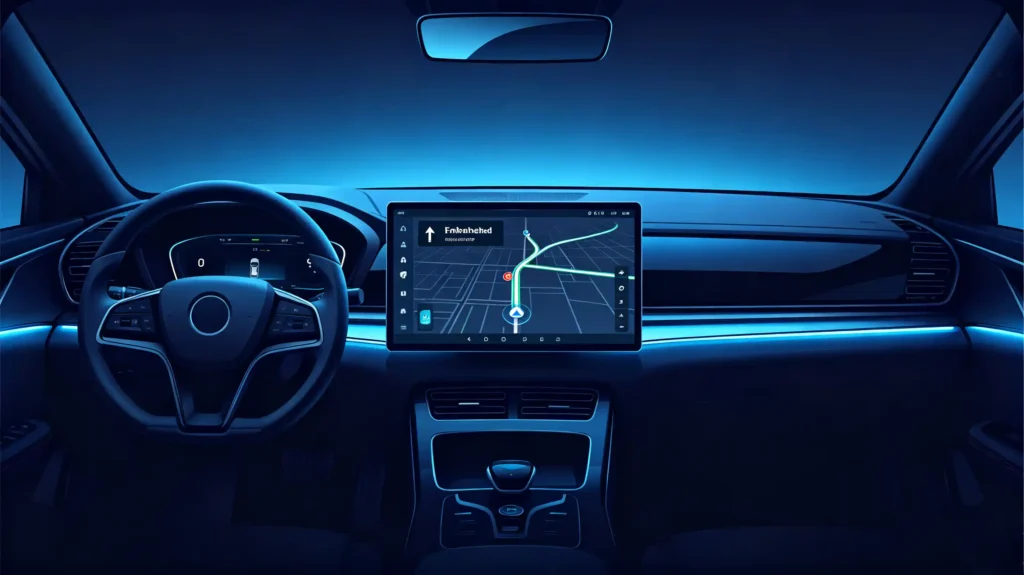
When a destination is entered, the system’s routing engine searches through this network. It finds a path from the current position to the destination. It uses pathfinding logic that evaluates combinations of road segments. It weighs distance, travel time, and road type.
More Than Shortest Distance
This is not simply finding the geographically shortest path. That would frequently produce routes down narrow residential streets or roads with low speed limits. These take longer to drive than a slightly longer route on a highway. Instead, route calculation weighs the trade-off between distance and travel time. It generally favors faster overall routes even when they cover more physical distance. This better matches what most drivers actually want from a “best route” recommendation.
Route Optimization Factors: What the System Actually Weighs
Beyond Basic Distance and Speed
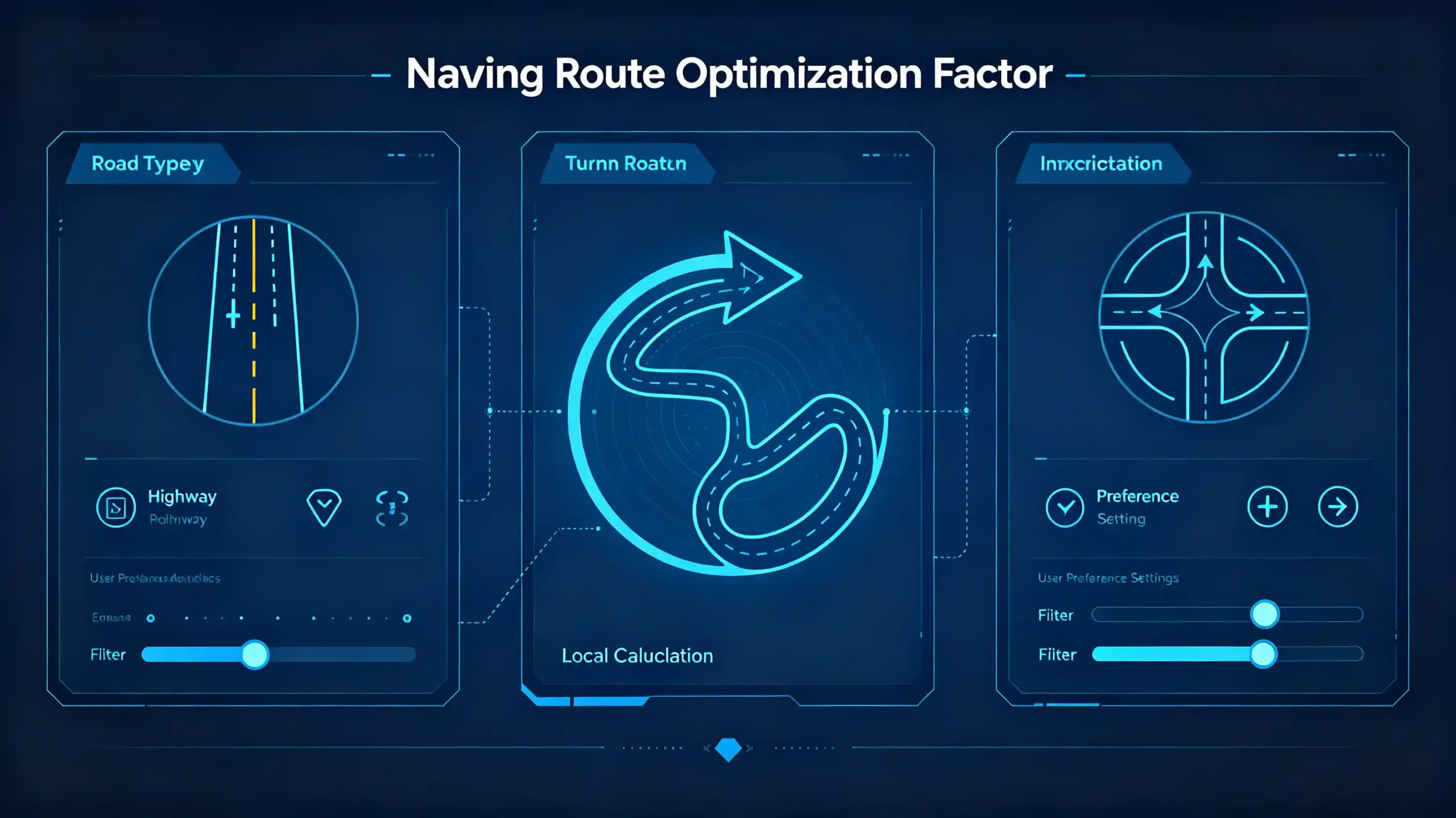
Several additional factors shape which route a system ultimately recommends. Understanding these helps explain why two systems can suggest different paths for the same trip.
Road Type and Classification
Road type and classification matter significantly. Highways generally allow faster average speeds than urban arterial roads. A routing engine typically favors highway segments even when they add distance. This is unless a driver has specifically requested to avoid them.
Turn Complexity
Turn complexity factors in too. A route requiring numerous turns and lane changes through dense intersections can take longer in practice than the raw distance and speed limit numbers suggest. More sophisticated routing engines account for this. They do not treat every turn as instantaneous.
Driver Preferences
Driver preferences also shape the calculation directly. Most systems let a driver choose to avoid tolls. They can avoid highways. They can prioritize fuel-efficient routing that favors steadier speeds over stop-and-go city driving. Fuel-efficient or “eco” route options specifically account for how driving patterns affect fuel consumption. Sometimes they recommend a route that is not the fastest but reduces the amount of braking and acceleration involved. For more on navigation features, see our car navigation features guide.
Multi-Route Navigation: Why Systems Offer More Than One Path
The Trade-Off Problem
Many navigation systems present two or three route options rather than a single recommendation. This reflects a genuine limitation in trying to reduce a complex trade-off to one “best” answer.
Different Priorities
A fastest route, a shortest-distance route, and a route avoiding tolls or highways each optimize for a different priority. No single option is objectively correct for every driver in every situation.
What to Check
For B2B buyers, multi-route capability is worth checking explicitly. Do not assume every navigation system offers it. A basic implementation might calculate only a single route with no alternatives. This limits flexibility for drivers who have specific preferences. For more on real-time route options, see our real-time traffic updates guide. A delivery driver avoiding tolls to control costs benefits from options. A driver who prefers highway routes over navigating unfamiliar city streets also benefits. Having options is meaningfully better than a single fixed recommendation.

Real-Time Recalculation: What Happens When a Driver Goes Off-Route
Common and Expected
Missing a turn or deviating from the planned route is common enough that recalculation behavior significantly affects how usable a navigation system feels in practice.
What a Well-Implemented System Does
A well-implemented system detects the deviation quickly. It recalculates a new route from the vehicle’s current position within a few seconds. It updates guidance without requiring the driver to manually restart the process.
What Affects Recalculation
Recalculation speed and accuracy depend partly on whether the system has live traffic data informing the new route. It also depends on whether it is working purely from static map data and road network logic. A system with real-time traffic awareness can route around a newly discovered slowdown during recalculation. A purely offline system simply recalculates the best static path. It does not account for current conditions.
B2B Considerations for Route Planning Capability in Navigation Systems
A Less Visible but Critical Spec
For dealers, wholesalers, and OEM/ODM buyers, route planning quality is a less visible spec than screen size or processor speed. But it directly affects how satisfied customers are with day-to-day use of the system.
Customization for Regional Road Networks
The buyer needs a routing engine that performs well against the specific road network characteristics of the target market. Dense urban grids in some regions. Sparse rural highway networks in others. Each places different demands on how a routing algorithm should weigh distance against road type. Companies usually evaluate whether a supplier’s map data and software configuration can be adjusted for a target region’s actual road conditions. They do not assume a routing engine tuned for one market’s road network performs equally well everywhere.
Supplier Evaluation Factors
Buyers comparing navigation systems for route planning quality tend to check a consistent set of things. Whether the system offers multiple route options or only a single fixed recommendation. How quickly and accurately it recalculates after a missed turn. Whether route preferences like avoiding tolls or highways are genuinely configurable. Whether the underlying map data reflects the target market’s actual road network accurately enough to avoid obviously poor routing suggestions.
Test Before Committing
Testing this directly on a sample unit is essential. Do not rely on a spec sheet claim of “smart routing.” Driving a sample through a market’s typical road conditions reveals more than any written description can. A dense city center. A rural stretch. A highway interchange. This shows whether the routing engine actually performs well locally. Or it shows it was tuned primarily around a different region’s road network. This kind of hands-on evaluation is worth the time before committing to a bulk order destined for a market where road conditions differ meaningfully from where the system was originally developed.
FAQ
Why does my navigation system sometimes suggest a longer route instead of the shortest one?
Route calculation generally optimizes for travel time rather than pure distance. A longer highway route often takes less time than a shorter route through slower city streets. The system is weighing road type, speed limits, and turn complexity together. It is not just measuring which path covers fewer kilometers. If you specifically want the shortest distance regardless of time, most systems offer that as a selectable route option.
What’s the difference between fastest, shortest, and eco route options?
Fastest routes prioritize minimizing total travel time. They generally favor highways even if the distance is longer. Shortest routes prioritize minimum distance regardless of travel time. Eco routes factor in fuel efficiency. Sometimes they recommend a route with steadier speeds and less stop-and-go driving. This is over one that is technically fastest but involves more braking and acceleration.
How quickly should a navigation system recalculate after I miss a turn?
A well-performing system typically recalculates within a few seconds of detecting the deviation. It does not require manual restart. Recalculation speed can vary based on whether the system is factoring in live traffic data or working from static map data alone. A noticeably slow or inaccurate recalculation is worth flagging as a potential software or hardware performance issue. It is not something to tolerate as normal behavior.
Should I look for multi-route options when sourcing navigation systems for my dealership?
It depends on your customer base. Multi-route capability is generally a meaningful differentiator worth checking. Do not assume every system includes it. Customers with specific preferences — avoiding tolls, preferring highways, prioritizing fuel efficiency — benefit from having selectable route options. A single fixed recommendation is less flexible. This can affect customer satisfaction after the sale.
Conclusion
Whether your customers need multiple route options for cost-conscious driving or fast, accurate recalculation for unpredictable routes, matching route planning capability to how your target market actually drives makes a real difference in customer satisfaction.