An In-Vehicle Infotainment (IVI) system is an integrated electronic platform that combines navigation, multimedia, communication, vehicle information, connectivity, and user interaction in one in-dash system.
Unlike a traditional car stereo that mainly handles audio, or a standalone navigation device that focuses on route guidance, an IVI system works as a broader computing and interaction platform for the vehicle. It can connect with vehicle electronics, display vehicle information, manage multimedia functions, and provide different forms of smartphone and network connectivity.
For B2B buyers, understanding the complete IVI structure is important before selecting a supplier. The processor, memory, display, operating system, CAN Bus integration, software customization, quality control, and long-term technical support can all affect the final product.
This guide explains how an IVI system is structured, what components it contains, where it is used, and what buyers should evaluate when sourcing IVI products.
What Is an In-Vehicle Infotainment (IVI) System? Core Definition & System Architecture
An in vehicle infotainment system is a unified vehicle platform that brings several functions together through one central interface. These functions commonly include navigation, audio and video playback, vehicle information, communication, smartphone integration, and connectivity.
The main difference between IVI and a basic car stereo is system integration. A car stereo is primarily designed around audio. A navigation device is mainly designed around positioning and route guidance. An IVI platform combines these functions and can also communicate with the vehicle’s electronic systems.
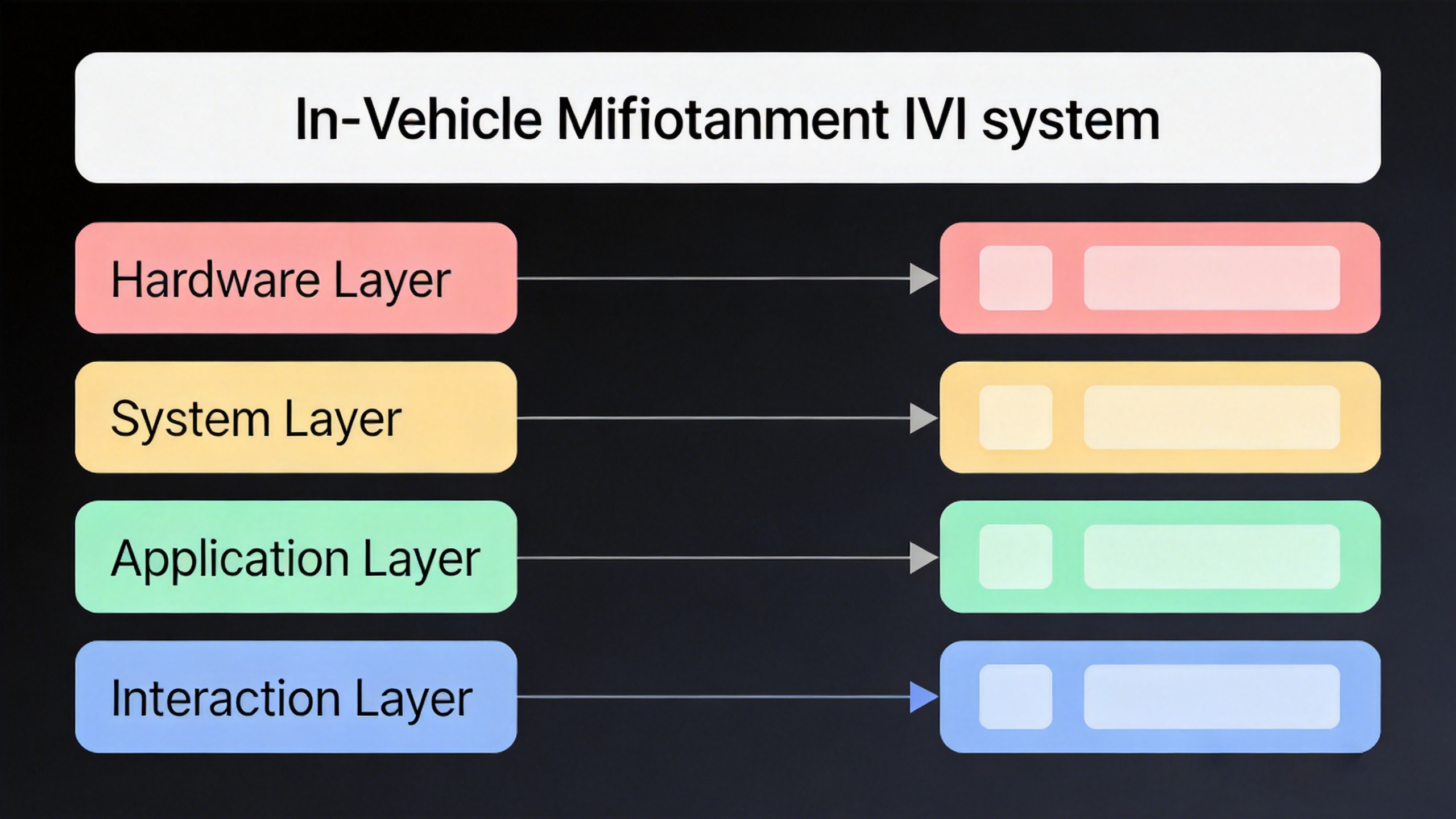
A typical IVI architecture can be viewed through four layers:
- Hardware layer: Includes the SoC processor, RAM and storage, touchscreen display, GPS/GNSS module, CAN Bus interface, audio hardware, and connectivity modules.
- System layer: Includes the operating system, firmware, drivers, and other software required to control the hardware.
- Application layer: Includes navigation, multimedia, vehicle settings, smartphone integration, and OTA update functions.
- Interaction layer: Includes touchscreen controls, voice control, steering wheel controls, and physical buttons.
The CAN Bus interface is especially important in vehicle applications. Depending on the vehicle and system configuration, it can allow the IVI unit to receive information such as vehicle speed, reverse status, steering wheel commands, climate information, and door or trunk status.
Android and Linux are two common operating system approaches for IVI platforms. Android provides a flexible application environment and extensive customization possibilities. Linux can provide a lightweight embedded platform for applications where stability, efficiency, and controlled functionality are priorities. For a detailed OS comparison for infotainment systems, see our Android vs Linux for automotive infotainment guide.
Core Hardware Components of IVI Systems
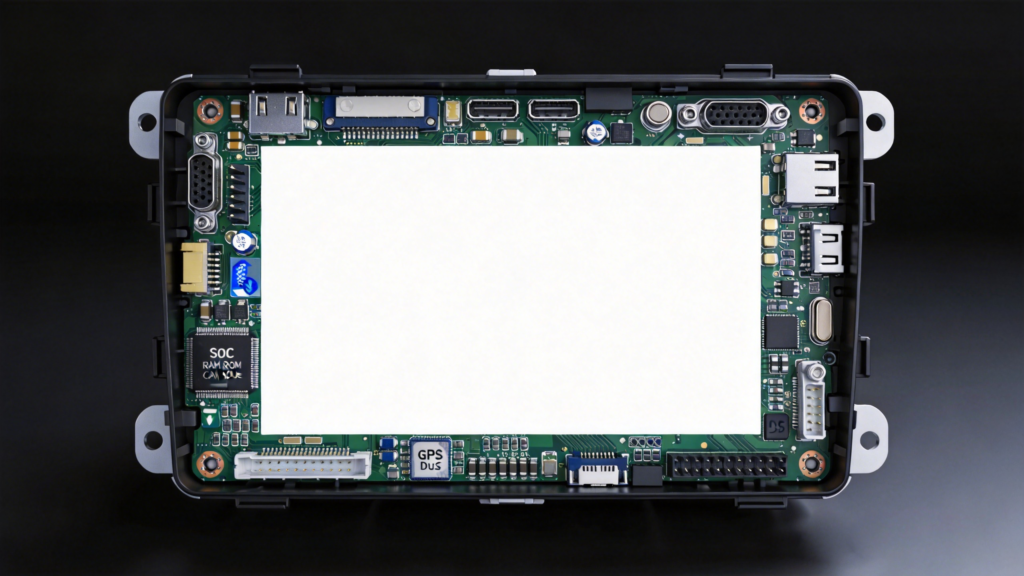
A complete IVI platform depends on several hardware modules working together. For B2B procurement, looking at the screen alone is not enough. The processor, memory, vehicle interface, connectivity hardware, and audio architecture all influence the final system.
- SoC processor: The processor acts as the computing center of the IVI system. It handles navigation, media processing, interface rendering, and multitasking. Processor capability directly affects system responsiveness and supported functions.
- RAM and storage: RAM supports running applications and multitasking. Internal storage holds the operating system, applications, maps, and other data. The right configuration depends on the intended application and software requirements.
- Touchscreen display: The touchscreen is the primary HMI interface. Screen size, resolution, panel technology, brightness, and touch response all affect the user experience.
- GPS/GNSS module: The positioning module receives satellite signals for navigation and location services. Support for multiple satellite constellations can improve positioning availability in different markets.
- CAN Bus decoder: The CAN Bus interface connects the IVI system with vehicle electronic systems. Correct integration can preserve functions such as steering wheel controls, reverse triggers, and vehicle information display.
- Audio processing hardware: Amplifiers, DSP components, and audio outputs determine how the system handles sound and connects to the vehicle’s audio system.
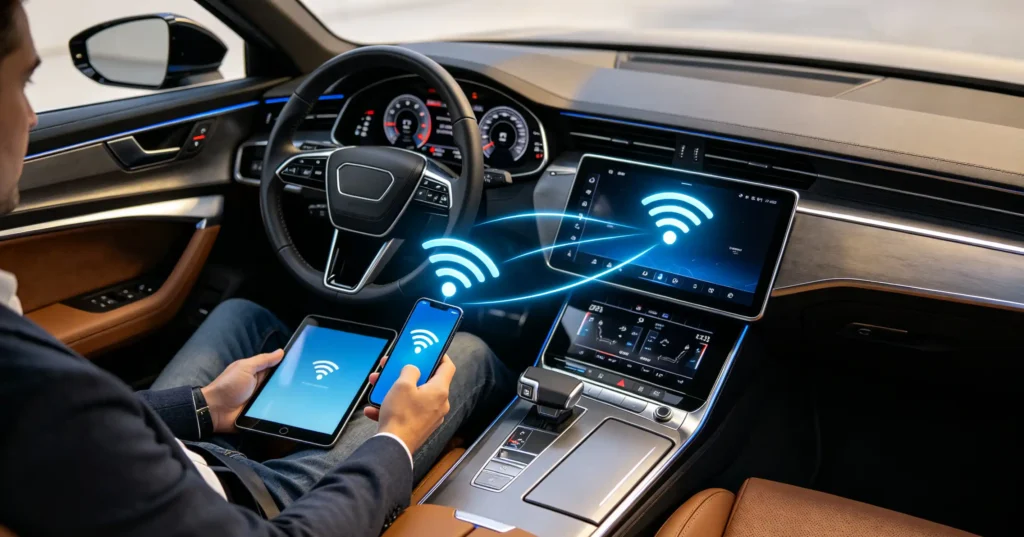
- Connectivity hardware: Wi-Fi, Bluetooth, USB, and optional cellular connectivity support functions such as wireless communication, online services, updates, and smartphone integration.
For commercial projects, these components should be evaluated as one system rather than as isolated specifications. A high-performance processor does not compensate for poor vehicle compatibility or unstable software.
Core Software & Functional Modules of IVI Systems
Hardware provides the computing foundation, but software determines how the IVI system operates in daily use. A commercial IVI platform normally combines several functional modules into one user interface.
- HMI infotainment: The Human-Machine Interface connects the driver or passenger with the system. It can include touchscreen menus, voice control, steering wheel controls, and physical buttons. Clear menu structures and responsive interaction are particularly important in vehicle applications.
- Navigation and positioning: GPS/GNSS information supports route planning, turn-by-turn guidance, points of interest, and other navigation functions. Online connectivity can also support services that require current data.
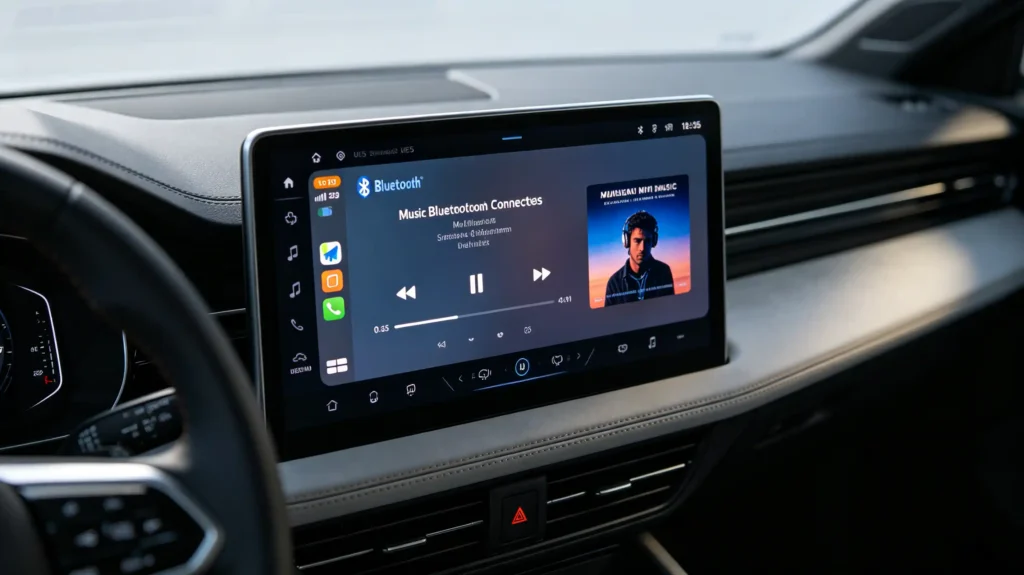
- Multimedia and entertainment: Audio playback, video playback, radio, Bluetooth audio, and compatible applications can be combined within the same platform.
- Vehicle connectivity: CAN Bus communication can transfer vehicle information to the IVI system. Depending on the vehicle, this may include steering wheel commands, reverse status, climate information, speed signals, and door information.
- Smartphone integration: Wired or wireless phone projection and screen mirroring can connect compatible smartphones with the vehicle display. Bluetooth can also support calling and messaging functions.
- Connectivity and OTA: Wi-Fi, Bluetooth, USB, and optional cellular connectivity can support data services and remote software updates.
- Customization and branding: OEM and ODM projects may require customized interfaces, startup screens, logos, icons, languages, radio frequencies, or system functions.
For B2B projects, customization can be particularly valuable. A supplier with software and CAN Bus development capabilities can adapt the system to different vehicle requirements instead of treating every project as a standard retail product.
B2B Application Scenarios & Commercial Value of IVI Systems
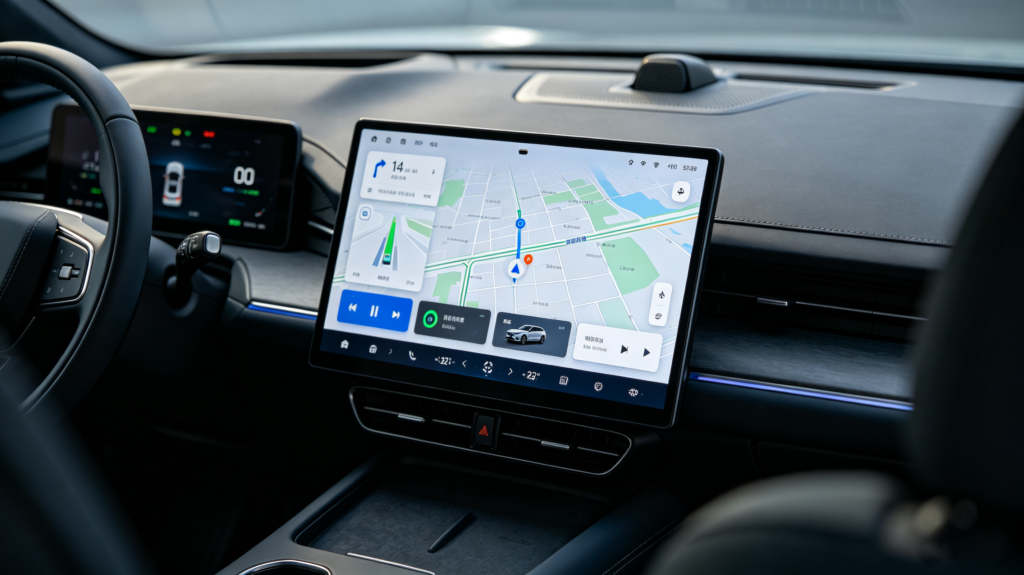
IVI systems can serve different commercial purposes depending on the buyer’s business model.
4S dealership upgrades: A dealership may use IVI systems as vehicle upgrade products. The system can be combined with compatible cameras, DVRs, TPMS modules, and other accessories. Vehicle-specific CAN Bus integration can also help retain selected original vehicle functions.
Wholesale and import: Importers often need products that can serve several regional markets. Multi-language support, regional radio frequency configuration, packaging customization, and market-specific hardware options can make one platform easier to adapt for different countries.
Fleet and commercial vehicles: Fleet operators may require navigation, vehicle information, cameras, connectivity, and other functions in one platform. Integration requirements depend heavily on the vehicle and fleet management system.
OEM and ODM projects: Automakers and automotive electronics companies may require customized hardware, software, user interfaces, branding, and vehicle-specific integration. OEM/ODM development allows the product to be adapted around a specific market or vehicle program.
For a B2B buyer, the commercial value is not simply the number of functions on the specification sheet. A more useful question is whether the supplier can deliver consistent hardware, stable software, reliable vehicle compatibility, customization, and after-sales support across the required order volume.
Core Evaluation Standards for IVI System Sourcing
Selecting an IVI supplier requires more than comparing processor and screen specifications. A practical B2B evaluation should cover at least five areas.
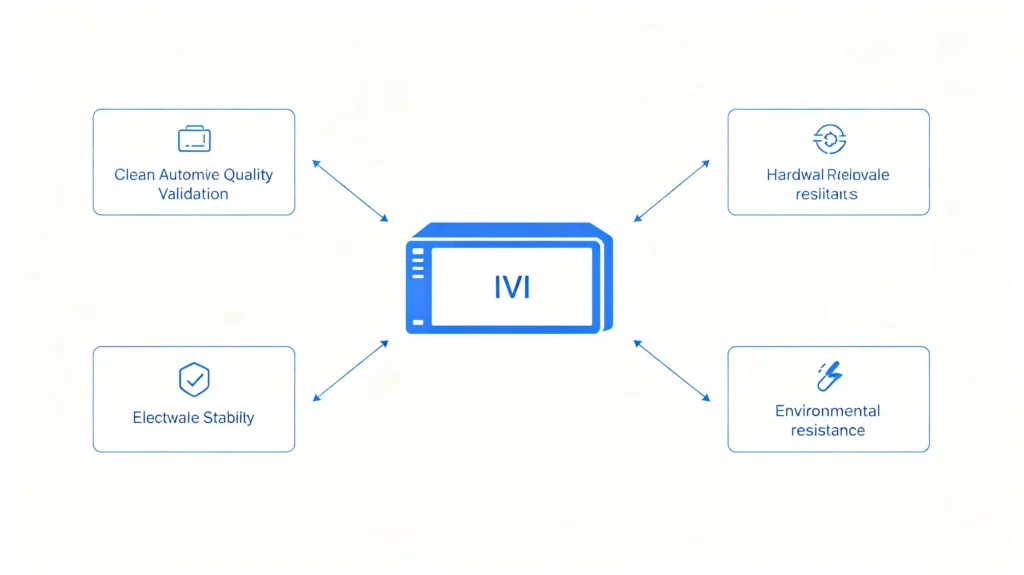
- Hardware quality: Evaluate processor configuration, RAM and storage, display resolution, panel technology, GPS/GNSS performance, interfaces, and overall hardware design.
- Software stability: Check the operating system, system responsiveness, application compatibility, update capability, language support, and customization options.
- Vehicle compatibility: Confirm supported vehicle models and the supplier’s CAN Bus development capability. Ask which original functions can be retained and how new vehicle adaptations are handled.
- QC and reliability: Review the supplier’s inspection process, aging tests, temperature testing, vibration testing, and final inspection procedures.
- Certification and compliance: Depending on the destination market and product configuration, buyers should verify applicable requirements and request the supplier’s relevant documentation before placing a commercial order.
Supplier capability also matters. Production capacity, R&D resources, technical support, spare parts availability, and after-sales response can become important after the first shipment.
For example, Rungrace operates a 3,000㎡ factory with dedicated production and testing areas. Its quality process includes incoming inspection, in-process inspection, functional inspection, finished-product inspection, and a 48-hour continuous aging test. The company also supports OEM and ODM projects, software customization, hardware customization, UI customization, and CAN Bus protocol development.
IVI Technology Trends & Industry Development Directions
IVI technology is moving toward greater system integration and connectivity. Several trends are particularly relevant to B2B buyers planning future product programs.
- Smart cockpit integration: IVI functions are increasingly connected with other digital vehicle systems instead of operating as isolated devices.
- Larger and multiple displays: Larger screens and multi-display configurations create new requirements for interface design, processing performance, and system integration.
- Enhanced connectivity: Wi-Fi, cellular connectivity, cloud services, and OTA technologies can support connected vehicle functions and remote software maintenance.
- Voice and AI functions: More natural voice interaction and intelligent software features are expanding the role of the IVI system beyond basic touchscreen control.
- Open software ecosystems: Android-based platforms provide flexible software development and customization options for different markets and applications.
These changes also affect supplier selection. B2B buyers should consider whether a supplier has the development capability to update software, adapt vehicle protocols, customize interfaces, and support future product revisions.
Rungrace’s R&D capabilities include Android and embedded Linux development, hardware and PCB design, UI development, firmware development, CAN Bus protocol development, and OTA development. These capabilities support customized automotive electronics projects where hardware and software need to evolve together.
IVI Content Hub: Complete Guides & Solutions
IVI covers a broad technical field, so one article cannot answer every detailed sourcing question. This page serves as the starting point for understanding the overall system.
Foundational guides
Hardware and specification guides
- Android Head Unit Processor Guide: Snapdragon vs MediaTek
- IPS vs QLED Car Display
- Android Car Stereo RAM and Storage Guide
- 1 DIN vs 2 DIN Android Head Unit
Sourcing and selection guides
- How to Choose an Android Head Unit for Your Vehicle?
- How to Choose a Car Navigation System Supplier
- What Is Double DIN?
Technology guides
- CAN Bus Explained
- Voice Navigation Guide for Car Stereos
- DSP Amplifier in Car Stereo
For buyers who are already comparing suppliers, the next step is to evaluate the supplier’s product capabilities, customization options, vehicle compatibility, quality process, and technical support.
FAQ
What is the core difference between an IVI system and a regular Android car stereo?
An IVI system is defined by system-level integration rather than simply using an Android operating system. It can combine navigation, multimedia, HMI, connectivity, smartphone integration, and vehicle data within one platform. An Android car stereo can be one type of IVI product, but the actual capabilities depend on its hardware, software, CAN Bus integration, and vehicle compatibility.
What certifications should buyers check before exporting IVI systems?
The exact requirements depend on the destination market, product configuration, wireless functions, electrical characteristics, and applicable regulations. Buyers should ask suppliers for current compliance documentation relevant to the target market rather than assuming one certificate covers every application. For European and North American projects, applicable requirements should be confirmed before mass production.
Can an IVI system retain the original vehicle’s factory functions?
It can retain selected original functions when the hardware and vehicle communication protocols support them. CAN Bus integration may allow functions such as steering wheel controls, reverse triggers, climate information, or other vehicle data to remain available. However, compatibility is vehicle-specific, so buyers should confirm the exact functions for each target vehicle before ordering.
What hardware configuration is important for a commercial IVI system?
There is no single configuration suitable for every project. Buyers should evaluate the processor, RAM and storage, display, GPS/GNSS module, CAN Bus interface, audio hardware, and connectivity together. The correct configuration should match the required applications, vehicle environment, target market, and expected product lifecycle.
What are common after-sales issues with bulk IVI orders?
Common issues can include vehicle compatibility problems, wiring or CAN Bus communication errors, software bugs, display problems, and configuration differences between vehicle models. A supplier with technical support, firmware updates, spare parts availability, and structured troubleshooting can reduce the impact of these issues during long-term cooperation.
Choose the Right IVI Partner for Your B2B Project
The right IVI system is not simply the device with the highest specification. B2B buyers need a platform that balances hardware performance, software stability, vehicle compatibility, customization, quality control, and long-term supplier support.
If you are sourcing standard IVI systems or developing a customized OEM/ODM project, evaluate the supplier’s complete technical and production capabilities before making a purchasing decision.
Contact our team to discuss your IVI system requirements, vehicle compatibility, customization needs, and target market.