Why This Distinction Matters for Buyers
“OEM head unit” and “aftermarket head unit” get used almost interchangeably in casual conversation. That looseness costs buyers when it’s time to actually place an order. The two aren’t different tiers of the same product. They’re built for entirely different purposes. Confusing them leads to sourcing the wrong thing for your actual business model.
This guide clears up the definitions. It compares the two across function, hardware, and cost. It also maps each type to the B2B scenario where it genuinely makes sense.
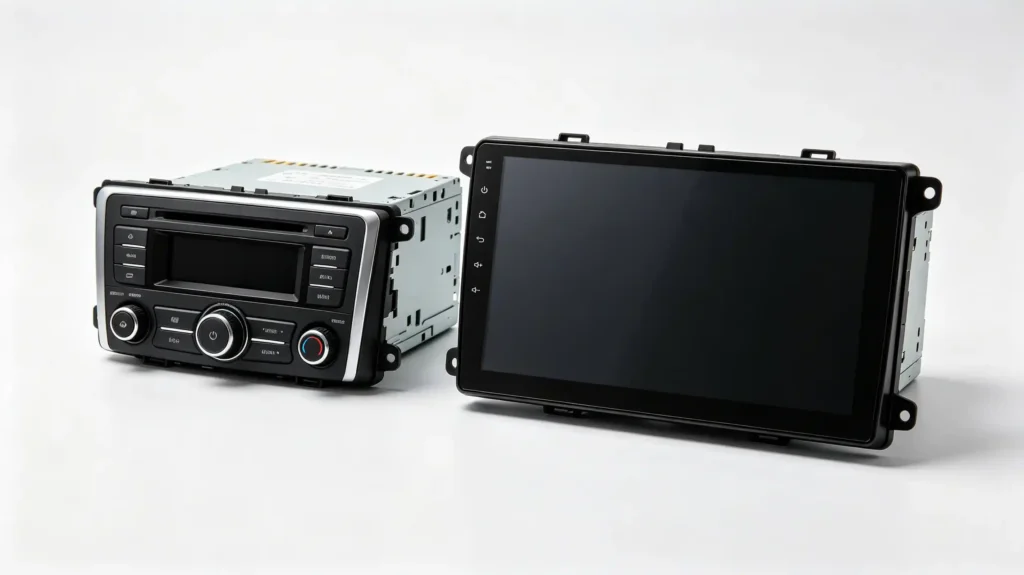
Core Definitions: OEM Head Unit vs Aftermarket Car Stereo
What Is an OEM Head Unit?
An OEM head unit — Original Equipment Manufacturer — is installed during vehicle production. It is built specifically for one make and model. Its CAN Bus protocols are native to that vehicle platform from day one. They are not adapted after the fact.
What Is an Aftermarket Car Stereo?
An aftermarket car stereo works differently. It is a replacement unit installed after the vehicle leaves the factory. It is designed to fit a range of vehicles through universal 2-DIN sizing or vehicle-specific fit kits. It relies on CAN Bus adapters to talk to whatever vehicle it ends up in.
For a complete technical breakdown of the Android-based systems that dominate the aftermarket category, see our full guide to Android Head Units.
The Essential Difference
The essential difference comes down to design philosophy. OEM is vehicle-first — built for one platform. Aftermarket is product-first — built to fit many. Production origin follows that same logic. OEM units move through an automaker’s own supply chain. Aftermarket units come from independent manufacturers. Sometimes they come from the very same factories, just building to different specifications.
Functional positioning reflects the split too. OEM prioritizes integration and reliability above all else. Aftermarket prioritizes feature richness, customization, and cost-effectiveness.
Functional Scope Comparison: Factory Navigation vs Aftermarket Android Head Unit
| Dimension | OEM Factory Navigation | Aftermarket Android Head Unit |
|---|---|---|
| Navigation | Proprietary, factory maps | Google Maps, Waze, offline options |
| App installation | Not supported | Full Android OS, open app ecosystem |
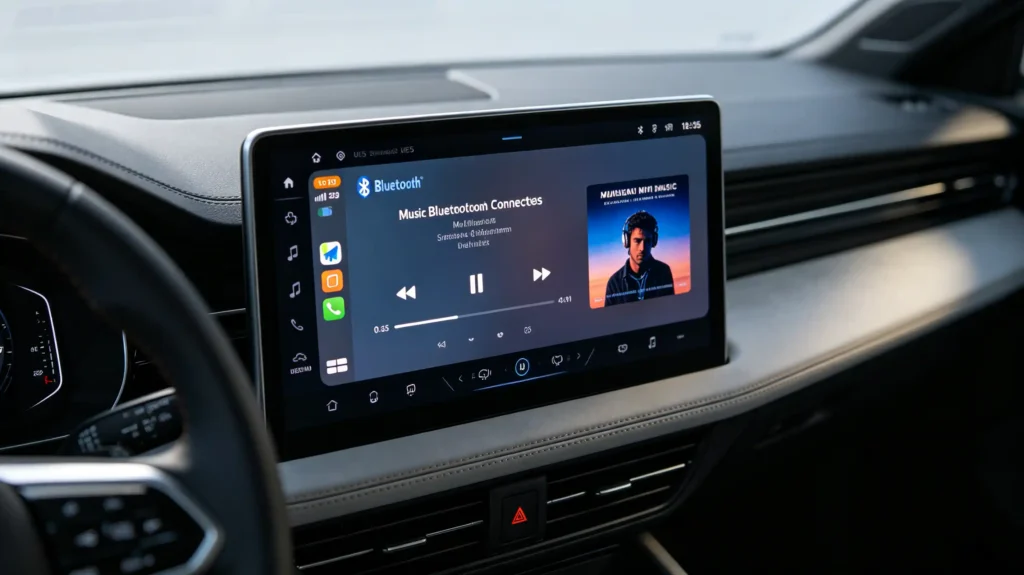
| Media playback | Limited | Broad — audio, video, streaming |
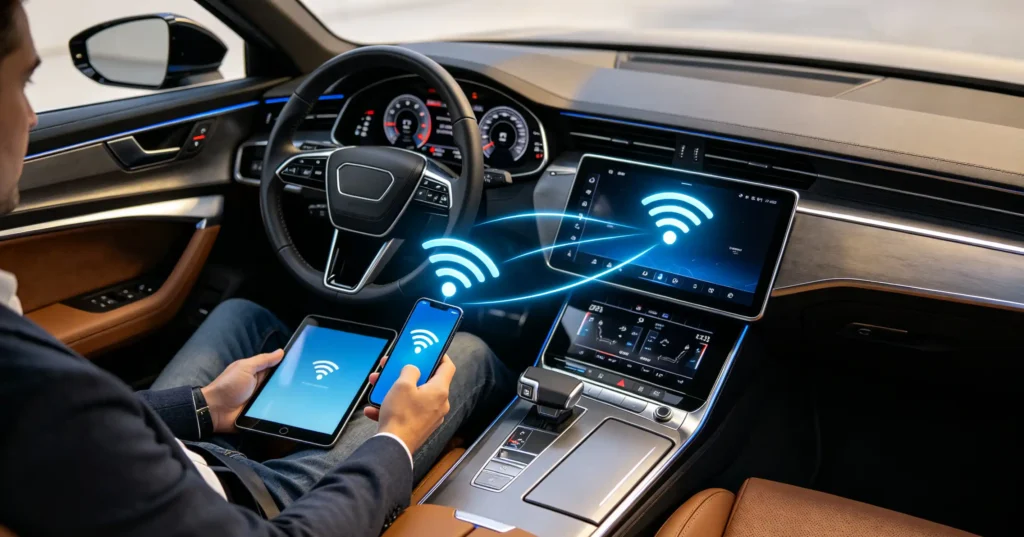
| Smartphone integration | Basic Bluetooth calling | Phone projection, screen mirroring |
| Vehicle data display | Native, built-in | Via CAN Bus decoder |
| Updates | Dealer visit required | OTA — firmware, maps, protocols |
| Customization | None | UI, branding, hardware configuration |
The pattern is consistent across nearly every row. OEM systems are closed — fixed functions, limited updates, no app installation. But they are stable and deeply integrated. Aftermarket systems are open — full app ecosystems, customizable interfaces, and OTA update support. That keeps a unit improving well after it ships. The cost is the native polish a factory-tuned system has from day one. If you’re evaluating navigation functionality specifically, our complete guide to car navigation systems covers the fundamentals.
Hardware & Vehicle Compatibility Comparison
OEM Hardware Approach
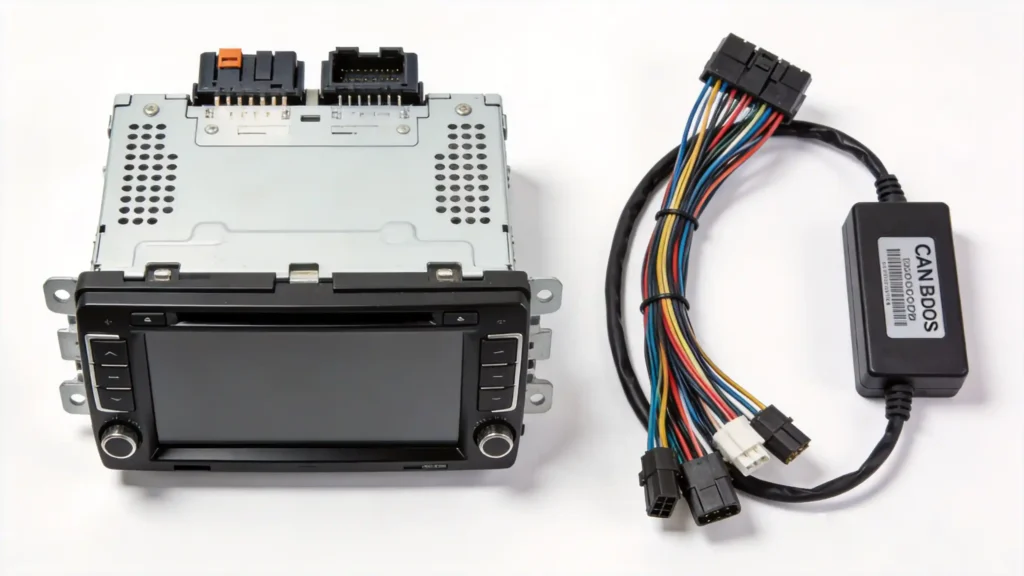
OEM hardware is built around one vehicle’s exact specifications from the ground up. It uses a vehicle-specific motherboard, proprietary connectors, and CAN Bus protocols baked directly into the firmware. It matches the dashboard fit and wiring of that specific model.
Aftermarket Hardware Approach
Aftermarket hardware takes the opposite approach. It uses a universal motherboard running Android or Linux. A CAN Bus decoder handles protocol translation rather than native integration. Wiring harness adapters and dashboard kits do the work of physical fitment.
Function Retention
That difference shows up directly in function retention. OEM units preserve 100% of original vehicle functions — steering wheel controls, climate display, vehicle settings. They do this simply because they were designed for that exact vehicle. Aftermarket units preserve functions through the CAN Bus decoder instead. Quality varies meaningfully depending on how deep that decoder’s development actually goes.
Installation Complexity
Installation complexity follows the same split. OEM units arrive pre-installed for automakers. Replacements require exact part-number matching. Aftermarket units need professional installation, adapter kits, and CAN Bus matching specific to the target vehicle. Compatibility risk tracks accordingly. OEM carries essentially zero risk by design. Aftermarket risk is variable, tied directly to decoder quality and how many vehicle models a supplier actually covers.
B2B Application Scenarios & Commercial Value Matching
Who Should Buy OEM Head Units?
OEM head units fit a specific set of buyers well:
- Automakers handling factory installation
- 4S dealerships processing warranty replacements
- Insurance repairs that require factory-spec parts
- Customers who insist on retaining 100% of original vehicle function no matter the cost
Who Should Buy Aftermarket Head Units?
Aftermarket head units serve a broader set of scenarios. For most B2B buyers, these are more commercially active:
- 4S dealership retail upgrades (custom UI and higher margins)
- Cross-border wholesale (cost-effectiveness and broad vehicle compatibility drive volume)
- Classic vehicle retrofits
- Used car upgrades generally
To explore our Android head unit product lineup for wholesale and retail upgrade programs, visit our product page or contact our sales team.
Commercial Value Split
The commercial value split reflects this directly. OEM units carry a high per-unit cost and limited margin. But they enjoy stable demand tied to warranty and insurance work. They also have low compatibility risk baked in. Aftermarket units run a lower per-unit cost with real margin upside. That upside comes from accessory upselling through cameras, DVR, and TPMS. OTA support trims after-sales costs over time. Custom branding creates genuine product differentiation.
Regional Demand Patterns
Regionally, this plays out predictably. OEM demand concentrates around new vehicles still under warranty. Aftermarket dominates used cars, upgrade programs, and cost-sensitive markets more broadly.
Procurement Cost & After-Sales Risk Comparison
Upfront Cost Difference
Procurement cost is the most immediate difference buyers notice. OEM head units run significantly higher, priced through automaker supply chains and built on proprietary parts. Aftermarket units land substantially lower. That is thanks to mass production and universal designs shared across many vehicles.
Compatibility and After-Sales Risk
Compatibility risk follows the same divide covered earlier. OEM carries essentially zero risk given its vehicle-specific design. Aftermarket risk varies with CAN Bus decoder quality and how broad a supplier’s vehicle model coverage actually is.
After-sales risk profiles differ too. OEM units tend toward simpler failure modes — typically straightforward hardware issues. Aftermarket units face a wider range of possible failures. These include CAN Bus mismatches, software bugs, and compatibility gaps. Those gaps only show up once a unit is actually installed in a specific vehicle.
Long-Term Support
Long-term support tells its own story. OEM units risk parts discontinuation as a vehicle model ages out of production. Aftermarket units benefit from OTA support covering firmware, maps, and CAN Bus protocols. That meaningfully reduces long-term support cost.
Practical Sourcing Takeaway
The practical sourcing takeaway: OEM is the lower-risk, higher-cost path. Aftermarket demands more rigorous supplier evaluation up front. Look for genuine CAN Bus development capability, documented QC testing, and real OTA support. That keeps the lower cost from turning into higher after-sales risk down the line.
How to Choose Between OEM and Aftermarket Head Units for Your Business
Consider Your Business Model
Business model and customer expectations drive most of this decision on their own. 4S shops handling warranty or repair work need OEM. 4S shops running retail upgrades do better with aftermarket’s higher margin potential. Wholesalers should default to aftermarket for its cost-effectiveness at scale. Automakers sourcing for factory installation have no real alternative to OEM.
Evaluate Budget and Margin Goals
Budget and margin goals point the same direction. OEM offers limited margin given its high cost. Aftermarket opens up stronger margin potential through lower unit cost, accessory bundling, and brand differentiation.
Factor in Vehicle Age
Vehicle age matters too. New vehicles still under warranty call for OEM. Vehicles three years and older are generally better served by aftermarket. Classic vehicles depend on aftermarket’s 1-DIN retrofit options specifically. No OEM alternative exists for them anymore.
Assess After-Sales Support Capability
After-sales support capability is worth weighing honestly. OEM requires access to increasingly limited parts availability as vehicles age. Aftermarket demands stronger technical support around CAN Bus matching, OTA updates, and software troubleshooting.
Match Feature Requirements
Feature requirements settle most remaining cases. Basic navigation with tight factory integration points to OEM. Modern features — app installation, smartphone integration, OTA updates, custom UI — point clearly to aftermarket.
FAQ
How does OEM software differ from aftermarket Android software?
OEM units run closed, vehicle-specific software with proprietary navigation and no app installation. They prioritize deep integration over feature range. Aftermarket Android head units run open systems with full app ecosystems, phone projection, and OTA update support. The trade-off is consistent: OEM offers tighter native integration; aftermarket offers broader functionality and ongoing improvability.
Can aftermarket head units retain original vehicle functions?
In most cases, yes, provided the CAN Bus decoder is properly matched to that specific vehicle model. Retention depends heavily on how deep the supplier’s decoder development actually goes. A well-adapted decoder preserves the large majority of original functions. A poorly matched one leaves real gaps. Always confirm vehicle-specific compatibility rather than assuming universal support.
Are aftermarket head units more cost-effective for bulk procurement?
Yes. Aftermarket head units carry substantially lower bulk procurement cost. They are mass-produced on universal designs rather than priced through an automaker’s proprietary supply chain. OEM units run significantly higher due to vehicle-specific parts and the automaker channel they move through. That is part of why aftermarket dominates cost-sensitive wholesale and retail upgrade markets.
Which B2B scenarios suit aftermarket head units best?
Aftermarket units fit:
- 4S dealership retail upgrade programs
- Cross-border wholesale (cost-effectiveness and broad vehicle coverage)
- Classic vehicle retrofits
- General used car upgrades
These scenarios all benefit from aftermarket’s lower cost, feature flexibility, and OTA-supported longevity. These advantages don’t apply to OEM’s factory-installation-only use case.
What is the most common aftermarket installation failure point?
CAN Bus decoder mismatches with specific target vehicle models cause the most damage. They typically show up as lost steering wheel control or vehicle data functions after installation. Sample testing on actual target vehicles before bulk production is the most effective way to catch these mismatches. Combine that with a supplier’s documented QC process. That prevents them from becoming an expensive after-sales problem.
Conclusion
OEM and aftermarket head units solve different problems for different buyers. OEM delivers factory-identical integration for warranty and production-line needs. Aftermarket delivers customization, features, and margin for wholesale and retail upgrade businesses. Matching the type to your actual business scenario is critical. Evaluating suppliers rigorously on the aftermarket side specifically is what keeps a sourcing decision from turning into an after-sales problem.