“Manufacturer” gets used loosely in this industry. That looseness costs buyers money. Some suppliers calling themselves manufacturers are actually trading companies. They resell someone else’s stock. The gap between the two only becomes obvious once a bulk order is already in transit.
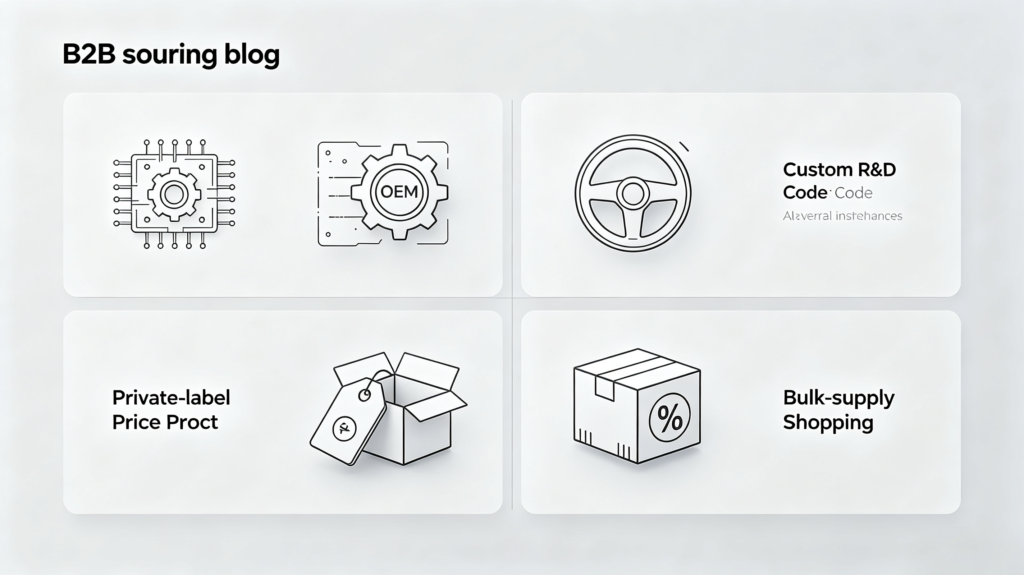
This guide covers what to actually look for in an Android head unit manufacturer. It covers qualification standards. It covers the four main cooperation models (OEM, custom, private label, wholesale). It provides a step-by-step screening process. It also highlights risks worth watching for before you commit to a partner. Before diving into manufacturer selection, make sure you understand what an Android head unit actually is — read our complete guide to Android Head Units first.
Core Qualification Standards: What to Look for in an Android Head Unit Manufacturer
Before comparing cooperation models, it’s worth confirming you’re actually dealing with a manufacturer in the first place.
Business Verification
Confirm the supplier is a registered manufacturer. Do not accept a trading company presenting itself as one. Request business license and factory registration documentation directly. For a complete step-by-step breakdown of the screening process, see our manufacturer screening guide.
Production Capacity
Factory size is a key indicator. 3,000㎡+ is a reasonable benchmark. Look for 10-plus production lines. Confirm in-house SMT and assembly capability. Monthly output of 50,000-plus units is a strong signal. This indicates a manufacturer capable of handling real volume.
Industry Certifications
Check for ISO 9001 for quality management. IATF 16949 adds automotive-specific quality assurance. CE, FCC, and RoHS are important for export compliance. Request current documentation rather than assuming from a company profile.
Workforce and QC Team
Look for 50-plus employees. A team of 5-plus R&D engineers is a positive sign. 10-plus QC engineers indicate genuine quality commitment. These numbers suggest real production scale, not just marketing language.
Factory-Direct Advantage
Factory-direct manufacturers have no middleman in the chain. They tend to offer better pricing. They provide more direct quality control. They also respond faster to customization requests than a reseller working through someone else’s production schedule.
OEM Android Head Unit: Factory Capability & Cooperation Model
What Is OEM Cooperation?
OEM (Original Equipment Manufacturer) cooperation means the manufacturer produces Android head units to your specifications. This includes brand, design, hardware, and software. The units are sold under your own brand, not theirs. Not sure whether OEM or aftermarket suits your business? See our detailed OEM vs Aftermarket Head Unit comparison.
Required Manufacturer Capabilities
OEM requires real capability on the manufacturer’s side. They need in-house R&D across software, hardware, and CAN Bus development. They must offer full customization support (UI, logo, boot animation, packaging). They also need enough production scalability to handle volume orders once development wraps.
Typical OEM Services
Services typically include custom PCB design, RAM/ROM configuration, screen resolution selection, and power module configuration for different countries’ voltage standards.
Who OEM Suits Best
OEM tends to suit a specific set of buyers:
- Automakers sourcing for factory installation
- Large 4S dealership chains building branded upgrade programs
- Distributors building their own product line rather than reselling generic hardware
Trade-Offs to Consider
The trade-off against standard wholesale is worth being clear-eyed about. OEM involves real development cost and longer lead times. But it produces an exclusive product with meaningfully better margins than reselling something anyone else can also stock.
Custom Android Head Unit: R&D Strength & Customization Capability Assessment
Evaluating the R&D Team
Assessing customization capability starts with the R&D team itself. Ask how many engineers they have. Ask which disciplines they actually cover — software systems, hardware circuit design, PCB layout, UI, CAN Bus protocol, OTA development. In-house coverage across all of these signals real capability. It is not just assembly work dressed up as customization.
Hardware Customization Scope
Hardware customization typically spans:
- Processor platform selection (Snapdragon or MediaTek)
- RAM/ROM configuration (2GB, 4GB, 6GB and up)
- Screen resolution
- USB/HDMI interface expansion
- Power module configuration for different voltage standards
Software Customization Scope
Software customization covers UI themes — desktop icons, color themes, menu layout. It also covers boot animation and system function modification. Examples include adding vehicle protocols, optimizing fluency, or adapting regional radio frequency.
Vehicle Adaptation and CAN Bus
Vehicle adaptation is where CAN Bus development capability really matters. In-house development adapts faster to new vehicle models than licensing from a third party. Support for 200-plus vehicle models is a reasonable benchmark for genuine depth here.
Custom Development Timeline
On timeline, custom development typically runs 15 to 20 working days. This depends on scope. Confirm this directly against your own deadlines rather than assuming a standard turnaround applies.
Private Label Head Unit: Brand Customization & Supply Chain Support
What Is Private Label Cooperation?
Private label — sometimes called white label — cooperation means the manufacturer produces units under your branding. This involves minimal design changes. It is faster and lower-cost than a full OEM development cycle.
Logo Customization
Logo customization typically covers several areas. Silk-screened logos go on the front panel, back shell, remote control, and packaging. Laser engraving is available from some suppliers.
UI Customization
UI customization covers boot wallpaper, desktop icons, color theme, and menu layout. This is enough to give the product a genuinely branded look and feel. It avoids an obviously generic interface.
Packaging Customization
Packaging customization spans neutral export cartons, custom color gift boxes, printed outer cartons, foam protection, and barcode or product label printing.
Documentation and Unboxing Experience
Documentation rounds this out. Custom user manuals, installation guides, and branded accessory packaging make the whole unboxing experience feel consistent with your brand. It feels like your product, not the factory’s.
Who Private Label Suits Best
This model suits importers building out a brand from scratch. It suits 4S dealerships putting together exclusive upgrade packages. It also suits distributors looking for a differentiated product line without committing to a full OEM development timeline.
Wholesale Android Head Unit: Bulk Supply Capacity & Cost Structure
Bulk Supply Capacity Metrics
Bulk supply capacity comes down to concrete numbers. Confirm monthly production capacity (50,000-plus units is a reasonable benchmark). Check the production line count. Verify the genuine ability to scale for large orders without straining.
MOQ Policy
MOQ policy is worth checking directly. Flexible MOQ accommodates small trial orders for new clients. Volume discounts kick in for larger commitments. This is what a genuinely wholesale-ready manufacturer offers.
Lead Time Expectations
Lead time follows a predictable pattern. Standard models are typically available quickly, often around 15 days. Custom OEM/ODM orders generally run 15 to 20 working days depending on scope.
Cost Structure Transparency
Cost structure transparency matters as much as the price itself. Look for factory-direct pricing without middlemen. Stable relationships with component suppliers keep costs consistent. Volume discounts scale with order size.
Payment Terms and Supplier Stability
Payment terms should be clear upfront. A 30% deposit with balance before shipment is a common structure (though it varies by supplier). Supplier stability — raw material inventory reserves that avoid stock-out risk — is worth asking about directly. Discover it before a delayed shipment, not during one.
Step-by-Step Manufacturer Screening & Cooperation Process
Turning evaluation criteria into an actual decision works best as a sequence. Do not treat it as a single leap of faith.
Step 1: Initial Screening
Shortlist manufacturers based on qualifications, production capacity, and general market reputation. Request company profiles and capability statements to compare side by side.
Step 2: Factory Verification
An in-person tour or a video call lets you inspect production lines, QC processes, and warehouse management directly. Do not take a company profile’s word for it.
Step 3: Sample Ordering
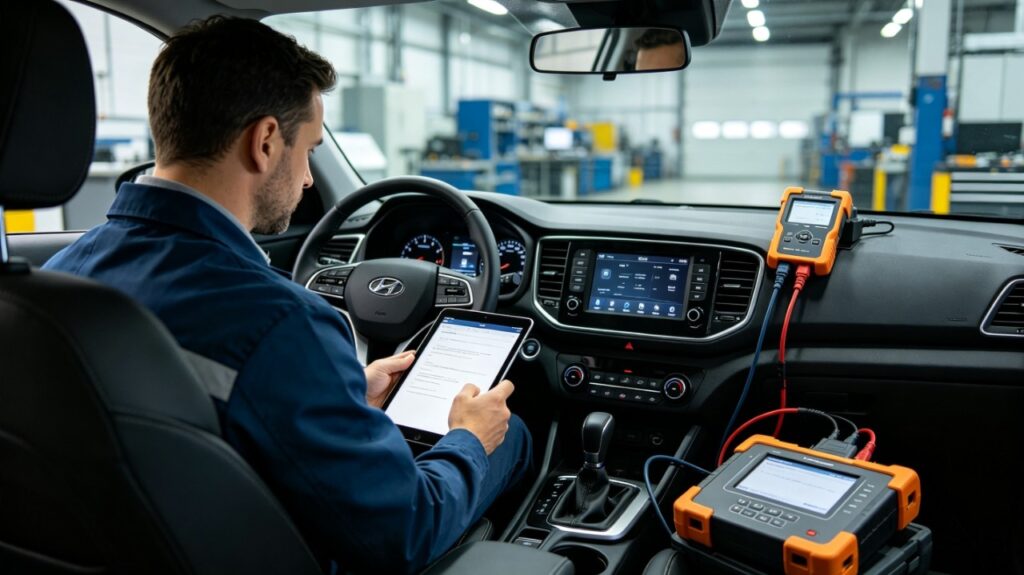
Order units for testing on actual vehicles. Check build quality, feature completeness, CAN Bus compatibility, and general performance.
Step 4: Small Trial Order
Once a sample clears that bar, place a small trial order. This tests production consistency, delivery reliability, and after-sales support responsiveness once money has actually changed hands.
Step 5: Negotiation and Formal Cooperation
If the trial goes well, move to negotiation and formal cooperation. Lock in MOQ, pricing, lead time, payment terms, warranty, and quality standards in a signed agreement.
Step 6: Ongoing Partnership Management
From there, it becomes ongoing partnership management. Conduct regular quality reviews. Maintain open communication. Have periodic conversations about what could improve.
Common Manufacturer Cooperation Risks & Avoidance Methods
Qualification Fraud
Qualification fraud tops the list of risks. A supplier claims manufacturing capability but actually operates as a trading company. Business license verification, a real factory tour, and production documentation usually settle this quickly.
Inconsistent Product Quality
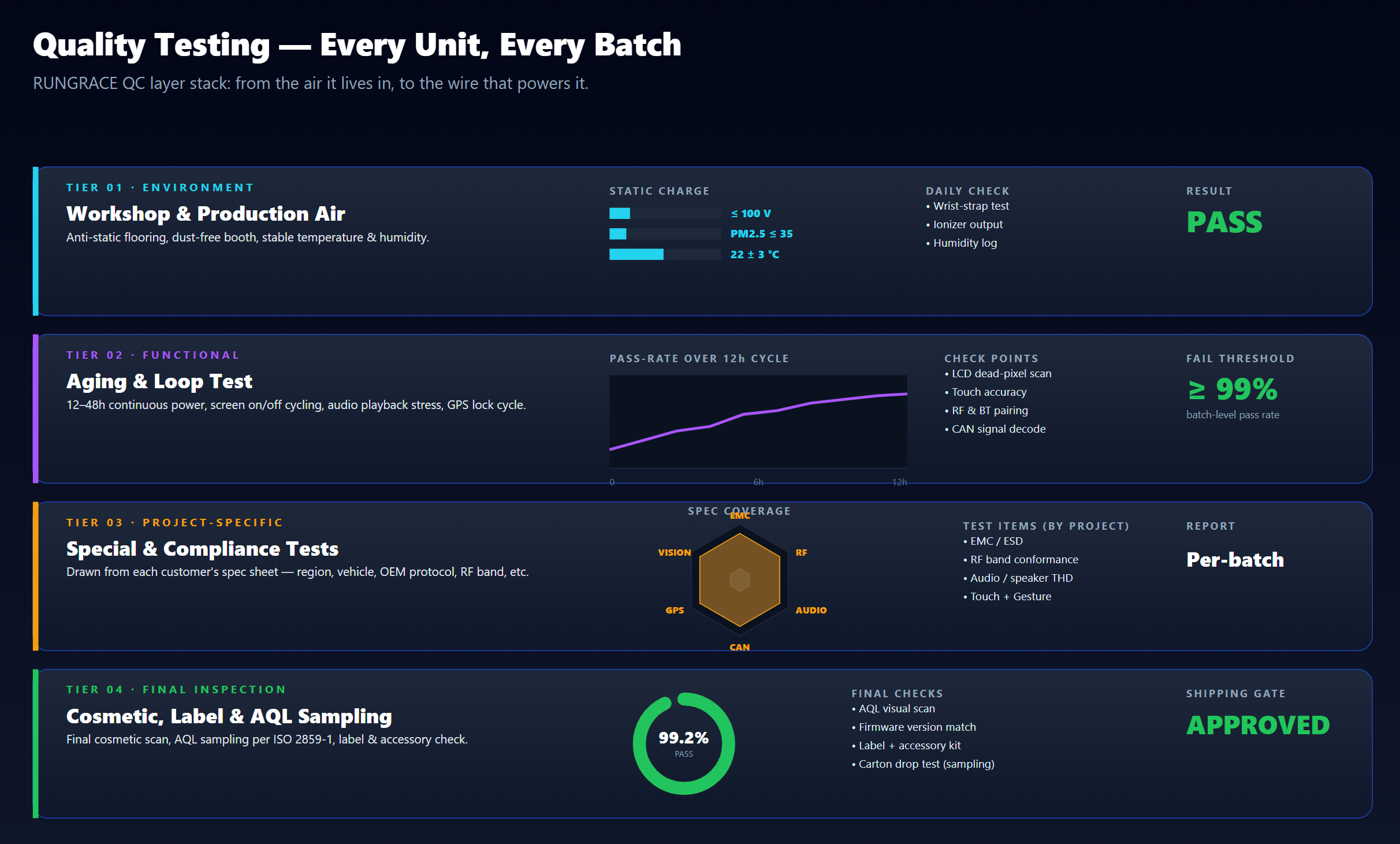
Inconsistent product quality is another common trap. First samples look great, but bulk quality quietly drops from there. Clear QC documentation and inspection upon delivery are your safeguards.
Fake or Inflated Specifications
Fake or inflated specifications — exaggerated RAM/ROM, resolution, or processor claims — are worth verifying. Use sample testing and diagnostic tools rather than trusting the listing.
CAN Bus Compatibility Issues
CAN Bus compatibility issues cause real damage at scale. Units that fail to work with your target vehicle models can undo an entire order’s worth of margin. Testing samples on actual vehicles before bulk production is the only real safeguard.
Poor After-Sales Support
Poor after-sales support tends to reveal itself early if you’re paying attention. Test responsiveness during the sample and trial order phases. Do not wait until a full container has shipped.
Unrealistic Pricing
Unrealistic pricing is often a signal in itself. Prices well below market average usually mean cost-cutting on critical components somewhere. It may not be obvious which ones yet.
FAQ
How much production capacity should a reliable manufacturer have?
There’s no universal number. But a manufacturer running 10-plus production lines with 50,000-plus units of monthly capacity can generally absorb sizable bulk orders without straining. For smaller orders, consistency matters more than raw capacity. A smaller manufacturer with solid QC can still be reliable, provided their claimed capacity is verified rather than assumed.
How do I verify a manufacturer’s R&D and customization capability?
Ask about the R&D team directly. Find out how many engineers and which disciplines they actually cover — hardware, software, and CAN Bus protocol development. Request examples of past customization work. Confirm whether CAN Bus protocols are developed in-house or licensed. A trial order with your specific customization requirements is the most reliable way to confirm capability before committing to full volume.
What certifications should an Android head unit manufacturer have?
Requirements vary by destination market. Common certifications include CE for Europe, FCC for North America, RoHS for hazardous substance compliance, and ISO 9001 for quality management. IATF 16949 adds automotive-specific assurance where relevant. Request current documentation directly from any manufacturer rather than assuming compliance. Confirm which certifications actually apply to your target country.
What is the typical MOQ for different cooperation models?
MOQ varies significantly by cooperation model and customization depth. OEM and fully custom projects typically require higher minimums given the development investment involved. Private label and standard wholesale orders generally support more flexible MOQs, including smaller trial orders for new buyers. Confirm exact minimums directly with a manufacturer for your specific configuration rather than assuming a fixed figure across models.
What are the biggest risks when sourcing from a manufacturer?
Qualification fraud causes major damage. Inconsistent bulk quality despite good samples is another risk. CAN Bus compatibility failures with specific target vehicles also cause significant problems. Sample testing on actual vehicles, documented QC verification, and a trial order before full-scale production are the most effective ways to catch these issues while they’re still cheap to fix.
Conclusion
Choosing an Android head unit manufacturer comes down to matching the cooperation model — OEM, custom, private label, or wholesale — to your actual business needs. Then verify qualifications, capability, and QC. Do not take a sales pitch at face value. The buyers who avoid expensive after-sales problems are usually the ones who tested a sample, ran a trial order, and asked for documentation before signing anything at scale.