Sourcing car navigation systems is different from sourcing most consumer electronics. A dealer or importer isn’t just buying a screen.
They’re buying a stack of components that all have to work together reliably inside a moving vehicle — in different climates, on different car models, for years without failure.
Understanding what’s actually inside the unit makes it much easier to compare suppliers, spot corner-cutting, and ask the right questions before placing an order.
This guide breaks down the core car navigation system components — the GPS module, navigation processor, car stereo display, CAN bus integration, and supporting hardware — and what each one means for product quality, customization, and long-term supply reliability. For a general overview of navigation systems and how they work, see our pillar guide: What Is a Car Navigation System?
It’s written for car dealers, automotive electronics wholesalers, importers, automakers, and 4S dealerships. These buyers are either evaluating navigation suppliers or trying to explain product differences to their own customers.
Core Components of a Car Navigation System
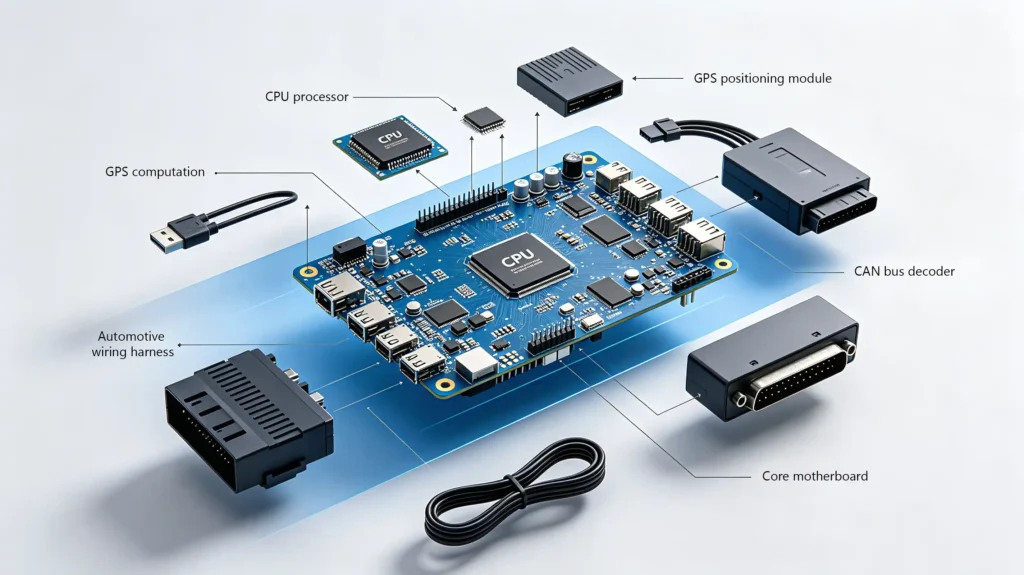
A modern Android or Linux car navigation unit is really a small computer built for automotive use. For a step-by-step technical walkthrough of how these components work together from satellite signal to on-screen guidance, read our guide on how does a car navigation system work.
Strip away the branding and packaging, and every unit is built around the same functional blocks: positioning, processing, display, vehicle communication, storage, and power.
The quality of each block — not just the final product photo — determines how the unit performs after a year of daily driving.
GPS Module and Positioning Accuracy
The GPS module is what gives the unit its actual navigation function. It receives satellite signals and calculates the vehicle’s position, and its performance shows up most clearly in tunnels, underground parking, dense urban areas, and mountainous regions where signal can be weak or reflected.
Buyers sourcing for markets with a lot of urban driving or multi-story parking structures should specifically ask suppliers how positioning holds up in those conditions.
This is one of the most common after-sales complaints when a supplier has cut costs on this component. For a detailed comparison between standalone GPS trackers and full navigation systems, read our guide on GPS vs car navigation system.
Navigation Processor and System Performance
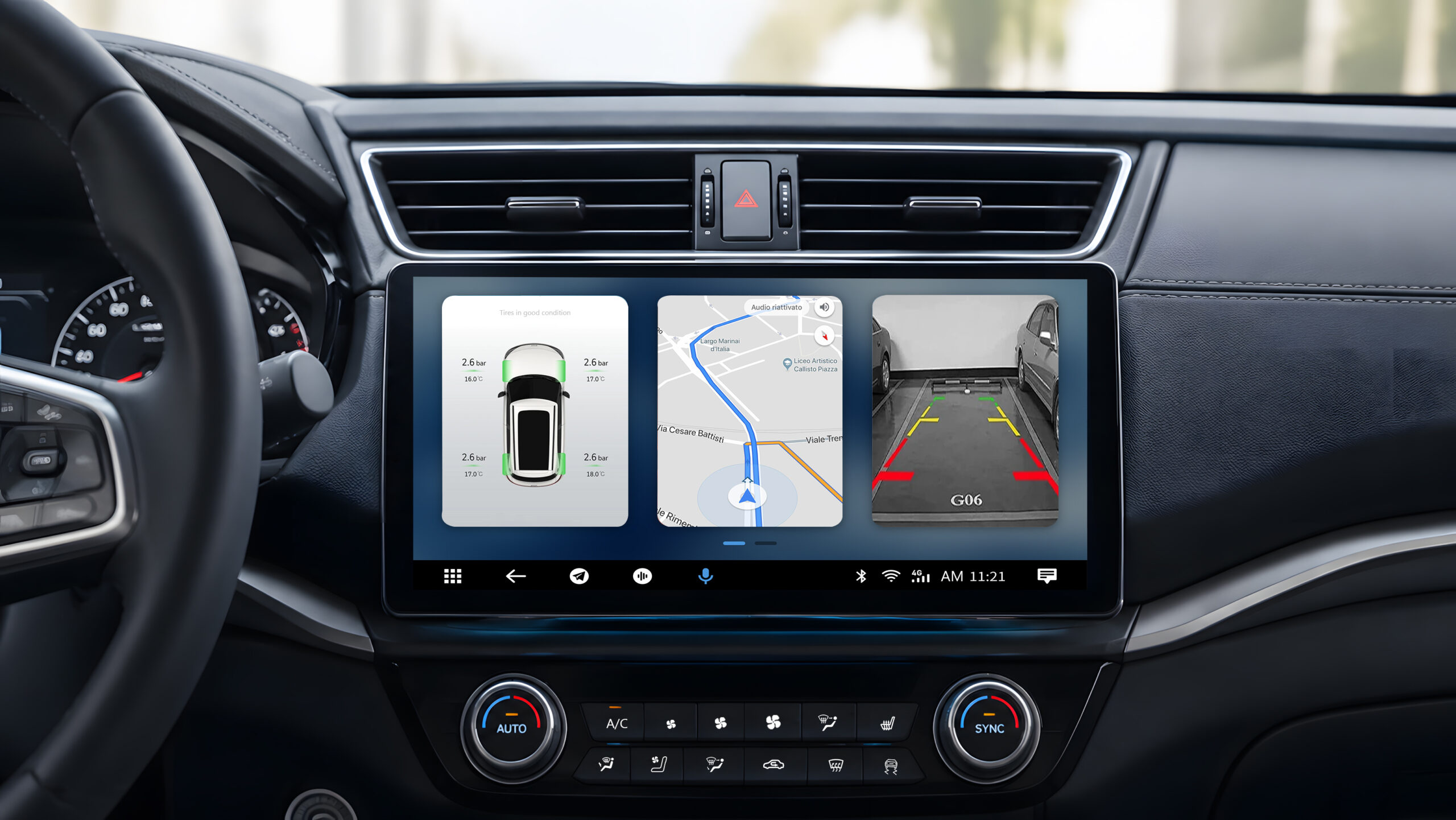
The processor is the part that determines how the whole system feels to use — how fast menus load, how smoothly the interface responds to touch, and how well it handles running navigation, media, and connected apps at the same time.
A weak or mismatched processor is usually the real cause behind units that feel laggy or freeze after months of use. This happens even when the screen and casing look identical to a higher-quality unit.
This is also the component most tied to whether a unit can support future software updates without becoming obsolete. For a complete breakdown of the main system types available on the wholesale market — OEM, aftermarket, Android, and portable — see our guide on types of car navigation systems.
Car Stereo Display and Touchscreen Interface
The display is the most visible part of the unit and often the first thing a buyer judges quality by, but screen resolution, touch responsiveness, and daylight visibility all vary significantly between suppliers.
For dealerships selling to end customers directly, display quality has an outsized effect on perceived product value, since it’s the one component every driver interacts with constantly.
CAN Bus Integration and Vehicle Data
CAN bus integration is what allows the navigation unit to talk to the vehicle itself. It reads data from the original car system so that steering wheel controls, air conditioning display, parking sensors, and other factory features keep working after the aftermarket unit is installed.
This is arguably the most technically demanding part of the whole product, because every car brand and model year uses different CAN bus protocols.
A unit with poor CAN bus matching will either lose these functions entirely or behave unpredictably. That’s one of the fastest ways to generate installation complaints and returns. For a deeper look at CAN bus technology — how it works, why it matters, and what to look for in a decoder — read our guide on What Is CAN BUS.
Wiring Harness, Power Management, and Connectivity
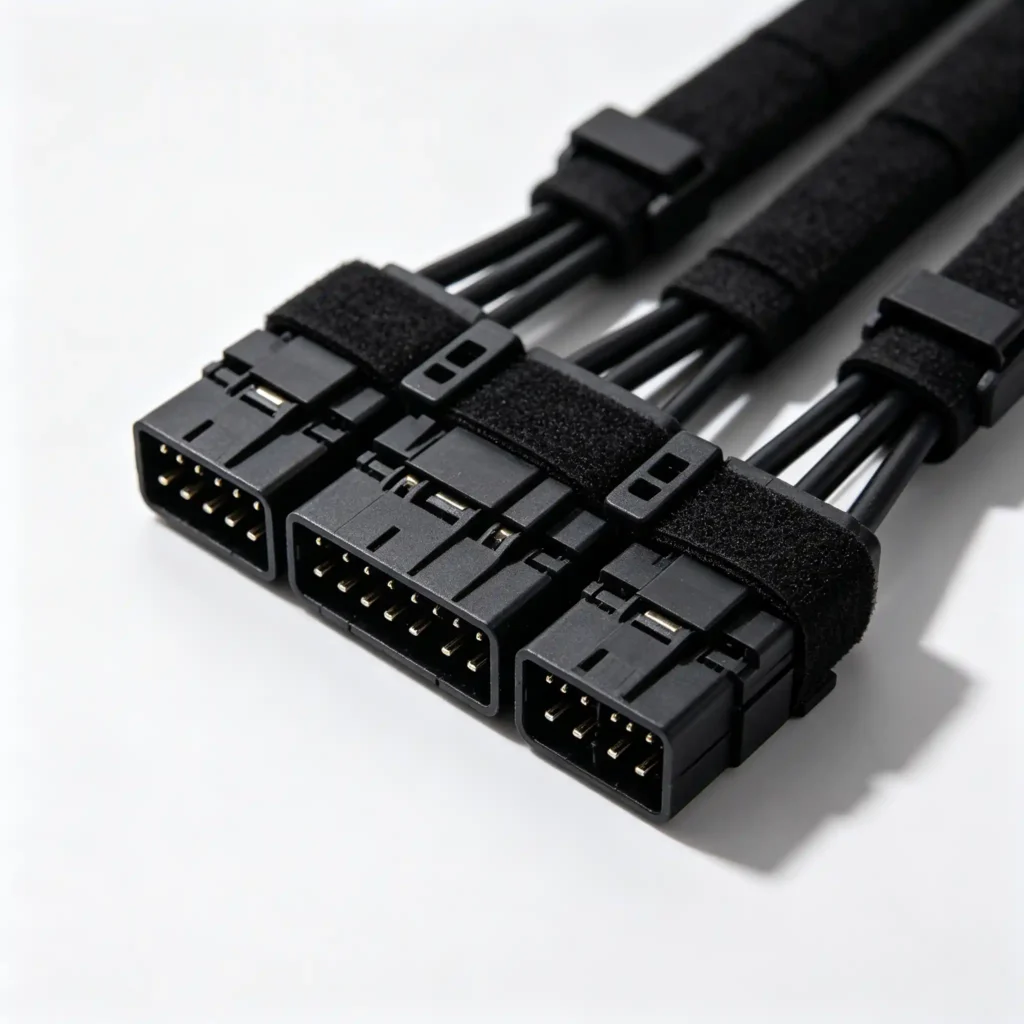
Beyond the visible components, the wiring harness and power circuitry handle the practical realities of an automotive electrical environment — voltage fluctuations, different regional power standards, and the physical vibration of daily driving.
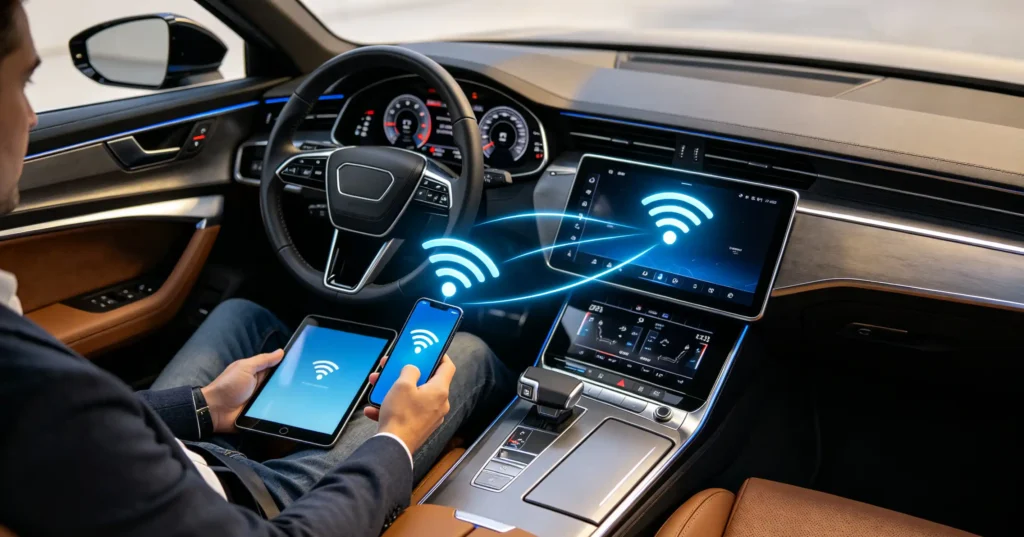
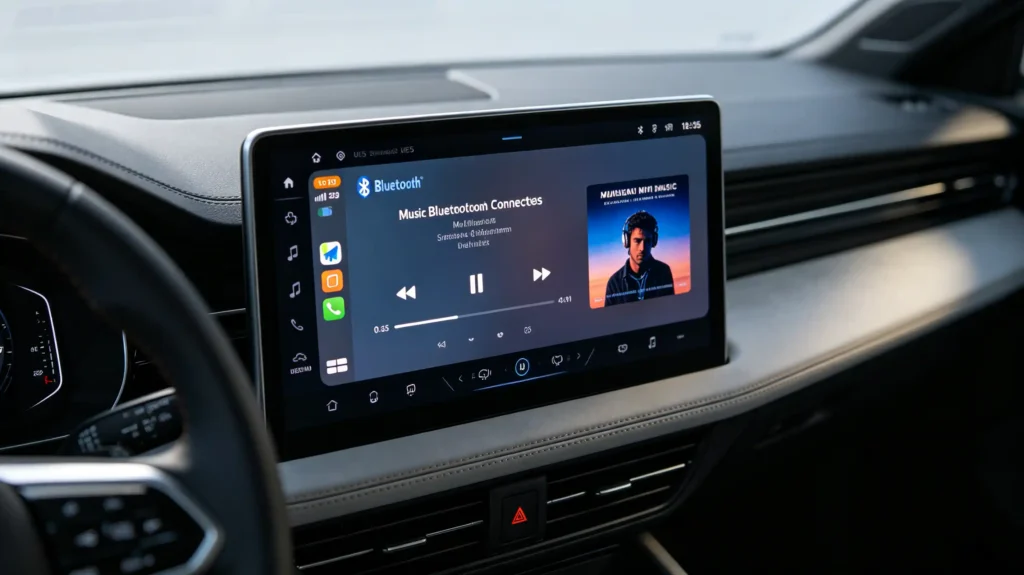
Connectivity modules (Bluetooth, Wi-Fi, and increasingly support) round out the system, letting the unit sync with phones and support OTA updates over time.
How These Components Work Together in a Real Vehicle
None of these components perform well in isolation. A strong processor paired with a poorly matched CAN bus decoder still results in a unit that loses steering wheel controls after installation. And a good GPS module paired with a weak display still frustrates the end driver. This is why experienced buyers evaluate navigation systems as a complete engineered product rather than a list of specifications on a datasheet.
In practice, this shows up during installation and the first few months of use. A wholesaler importing units for multiple car brands will notice quickly if CAN bus adaptation was only tested on a narrow range of models. Installers in the field start reporting missing functions on specific vehicles.
A 4S dealership installing units as an accessory upgrade cares less about raw specs and more about whether the unit installs cleanly and keeps the original car’s functions intact, since that’s what the customer actually judges the work on.
This is also where a 48-hour aging or burn-in test matters more than it sounds. Running a fully assembled unit continuously before it ships is one of the more reliable ways to catch hardware that would otherwise fail a few months into normal use.
Power circuit issues and marginal component connections tend to surface under sustained operation. A quick function test on the line won’t catch these problems.
What B2B Buyers Should Evaluate When Sourcing Navigation Components
For dealers, wholesalers, and importers, the practical question isn’t “what components exist” but “how do I evaluate whether a supplier’s components are actually good.” A few factors tend to matter most:
CAN bus coverage. Ask specifically how many car models and brands the supplier has adapted protocols for, and whether they can develop new vehicle matching in-house or depend on third parties. In-house CANBUS development generally means faster turnaround when a customer needs a less common vehicle supported. This is especially true when the supplier has matched 200+ car models.
Customization depth. Buyers serving different markets often need more than a logo swap — regional voltage standards, RF/radio frequency tuning for local broadcast bands, multi-language system packages, and UI branding all affect whether a unit is genuinely ready for a specific market or just a repackaged generic product.
QC process, not just QC claims. A supplier that can describe their actual inspection flow is a different conversation than one that simply says “we have quality control.” The inspection flow should cover incoming material testing, in-process inspection, full function testing, and pre-shipment sampling.
Lead time reliability for custom orders. Component sourcing and CAN bus matching take real engineering time. A supplier quoting unrealistically fast turnaround on a fully customized OEM order is a common warning sign; a 15-working-day production cycle for custom OEM/ODM orders is a more realistic benchmark to compare against.
After-sales and spare parts access. Because these units are component-based products, long-term spare parts availability (touch screens, motherboards, CANBUS boxes, wiring harnesses) matters as much as the initial order, especially for importers who need to support local repair networks.
OEM/ODM Customization of Navigation System Components
Buyers evaluating suppliers often need the flexibility to customize at the component level rather than accept a fixed configuration. Rungrace supports both OEM and ODM development.
This includes hardware customization — RAM/ROM upgrades, screen resolution adjustments, and power module configuration for different country voltage standards. It also covers software customization, including system functions, vehicle protocol additions, and regional radio frequency adaptation.
On the CAN bus side specifically, Rungrace develops its own CANBUS decoder boards in-house. It supports protocol matching across 200+ car models. This allows faster adaptation when a customer needs support for a vehicle brand outside the standard catalog.
Every finished unit goes through a 48-hour continuous aging test as part of the standard QC process before shipment, alongside incoming material inspection and full function testing.
For buyers who need brand-specific packaging, boot animation, UI themes, or front panel logo customization, these are handled alongside the hardware and software configuration rather than as a separate add-on process. This keeps custom orders on a predictable production timeline — typically around 15 working days for OEM/ODM builds. For a deeper comparison of OEM and aftermarket approaches — including sourcing considerations for each — read our guide on OEM vs Aftermarket Car Navigation.
FAQ
What is the most important component in a car navigation system for reliability?
There isn’t one single answer, since GPS accuracy, processor stability, and CAN bus matching each cause different failure types. In practice, CAN bus integration is the component most likely to cause visible problems after installation, because it directly affects whether original vehicle functions like steering wheel controls keep working. Buyers sourcing for multiple car brands should prioritize suppliers with broad, in-house CAN bus development.
How do I know if a supplier’s CAN bus integration is actually reliable?
Ask how many vehicle models and brands they’ve adapted, whether the decoder development is done in-house, and how they handle requests for less common models. Suppliers with independent CANBUS R&D can usually turn around new vehicle matching faster than those relying on third-party decoder suppliers.
Can navigation system components be customized for different regional markets?
Yes. Hardware elements like power modules can be configured for different voltage standards, and software elements like radio frequency bands and system language packages can be adapted per region. This is standard for OEM/ODM orders rather than a special request.
What’s a realistic lead time for a custom OEM navigation order?
For fully customized hardware and software builds, roughly 15 working days is a reasonable benchmark to expect from an established manufacturer, assuming components and CAN bus matching are already validated. Requests involving new vehicle protocol development may take longer.
Do navigation system components affect long-term after-sales support?
Yes, significantly. Because these are component-based products, having ongoing access to spare parts — touchscreens, motherboards, CANBUS boxes, wiring harnesses — is important for dealers and importers supporting installers and end customers after the initial sale.
Get Component-Level Support for Your Next Order
Whether you’re evaluating suppliers for the first time or looking for a manufacturer that can match CAN bus protocols for a specific vehicle lineup, understanding the component breakdown makes it easier to ask the right questions and compare quotes accurately.
Contact our team to discuss your customized requirements, or request a quotation for OEM/ODM car navigation solutions built around your target market.