
A supplier quotation lists “reverse camera” while your customer’s RFQ asks for a “backup camera.” It is suddenly unclear whether you are looking at the same product or two different pieces of hardware. This mix-up is common enough in automotive electronics sourcing to be worth resolving directly.
This guide clarifies the terminology around backup, reverse, rear, and reversing cameras. It explains where real hardware differences actually live. It also gives B2B buyers a framework for writing RFQs that avoid the confusion altogether. For a complete technical guide on camera hardware, see our backup camera guide.
Backup Camera vs Reverse Camera: Terminology Clarification
The Short Answer
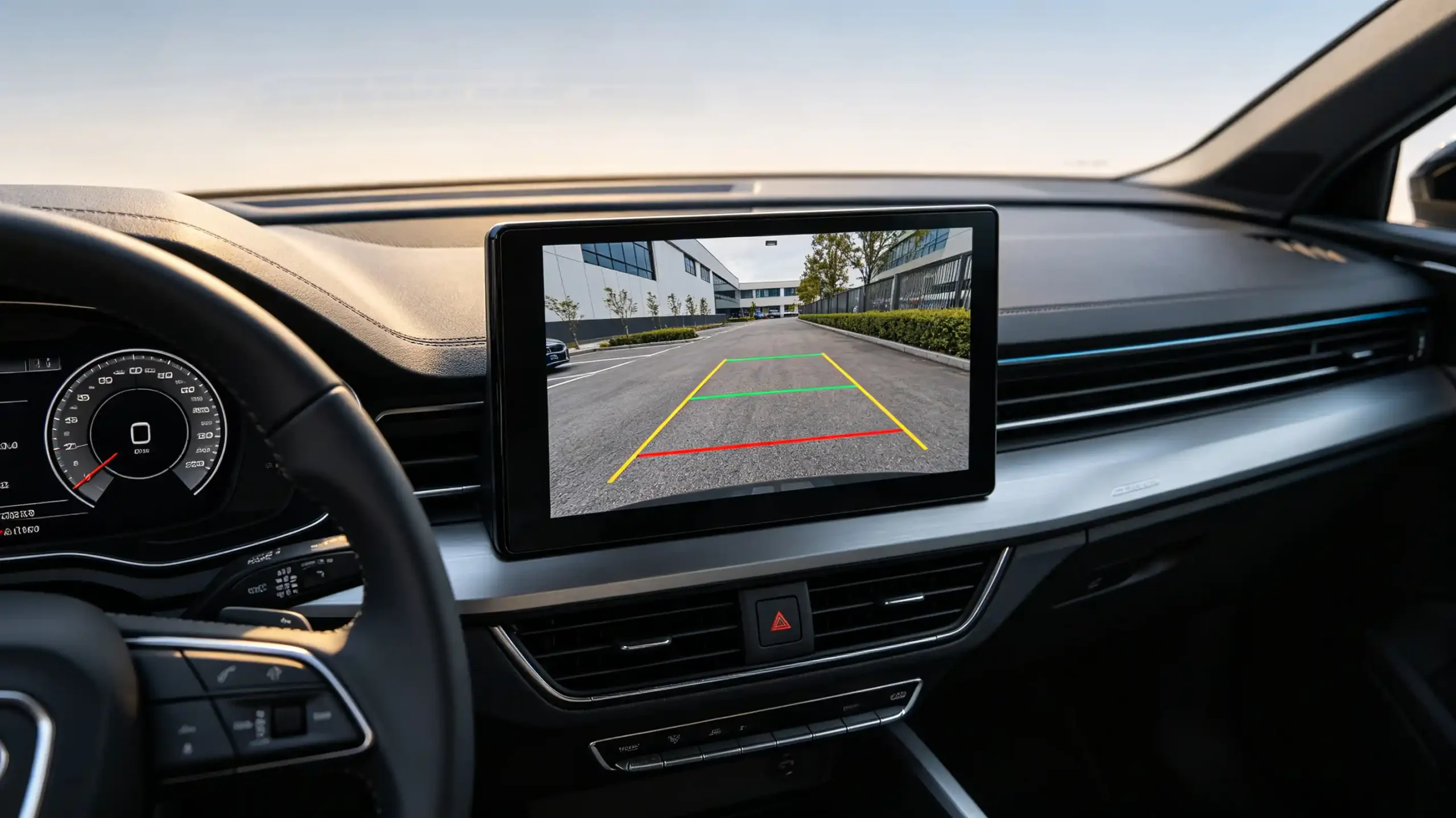
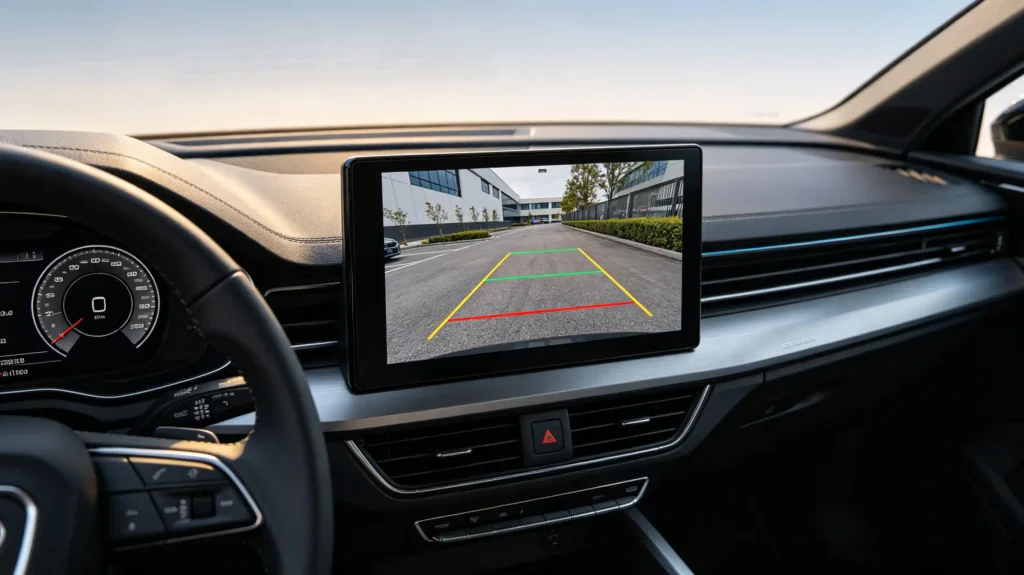
The short answer: backup camera and reverse camera are functionally identical terms. Both describe a rear-mounted camera that activates when the vehicle shifts into reverse. It displays the area behind the vehicle on the head unit screen. There is no hardware distinction hiding behind the different names.
What Separates the Terms
What separates the terms is mostly geography and habit rather than function.
- “Backup camera” is the term more commonly used in North America.
- “Reverse camera” shows up more often in European and Asian markets.
- “Rear-view camera,” “reversing camera,” and “parking camera” are additional synonyms in circulation.
All refer to the same category of hardware with only minor usage variation.
Why So Many Terms Exist
The reason so many terms exist comes down to:
- Regional naming conventions
- Differing marketing language
- Translation variation across product catalogues
None of these reflect an underlying technical split.
Practical Implication for B2B Buyers
For B2B buyers, the practical implication is simple. Treat all of these terms as referring to the same product category. Do not assume a supplier using unfamiliar terminology is offering something different from what you expect.
Functional Similarities and Subtle Practical Differences
Core Functions Are the Same
Whatever term a supplier uses, the hardware shares the same core functions. It displays the rear view on the head unit screen when the vehicle is in reverse. It provides parking guidance through static or dynamic guideline overlays. It helps detect obstacles, pedestrians, and other vehicles behind the car. It improves driver visibility in an area mirrors alone do not fully cover.
No Functional Difference Tied to the Label
There is no inherent functional difference tied to the label. A camera called “reverse camera” on one spec sheet and “backup camera” on another can be the exact same product. Often, it is.
Where Real Differences Exist
Where real differences do exist, they come from the camera type and specification. They do not come from the name. Mounting style, resolution, and night vision vary between individual products. These variations are entirely independent of what the listing calls them.
Sourcing Implication
This is worth internalizing for sourcing purposes. Focus on actual specifications — resolution, night vision, IP rating — rather than the product name when evaluating what a supplier is offering.
Rear Camera and Reversing Camera: Additional Related Terminology
Rear Camera
A few more terms show up regularly in automotive electronics catalogues. It is worth knowing how they map to actual hardware. “Rear camera” is a broader term. It can refer to a backup camera specifically. But it can also describe other rear-facing hardware like part of a 360-degree surround-view system or a rear dash camera. It is slightly less precise than the other terms here.
Reversing Camera
“Reversing camera” is essentially the British and European equivalent of backup camera. It describes exactly the same hardware and function.
Parking Camera
“Parking camera” often implies a wider viewing angle geared toward parking assistance. However, there is no consistent spec difference separating it from a standard backup camera.
Rear-View Camera
“Rear-view camera” is another synonym. However, the phrase also appears in other contexts, such as cameras built into rear-view mirrors.
The Takeaway
The takeaway: these terms largely describe the same product category. “Rear camera” is the one exception. It is broad enough to occasionally mean something else. Buyers should expect this terminology variation across suppliers. Rely on spec sheets, not labels, to confirm what is actually being quoted.
Backup Camera Types: Hardware Variants for Parking Assistance
Standard Hardware Types
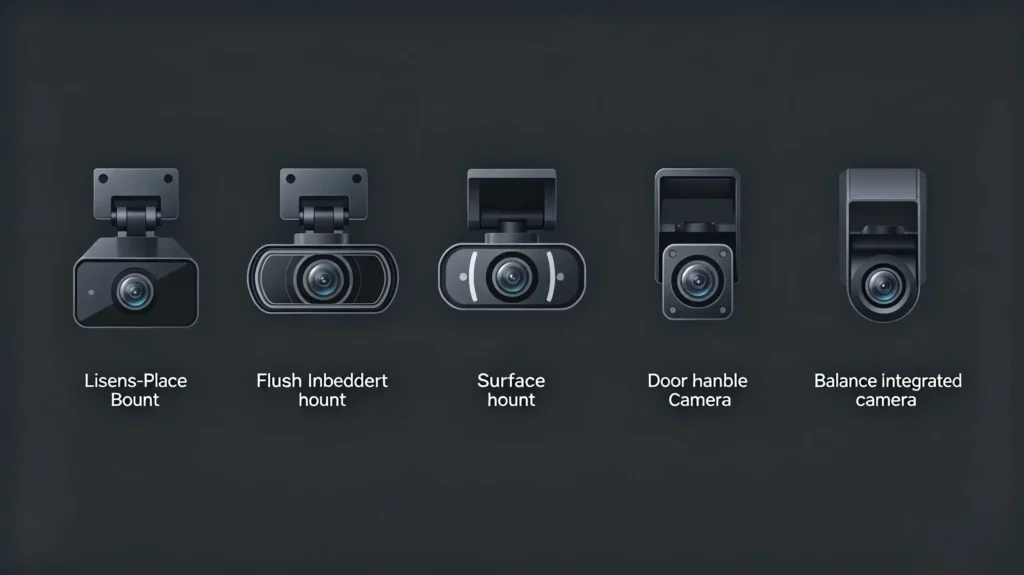
Regardless of what a supplier calls it, the hardware falls into a handful of standard types. For a full view of all hardware decisions, see our car stereo hardware components overview.
License plate mount — attaches to the license plate bracket. Offers a universal fit and easy installation. The most common aftermarket type.
Flush mount — sits flush with the vehicle body through a drilled hole. Offers a cleaner, vehicle-specific look.
Surface mount — attaches to a bumper or trunk surface. A compact option where flush mounting is not practical.
OEM replacement — installs in the factory camera location, typically the trunk lid or tailgate. Offers the best integration since it is built for a specific vehicle.
Handle mount — fits into the tailgate handle assembly. Common on SUVs and trucks.
Feature Variation
On top of mounting type, feature variation adds another layer. Static versus dynamic parking guidelines, infrared night vision, viewing angle in the 120–170 degree range, and waterproof rating (IP67 or IP68) all vary between products. These variations are independent of what the camera is called.
Sourcing Implication
For sourcing purposes, hardware type and feature set matter far more than the naming convention. Select based on the vehicle application and what your customers need. Do not select based on the label on the listing.
Parking Camera Applications and Head-Unit Compatibility
Primary Use Case
The primary use case across all of this terminology is reverse parking assistance. The camera activates automatically when the vehicle shifts into reverse.
Secondary Use Case
A secondary use case involves rear-view monitoring while driving. This is useful for trailer and towing applications. Some systems allow manual activation rather than only on reverse.
Tertiary Use Case
A more complex tertiary category is the 360-degree surround-view system. It combines multiple cameras into a single bird’s-eye view. It involves considerably more integration work than a single rear camera.
Compatibility Factors
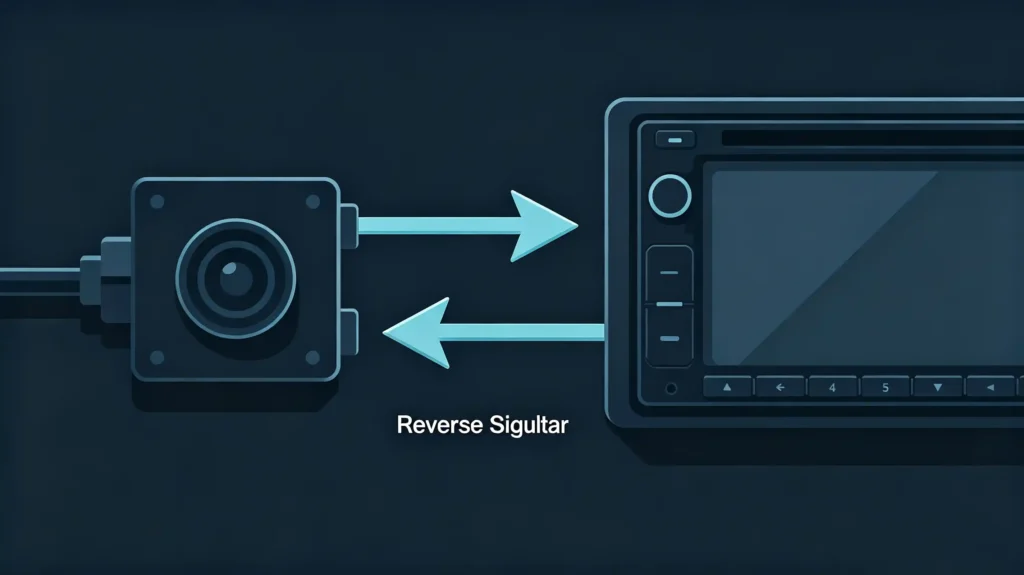
Whatever the use case, compatibility with the head unit comes down to a few specifics. Input compatibility is key for camera integration. See our reverse camera input guide for detailed guidance.
Video input type — RCA (composite) is most common. AHD supports higher resolution. LVDS is generally reserved for OEM systems.
Trigger method — typically a 12V signal from the reverse light circuit or a CAN bus trigger.
Display support — the head unit needs to switch to the camera input automatically when triggered.
Aftermarket Reality
Most Android head units on the aftermarket support RCA camera input with a reverse trigger. This can be wired or CAN bus-based.
Commercial Point
The commercial point here is straightforward. Cameras are not universal hardware. Always verify the camera’s input type and trigger method match the head unit before finalizing a selection.
B2B Sourcing Guide: Term Selection and Camera Hardware Buying Factors
Terminology for Product Listings
For product listings, terminology should follow regional convention.
- “Backup camera” or “rear-view camera” for North American markets
- “Reversing camera” or “reverse camera” for European markets
- Multiple terms together or a generic label like “parking assistance camera” for global catalogues serving several regions at once
Hardware Selection Factors
On the hardware side, a few factors should guide the actual selection regardless of what term ends up on the listing.
- Vehicle type — universal versus vehicle-specific cameras
- Installation requirements — ease of installation versus a more professional, integrated appearance
- Feature requirements — night vision, dynamic guidelines, viewing angle
- Durability — IP67 or IP68 waterproof rating for anything exterior-mounted
RFQ Best Practices
For RFQs specifically, it is worth avoiding reliance on product names altogether. Specify the technical requirements directly. For guidance on choosing the right head unit, see our how to choose an Android head unit guide.
- IP rating
- Resolution
- Video output format
- Trigger method
This eliminates ambiguity. Request samples to verify compatibility and image quality regardless of what label the supplier used in their catalogue.
FAQ
Do “backup camera” and “reverse camera” always describe identical physical hardware in supplier quotation sheets?
In the vast majority of cases, yes. Both terms describe the same functional category of hardware. That said, it is still worth confirming actual specifications (resolution, IP rating, video output) directly with the supplier. The label alone does not guarantee any particular spec, only the general function.
Which camera terminology is preferred for product catalogues targeting North American vs European markets?
North American buyers typically favor “backup camera” or “rear-view camera.” European markets lean toward “reversing camera” or “reverse camera.” For catalogues serving both regions, using multiple terms together or a generic label like “parking assistance camera” avoids favoring one market’s terminology over another.
Can a “rear camera” be used for purposes other than reversing or parking assistance?
Yes. “Rear camera” is a broader term than the others here. It can refer to hardware used for continuous rear monitoring. It can be a component within a 360-degree surround-view system. It can also be a standalone rear dash camera. Confirm specifically what function a listed “rear camera” performs before assuming it matches a standard backup camera.
What wording should B2B buyers use in RFQs to eliminate ambiguity when ordering parking-assist cameras?
Specify the actual technical requirements directly rather than relying on a product name. Include IP rating, resolution, video output format (RCA, AHD, or LVDS), viewing angle, and trigger method (wired or CAN bus). This sidesteps regional terminology differences entirely. It gives suppliers a precise specification to quote against.
Conclusion
Once you look past the terminology, sourcing a reliable backup or reverse camera comes down to matching specifications and compatibility to your target vehicles and markets. Contact our team to discuss your customized requirements. Request a quotation for backup camera-compatible Android head units built around your target market.