A driver sets a route. The navigation system estimates thirty minutes. Twenty minutes later, they are sitting in stopped traffic on a road the system never warned them about. That gap between what the map shows and what the road actually looks like right now is exactly what real-time traffic updates are meant to close.
This guide explains how live traffic data reaches a car navigation system. It explains what it changes in practice. It also covers what B2B buyers should check when sourcing navigation-equipped head units for markets where this feature genuinely matters.
What Are Real-Time Traffic Updates in Car Navigation?
Definition
Real-time traffic updates are live data feeds showing current road conditions. These include congestion, accidents, road closures, and construction. They are layered onto a navigation system’s map and route calculation.
Static vs Live Traffic Navigation
Unlike a static map, which only knows the road network itself, live traffic navigation factors in what is actually happening on those roads at the moment the driver is using them.
Two Categories of Route Planning
This distinction separates two categories of route planning. A system without live traffic calculates the fastest route based purely on distance, speed limits, and road type. It might send a driver down a highway that looks efficient on paper but is currently backed up for kilometers. A system with real-time traffic updates can detect that congestion. It can either warn the driver or automatically suggest an alternate route. This is the practical value proposition customers are actually paying for when they ask about this feature.
How Live Traffic Data Gets to the Head Unit
Data Travels to the Vehicle
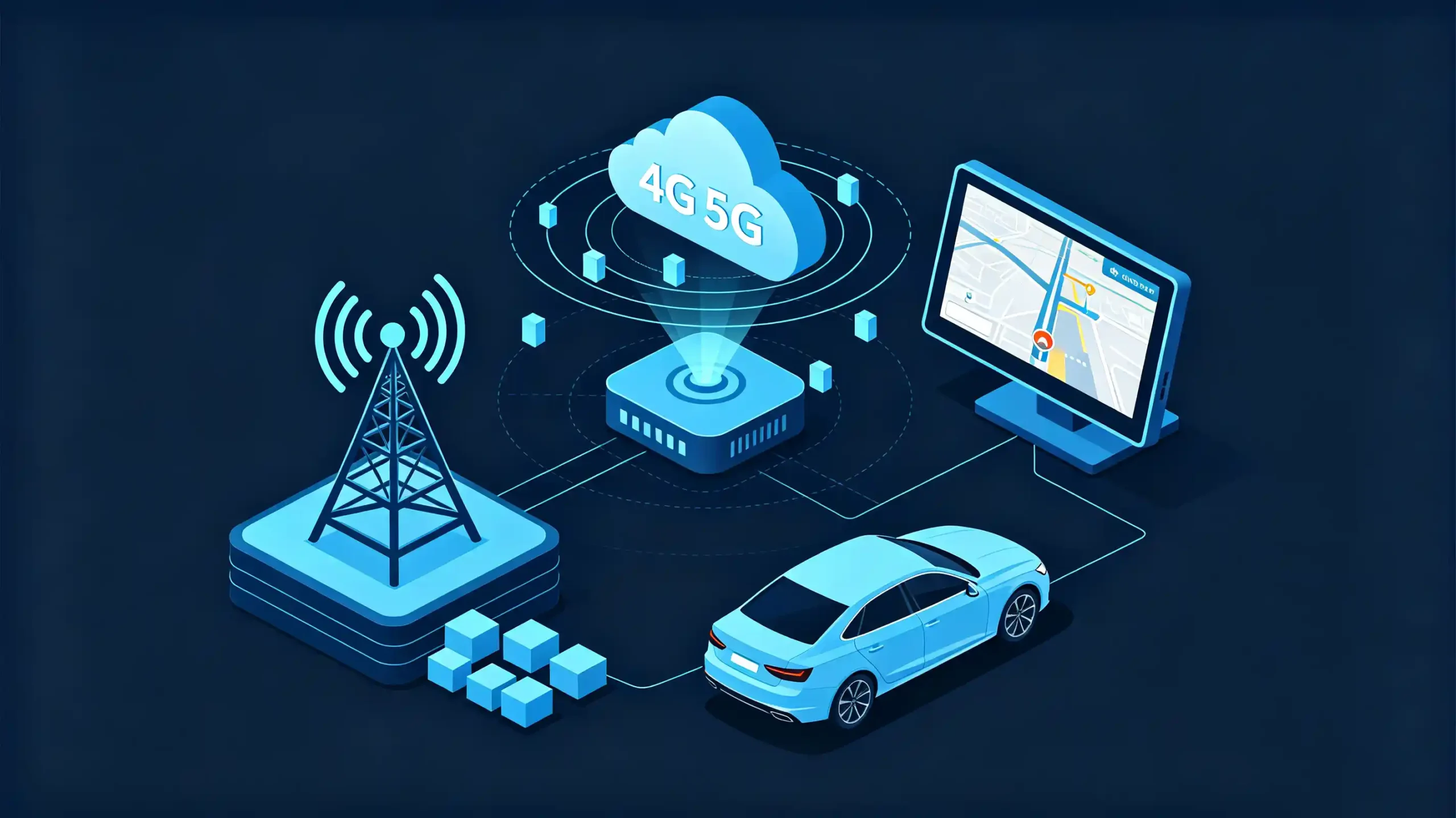
Traffic data does not appear on a screen by magic. It has to travel from a data source to the vehicle through one of a couple of established methods. Understanding which one a system uses explains a lot about its real-world reliability.
Cellular and Data-Based Traffic Services
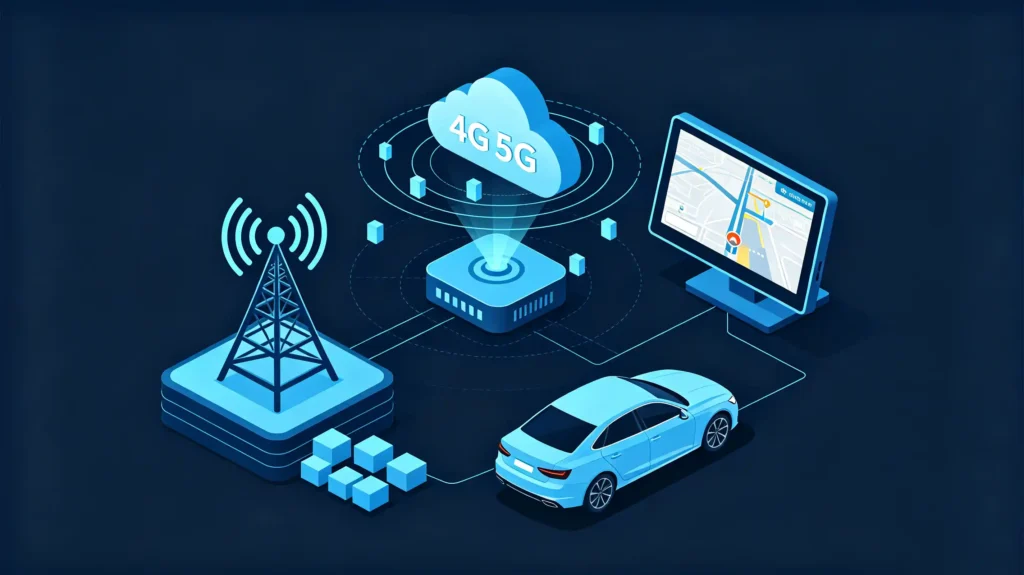
The most common modern approach uses a cellular data connection. This can be built into the head unit or tethered through a connected smartphone. It pulls live traffic information from an online mapping service. This data is typically aggregated from a combination of sources. Government traffic sensors, connected vehicle data, and crowd-sourced information from other drivers using the same navigation platform all contribute. It updates frequently and covers a wide range of conditions. But it depends entirely on having an active data connection. This brings back the same coverage limitations that affect any connected feature in areas with weak cellular service. For more on connectivity, see our smartphone integration in vehicles guide.
RDS-TMC and Broadcast-Based Traffic
An older but still relevant method delivers traffic information over an FM radio subcarrier signal. This is commonly known as RDS-TMC (Radio Data System – Traffic Message Channel). This approach does not require cellular data at all. It receives traffic alerts through the same radio signal the vehicle already uses for standard broadcasts. Coverage and update frequency tend to be more limited than cellular-based services. Availability varies significantly by country. It depends on regional broadcasters supporting the standard.
What Real-Time Traffic Actually Changes While Driving
Concrete Changes in Navigation Behavior
Once a system has live traffic data, it changes navigation behavior in a few concrete ways.
Estimated Arrival Times
Estimated arrival times adjust based on current congestion. They no longer assume free-flowing traffic the whole route.
Dynamic Route Suggestions
Route suggestions can shift dynamically. The system reroutes around an accident or unexpected slowdown the driver would not have known about otherwise.
Visual Traffic Overlays
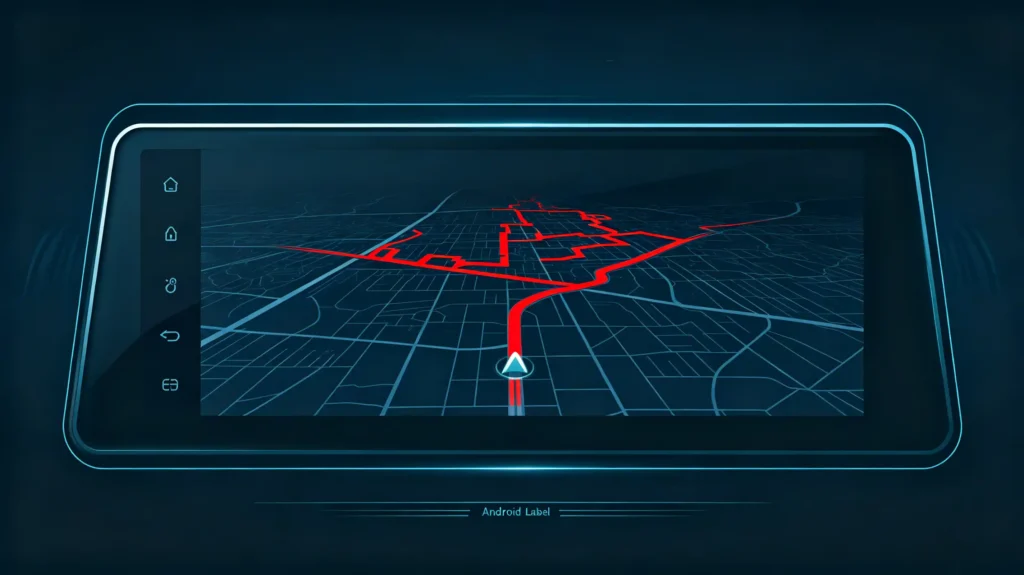
Some systems also display color-coded traffic overlays directly on the map. This lets a driver see congestion ahead before the system even suggests rerouting.
Practical Framing for Dealers
For dealers explaining this feature to customers, the practical framing is straightforward. Real-time traffic does not make the underlying map or GPS positioning more accurate. It makes the route recommendation smarter. It accounts for conditions that a static map has no way of knowing.

Limitations and Common Issues with Live Traffic Updates
Genuinely Useful but Limited
Real-time traffic is genuinely useful. But it comes with limitations worth setting expectations around.
Coverage Limitations
Coverage is not universal. Rural roads and less-traveled routes often have sparse or no traffic data. This is true even in regions where major highways are well covered.
Data Quality Varies
Data quality varies by provider and region. The same head unit might deliver excellent traffic accuracy in one country. It might show noticeably worse performance in another. This is simply because of how the underlying traffic data is sourced there.
Connectivity Dependency
Connectivity dependency is the most fundamental constraint. Cellular-based traffic services stop updating the moment a vehicle loses signal. RDS-TMC coverage depends on regional broadcast support. That is not guaranteed everywhere. For more on offline fallback options, see our offline navigation guide.
Subscription Costs
Buyers should also be clear with customers that live traffic services sometimes require an ongoing subscription or data plan. This is a recurring cost. It is not a one-time feature included with the hardware purchase.
Managing Customer Expectations
There is also a perception gap worth managing proactively. Customers who have used live traffic on a smartphone app sometimes expect identical performance from a car head unit. They do not realize the underlying data source, update frequency, or coverage area can differ meaningfully between a phone’s mapping app and a dedicated navigation system. Setting this expectation at the point of sale, rather than after a complaint, tends to head off a category of dissatisfaction that is not really about the hardware at all. For more on navigation features, see our car navigation features guide.
B2B Considerations for Sourcing Navigation with Real-Time Traffic
Not a Single Yes-or-No Spec
For dealers, wholesalers, and OEM/ODM buyers, real-time traffic support is not a single yes-or-no spec. It is a combination of hardware capability, data source availability, and regional market fit. These need to be evaluated together.
Connectivity Requirements
The buyer needs a head unit configuration that actually matches how customers in the target market will connect to traffic data. Whether that is a built-in cellular module, smartphone tethering, or RDS-TMC reception for regions with strong broadcast support all matters. Companies usually evaluate whether a supplier can adapt regional radio frequency settings and system configuration to match the traffic data infrastructure that is actually available in a specific country. They do not assume one connectivity method works everywhere.
Supplier Evaluation Factors
Buyers comparing navigation systems with live traffic support for bulk orders tend to check a consistent set of things. Which traffic data provider the system relies on and how well that provider covers the target region. Whether the connectivity method (cellular, tethering, or RDS-TMC) matches what is realistic for that market. Whether subscription costs are transparent to the end customer. Whether the supplier can adjust regional settings for OEM or ODM projects targeting a specific country’s traffic infrastructure. For guidance on choosing the right supplier, see our how to choose a car navigation system supplier guide.
Long-Term Cooperation Matters
Long-term cooperation matters here in a way that is easy to underestimate at the quoting stage. Traffic data providers change coverage and pricing over time. A supplier who stays on top of which services remain reliable in a given region — rather than shipping the same configuration indefinitely — saves a dealer from having to explain a degrading feature to customers years after the original sale.
Frequently Asked Questions
Does real-time traffic navigation work without a cellular connection?
Not through cellular-based traffic services, which require an active data connection to receive live updates. Some systems can still receive limited traffic information through RDS-TMC, a broadcast-based method delivered over FM radio, but this depends on regional broadcaster support and generally offers less frequent updates than cellular-based services.
Why does live traffic accuracy vary so much between regions?
Traffic data quality depends on the underlying data source — government sensors, connected vehicle networks, and crowd-sourced driver data — and these sources are far more developed in some countries and cities than others. A system can perform excellently on well-covered highways in one region and show sparse or outdated traffic information in a less-covered area, even using the same underlying hardware.
Is real-time traffic the same as GPS accuracy?
No, and this is a common point of confusion. GPS accuracy relates to how precisely the system calculates the vehicle’s physical position using satellite signals, which works independently of any connection. Real-time traffic is a separate data layer showing current road conditions, and it depends on connectivity rather than satellite reception. A system can have excellent GPS accuracy while having no traffic data at all, or vice versa.
What should I check before sourcing navigation units with live traffic for a new market?
Confirm which traffic data provider the system uses and verify its coverage quality in the target country, check whether the connectivity method matches realistic conditions there (cellular availability, RDS-TMC broadcast support), and clarify whether the end customer needs an ongoing subscription. For OEM or ODM orders, also ask whether regional configuration can be adjusted to fit the specific market’s traffic infrastructure.
Ready to Source Navigation Systems With Reliable Traffic Support?
Whether your target market has strong cellular coverage for live traffic or relies more on broadcast-based updates, matching the connectivity method and regional configuration to actual conditions avoids overselling a feature that won’t perform as expected. Contact our team to discuss your regional traffic and connectivity requirements, or request a quotation for OEM navigation solutions suited to your target market.