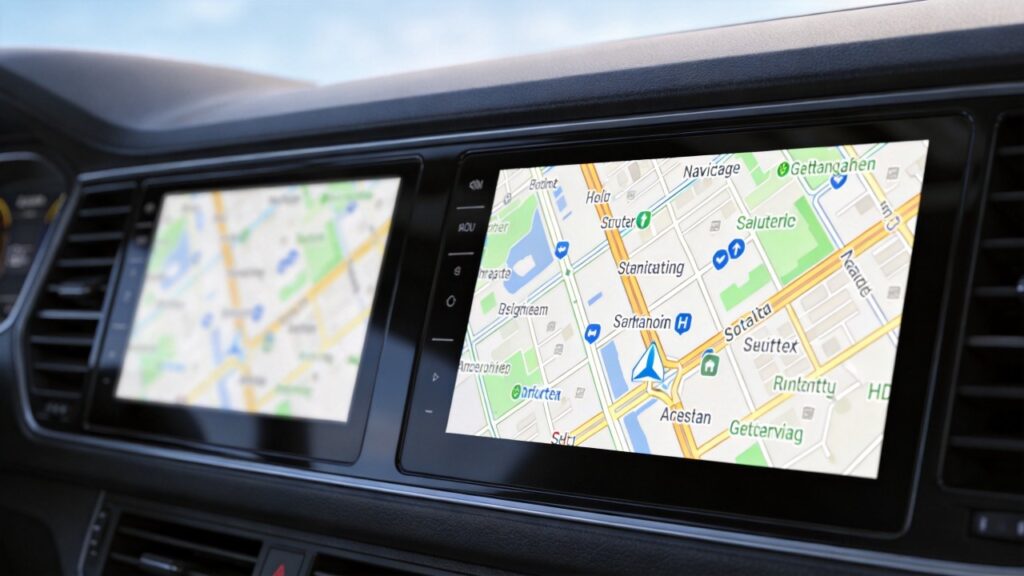
Two car stereos can list the exact same screen size and still look nothing alike once they are actually mounted in a dashboard. Resolution is almost always the reason. It happens to be one of the easiest specs for a supplier to fudge on a listing. A customer usually cannot tell HD from FHD in a product photo.
This guide walks through what resolution actually means for car stereos. It covers how HD stacks up against FHD in daily use. It explains how resolution works together with panel technology. It covers what pixel density has to do with how sharp a screen actually looks. There is also a section at the end on the sourcing traps that catch buyers who skip verification. For a full view of all hardware decisions, see our car stereo hardware components overview.
What Is Display Resolution for Car Stereos? Core Definitions & Industry Standards
Core Definition
Resolution is simply the pixel count on a screen, given as width by height. More pixels packed in means sharper images and cleaner text. That part is not complicated.
HD (High Definition)
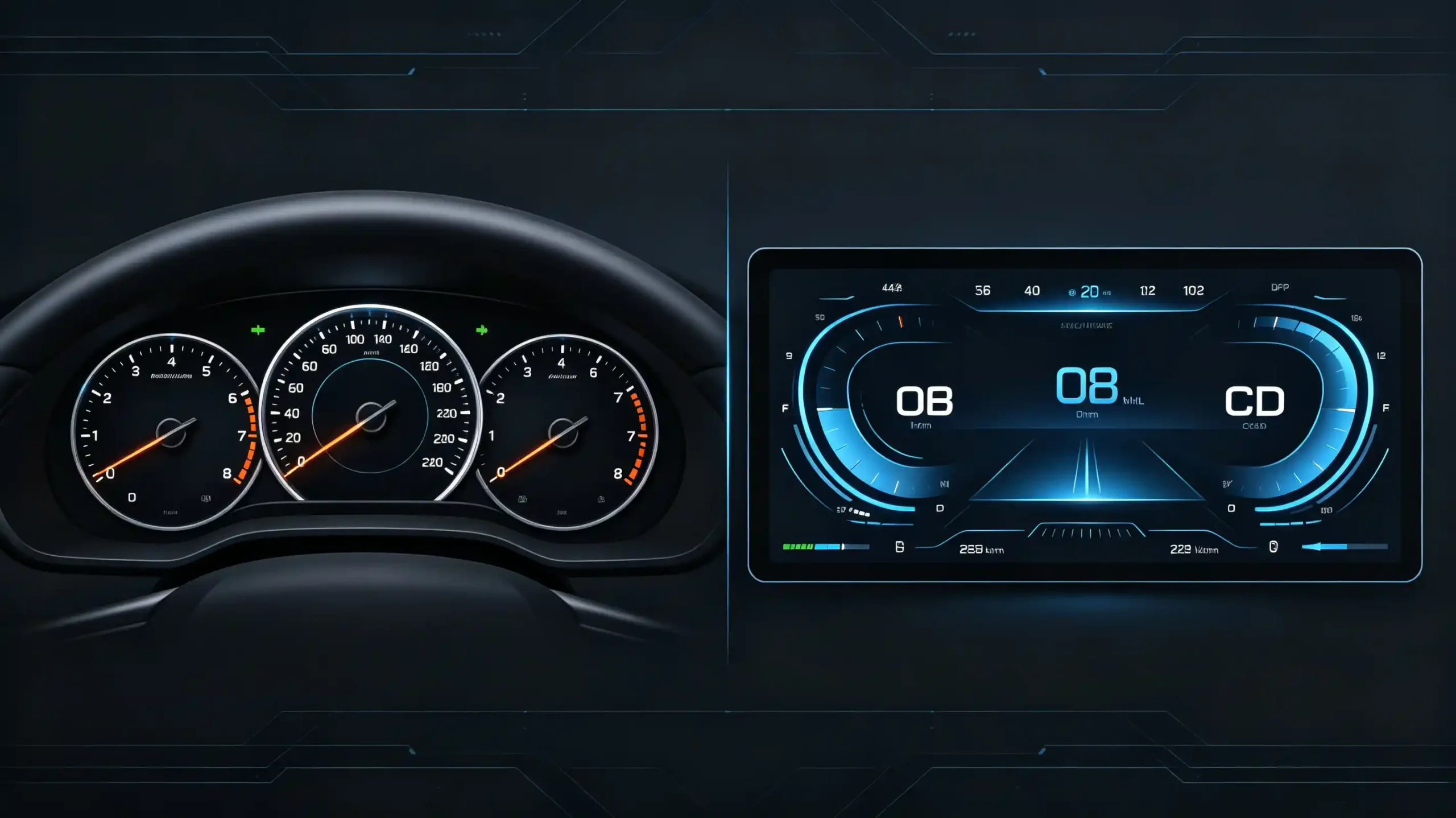
HD (High Definition) sits at 1280×720. It has become the entry-level baseline for car stereos. It holds up fine for navigation and media on screens up to about 7 or 8 inches.
FHD (Full High Definition)
FHD (Full High Definition) jumps up to 1920×1080. The difference shows immediately. Sharper text, better video, and a real improvement in how easy a navigation map is to read at a glance.
Why Resolution Matters Behind the Wheel
Why does any of this matter behind the wheel? Because a driver glancing at a screen does not have time to squint at a blurry street name. Higher resolution means less eye strain. It also means faster, safer reading at a glance.
Industry Standards
Across the industry, HD is still the floor. FHD is quickly becoming the expected norm in more developed markets. Sharper panels are starting to show up here and there. They are not common enough yet to be worth covering in a guide like this one.
HD vs FHD Car Stereo: Core Resolution Performance Comparison
Where the Gap Shows Up
Where does the gap between HD and FHD actually show up? Pretty much everywhere the screen gets used.
Navigation Maps
On navigation maps, FHD renders finer street labels and cleaner lane guidance. HD is not bad, exactly. It just does not have that crisp, premium look FHD gives you.
Video Playback
Video looks noticeably sharper on FHD. HD starts showing its limits once you are playing high-def content on a bigger screen. Some visible pixelation appears.
Text Readability
Text benefits as well. Sharper edges on FHD make it easier to read menus and song titles. Users do not need to squint.
Screen Size Considerations
Screen size changes how much any of this matters. On a 7-inch display, the HD-to-FHD jump is there if you look for it. But it is not dramatic. Push past 9 or 10 inches, though, and the gap becomes obvious. Even someone who is not paying close attention will notice. Screen size and resolution go hand in hand. See our car navigation screen size guide for detailed guidance.
Business Perspective
From a business standpoint, FHD supports a higher price tag. It is turning into table stakes in mature markets. That said, HD still makes complete sense for cost-sensitive buyers and smaller screens. It is not an inferior product. It is just a different one.
How Resolution Interacts with IPS & QLED Display Panels
Resolution vs Panel Technology
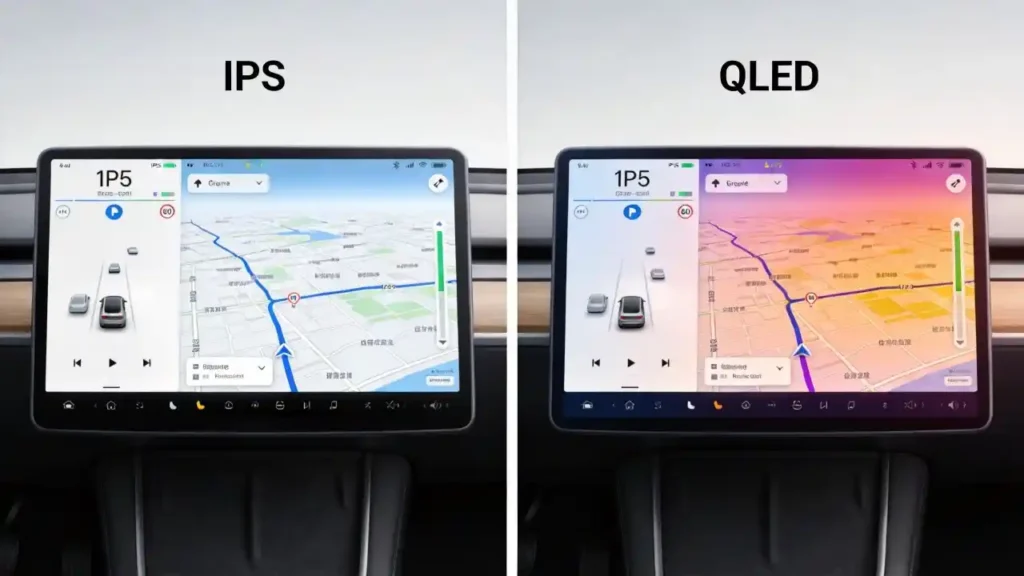
Resolution and panel technology are not the same conversation. Buyers often lump them together. Resolution is about how many pixels exist on the screen. Panel type — IPS, QLED — is about how those pixels actually get lit up and displayed. You need both working in your favor to get a genuinely good image. For a detailed comparison of panel technologies, see our IPS vs QLED display technology guide.
IPS + HD: The Workhorse Combination
IPS + HD is the workhorse combination. It offers solid viewing angles, accurate color, and entry-level pricing. It is what most cost-effective car stereos ship with. For a lot of buyers, it is genuinely enough.
IPS + FHD: The Sweet Spot
IPS + FHD steps things up without a huge cost jump. You get sharper images on top of the color accuracy and wide viewing angles IPS already offers. For most B2B buyers, this ends up being the sweet spot. For most B2B buyers, this ends up being the sweet spot. For guidance on touchscreen performance alongside display quality, see our best touchscreen car stereo guide.
QLED + FHD: The Premium Choice
QLED + FHD is where you land if the customer wants the best. High brightness, a wider color range, sharp detail, and the strongest sunlight readability of the bunch. It is the natural fit for premium 4S dealership upgrades.
One Thing Worth Flagging
One thing worth flagging: do not source resolution and panel quality separately. Pair a sharp panel with weak resolution, or a high resolution with a mediocre panel, and you have wasted money on whichever half was actually good.
Touchscreen Pixel Density: Impact on User Experience & Commercial Value
What Is Pixel Density?
Here is a spec that gets overlooked more than it should: pixel density, or PPI — pixels per inch. It is a measure of how tightly packed the pixels are on the display. It tells you more about real sharpness than resolution alone does.
The Math Behind It
The math behind it is simple enough. Take the pixel count along the diagonal. Divide by the screen’s diagonal size in inches. Bump up the resolution on a screen that stays the same physical size, and PPI climbs right along with it.
Why Buyers Should Care
Why should a buyer care? Higher PPI means text that is easier to read at a glance. That is genuinely a safety consideration while driving. It also means less eye strain over a long trip. It makes the interface feel more premium in the hand — or on the dash, in this case.
Screen Size and Resolution as a Pair
Screen size and resolution need to be considered as a pair, not separately. A 7-inch HD screen looks fine. Stretch that same HD resolution across a 10-inch panel, though, and PPI drops enough that it starts looking pixelated. A 10-inch FHD panel keeps things sharp at that larger size. That combination — FHD on a bigger screen — is one of the more noticeable premium touches you can offer. Customers are usually willing to pay for it.
OEM Head Unit Screen Specs: Resolution Standards for Factory Systems
Factory Displays Lag Behind
Factory displays tend to lag behind what the aftermarket offers. The gap is bigger than most buyers realize. Entry-level vehicles often ship with HD or worse. Mid-range models are only now catching up to HD as a baseline. FHD is really only standard on luxury trims at this point.
The Opportunity for Aftermarket
That lag is exactly where the opportunity sits. An aftermarket unit can frequently out-resolve the factory screen in the same vehicle. Sometimes at a similar price point or even less. It comes down to priorities. Automakers are optimizing for reliability and cost at mass-production scale. Display upgrades tend to get pushed down the list.
Resolution vs CAN Bus Integration
Worth clearing up for buyers who might assume otherwise: swapping in a sharper aftermarket unit does not touch CAN Bus functionality at all. Resolution and vehicle integration are completely separate specs. For foundational context on vehicle communication, see our what is CAN BUS guide. For 4S dealerships, that OEM-versus-aftermarket resolution gap is a genuinely easy sell. Customers have noticed their factory screen looking dated.
How to Choose the Right Display Resolution for Your B2B Business
4S Dealership Premium Upgrades
Running 4S dealership premium upgrades? FHD is not optional here. It is the baseline your customers expect. It is what lets you charge accordingly.
4S Dealership Standard Upgrades
Doing standard dealership upgrades? FHD still makes sense competitively. HD is a reasonable fallback for budget-conscious customers. Even if it is starting to feel a little dated.
Mature Cross-Border Markets
Selling into mature cross-border markets? Go FHD. Buyers notice the sharper screen. HD increasingly reads as the older option.
Emerging Price-Sensitive Markets
Targeting emerging, price-sensitive markets? HD is often the smarter call for price-to-performance. Save FHD for your premium line where buyers are willing to pay up.
OEM/ODM Projects
Working on an OEM/ODM project? FHD for premium vehicle segments and bigger screens. HD where cost discipline matters more than display quality. Custom resolution and panel configurations are available if your target market needs something specific.
Common Resolution-Related Quality Risks & Sourcing Red Flags
FHD Advertised, HD Shipped
Some suppliers will simply advertise FHD and ship HD. It happens more than buyers expect. The only real defense is physical inspection or display testing. Do not trust the spec sheet alone.
Firmware Optimization Issues
Even a genuine FHD panel can look underwhelming if the firmware behind it is not properly optimized. Test with actual high-definition content. Do not rely on a polished demo reel that has been chosen to look good.
High Resolution on a Weak Panel
High resolution on a weak panel is another trap. The number on the box means little if brightness, contrast, and viewing angles are not there to back it up.
Screen Size Mismatches
Do not overlook screen size mismatches. HD stretched across a 10-inch-plus display produces exactly the kind of low-PPI, pixelated look this guide has been warning about.
The Fix
The fix is the same every time. Request samples. Run them through real content. Check pixel count with a proper diagnostic tool before production starts. Pair that with a 48-hour aging test and high-temperature testing. That goes a long way toward confirming the display holds up past its first showroom demo.
FAQ
What is the minimum resolution standard for car stereos sold in mature North American and European markets?
FHD (1920×1080) is quickly becoming the expected minimum for competitive positioning in these markets. This is especially true on 9-inch-plus screens. HD is still technically acceptable and still sells. But buyers in these regions increasingly notice the sharper FHD experience. They prefer it once they see the two side by side.
How much clearer is FHD resolution compared to HD in in-car navigation and video playback?
The difference shows up clearly in sharper street labels, finer map detail, and video that stays clean without visible pixelation. This is particularly noticeable on 9-inch-and-up screens. On a smaller 7-inch display, the gap is present but subtler. It is most obvious when you put the two side by side. Judging either one in isolation does not show the full difference.
Do higher resolution car stereos require more powerful processors to run smoothly?
Yes, to some degree. Rendering FHD content smoothly — especially 3D navigation and video — asks more of the processor and GPU than HD does. Pair an FHD panel with a weak processor and you will get lag despite the sharper screen. Check processor specs alongside resolution. Do not treat the two as unrelated decisions.
What pixel density is recommended for 10-inch car stereo touchscreens to ensure clear display?
A 10-inch FHD panel lands around 220 PPI. This gives excellent clarity for text and navigation detail. Drop to HD on that same 10-inch size and PPI falls enough to start looking pixelated by comparison. For screens this size, FHD is generally the better match. This is true if sharp, legible detail matters to your buyers.
What are the most common fake resolution specifications in aftermarket car stereo bulk orders?
The classic move is advertising FHD while actually shipping HD. Only physical inspection or diagnostic testing will catch this. The listing itself will not reveal it. Firmware that does not fully take advantage of a genuine FHD panel is another pattern. Test for this directly using sample units before you commit to a full production run.
Conclusion
Start by matching HD or FHD to whatever market you are actually selling into. That is the easy part. The harder, more important part is verifying that the panel and PPI genuinely deliver what the spec sheet claims. Test samples before bulk orders go out. Skip that step and you are gambling with your margins and your after-sales reputation.