A service center replaces a windshield, runs the required ADAS recalibration, and hands the car back — only for the customer to call a day later saying the navigation is showing the wrong location or won’t lock onto GPS. The technician did nothing wrong with the calibration itself, but the complaint still lands on the dealership’s desk. This mix-up happens often enough in 4S service departments and independent shops that it’s worth explaining clearly: what ADAS calibration actually touches, what it doesn’t, and why navigation issues still show up afterward. For a foundational overview of navigation systems, see our what is a car navigation system guide.
What Is ADAS Calibration, and Why Does It Happen?
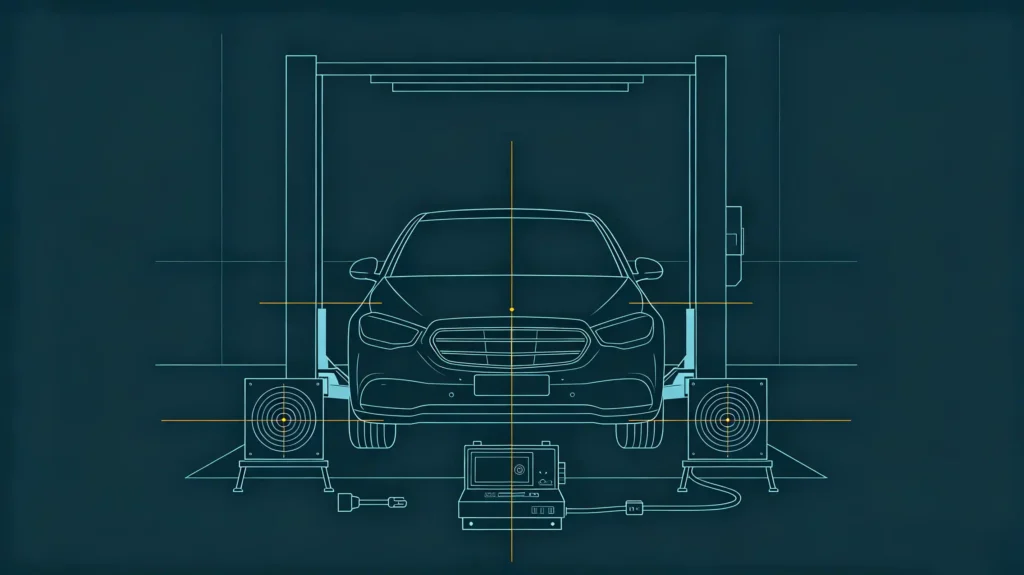
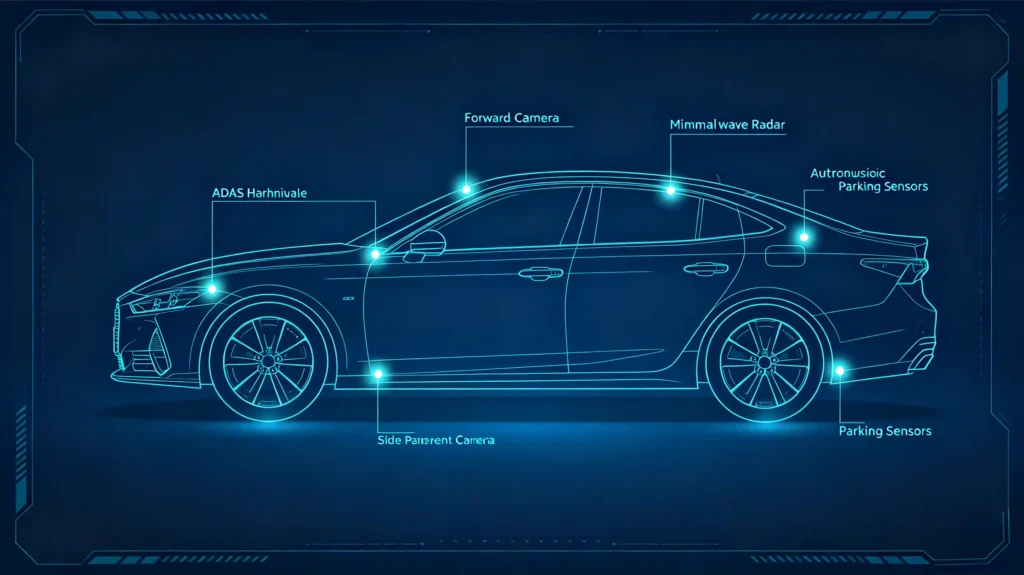
ADAS stands for Advanced Driver Assistance Systems — the cameras, radar units, and ultrasonic sensors behind features like lane departure warning, forward collision alerts, and adaptive cruise control. These sensors are calibrated to a precise physical alignment relative to the vehicle, which is why calibration becomes necessary after windshield replacement (since forward-facing cameras are often mounted there), bumper repairs, suspension or wheel alignment work, or any repair that shifts a sensor’s mounting position even slightly.
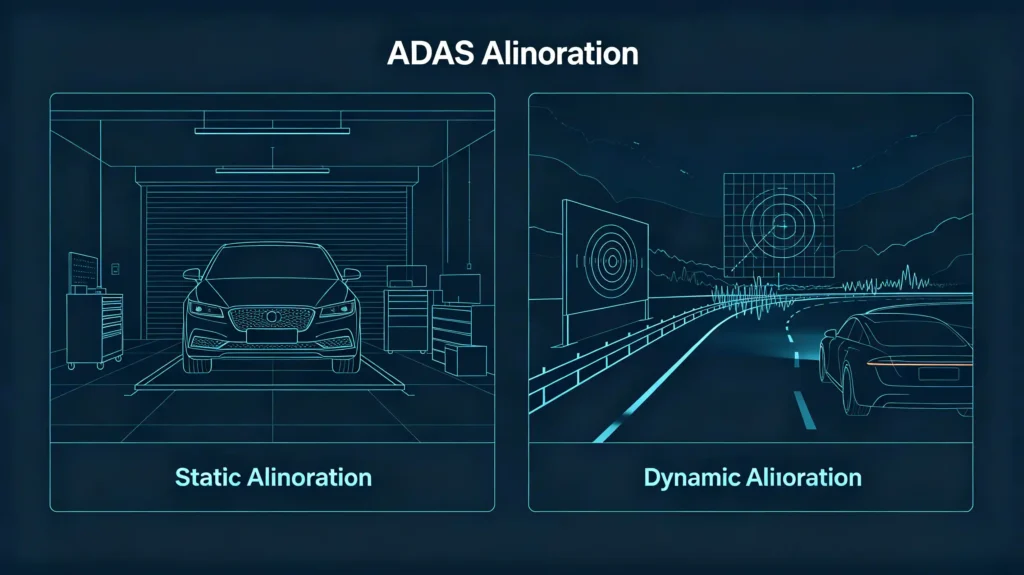
Calibration itself comes in two forms. Static calibration uses target boards positioned at exact measured distances in a service bay, while dynamic calibration requires driving the vehicle at a specified speed on a suitable road so the system can self-calibrate using real-world reference points. Neither process is inherently connected to the vehicle’s GPS-based navigation system — they’re addressing camera and radar alignment, not map data or satellite positioning.
Do ADAS Calibration and In-Car Navigation Systems Interact?
Technically, ADAS and in-car navigation are separate systems built for different jobs. ADAS reads real-time sensor data to assist with driving decisions; navigation uses GPS positioning and stored map data to guide a route. For more on how navigation systems work, see our how does a car navigation system work guide. They typically run on different modules within the vehicle, and calibrating one doesn’t directly reprogram or corrupt the other’s data.
That said, they’re not entirely isolated from each other, which is exactly why the confusion persists.
Why Navigation Errors Show Up After ADAS Recalibration
Most reported “navigation broke after calibration” cases trace back to something ancillary to the calibration itself rather than the calibration process corrupting anything. Disconnecting the vehicle battery — common during ADAS or other service work — resets the GPS receiver’s stored satellite almanac, meaning the system needs a fresh “cold start” to reacquire signal, which can take noticeably longer than a normal startup and sometimes shows an inaccurate position briefly while it does. Physical work near the windshield or dashboard can also nudge a GPS antenna connection loose without the technician noticing, since these antennas are often small and tucked behind trim panels.
What’s Actually Happening at the System Level
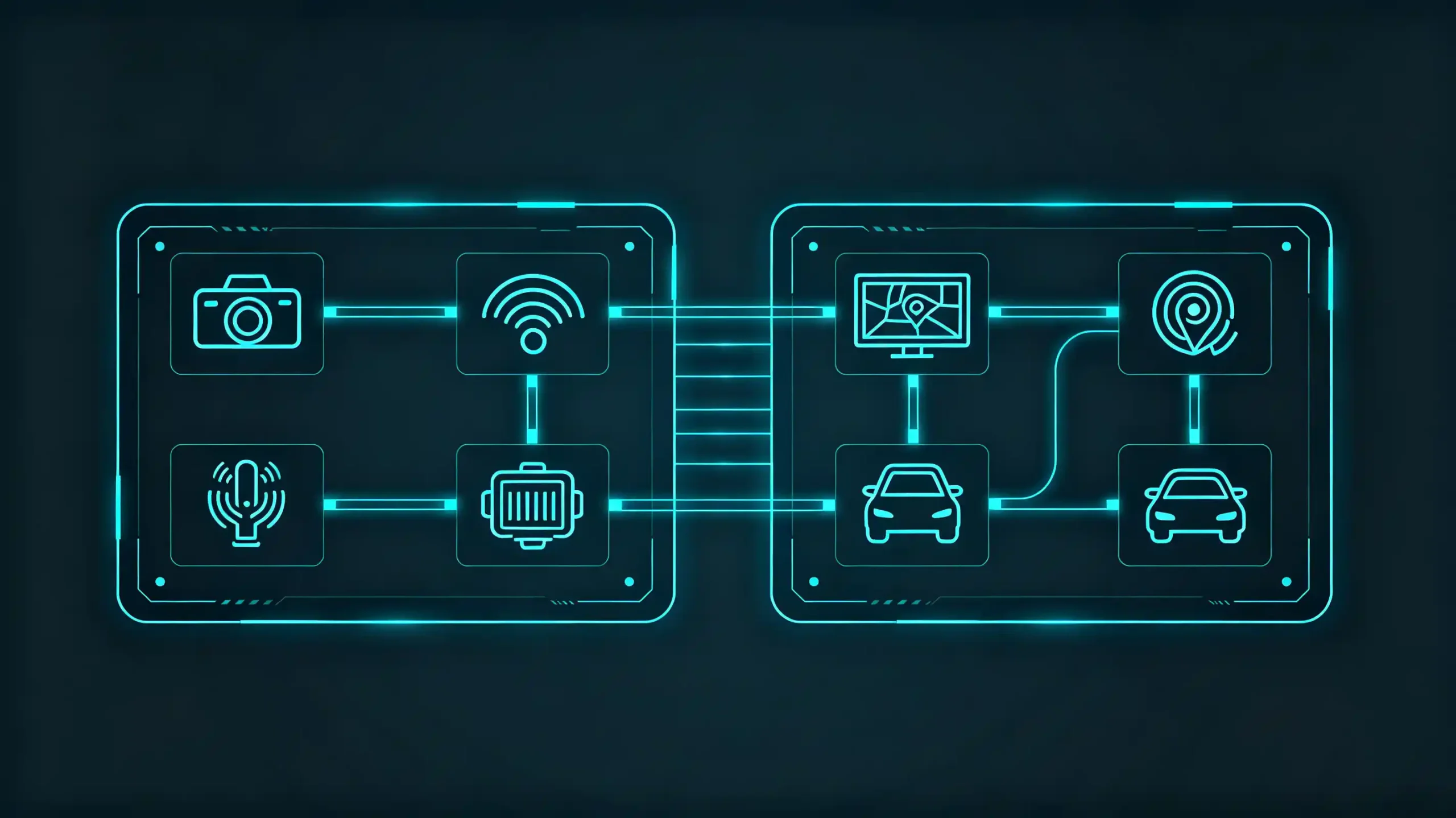
There’s also a CANBUS factor worth understanding for anyone working on vehicle electronics regularly. Many modules on a vehicle, including the head unit’s navigation system and various ADAS-related sensors, communicate over the same CANBUS network. For foundational context on CANBUS, see our what is CAN BUS guide. Reflashing or resetting one module during a service procedure can occasionally cause a brief communication interruption across the bus, which shows up on the head unit as a temporary glitch, reboot, or lost GPS fix — not because navigation data was damaged, but because the shared communication channel was momentarily disrupted by unrelated service work.
What Dealers and Service Centers Should Check After Recalibration
For a service department fielding this complaint, the practical troubleshooting sequence is straightforward and rarely requires escalating to a hardware fault. Confirming the GPS antenna connection wasn’t disturbed during the repair is the first step, followed by allowing enough time for the receiver to complete a cold start rather than assuming a fault after a few minutes of inaccurate positioning. If the head unit itself rebooted or showed a communication error during the calibration procedure, checking that its CANBUS pairing with the vehicle re-established correctly is the next logical step before assuming a defective unit.
This is a useful conversation to have with customers proactively, too — explaining upfront that navigation may take a few minutes to reacquire GPS after service work involving a battery disconnect avoids a callback that didn’t need to happen.
B2B Considerations for Head Unit and Navigation Sourcing
For dealers and 4S networks that install or service Android-based head units regularly, this whole scenario points to a sourcing consideration that’s easy to overlook until it causes a support headache: how well a head unit’s navigation and CANBUS integration handle the kind of service disruptions described above.
CANBUS Compatibility and Recovery
The buyer needs a head unit that reconnects cleanly to the vehicle’s CANBUS network after a module reset or battery disconnect, rather than requiring a manual re-pairing procedure every time related service work happens elsewhere in the vehicle. Companies usually evaluate this by asking suppliers directly about CANBUS decoder development — specifically, whether the decoder is matched to the original vehicle protocol closely enough to recover automatically, or whether it needs manual intervention after every disruption.
Rungrace develops CANBUS decoders in-house, built specifically to match original vehicle communication protocols rather than relying on generic decoding that may behave unpredictably after a module reset. For more on decoder development, see our CAN Bus explained guide. For dealers fitting head units into vehicles that will also go through routine ADAS-related service work, this kind of protocol-matched integration reduces the number of “why isn’t my navigation working” callbacks that have nothing to do with the head unit’s actual navigation function.
Supplier Evaluation Factors
Beyond CANBUS handling, dealers sourcing head units for vehicles likely to undergo ADAS service work over their lifetime tend to check a few consistent things: how the GPS module performs on cold start after a power interruption, whether the supplier can provide OEM navigation customization matched to specific vehicle models, and whether after-sales support is available for diagnosing the kind of intermittent, service-related issues covered here rather than treating every complaint as a defective unit.
Long-term cooperation matters here more than a single purchase order suggests. A dealer network servicing the same vehicle models repeatedly will run into this exact navigation-after-service scenario again, and a supplier who can walk a service team through the difference between a genuine hardware fault and a routine GPS reacquisition delay saves both sides time on warranty claims that don’t need to happen. That kind of ongoing technical support tends to matter more over a multi-year relationship than any single unit’s price.
Frequently Asked Questions
Can ADAS calibration damage my car’s navigation system?
Not directly. ADAS calibration adjusts camera and radar sensor alignment and doesn’t reprogram GPS or map data. Navigation issues that appear afterward are usually caused by related service steps — a battery disconnect resetting the GPS receiver, a disturbed antenna connection, or a brief CANBUS communication interruption — rather than the calibration process itself affecting navigation.
Why does my navigation show the wrong location right after a windshield replacement and recalibration?
This is typically a GPS cold start issue. If the battery was disconnected during the repair, the receiver loses its stored satellite data and needs time to reacquire an accurate fix, which can temporarily show an incorrect or drifting position. Waiting a few minutes with a clear view of the sky usually resolves it without any further service needed.
Should ADAS recalibration and navigation checks be done together during service?
They don’t need to be performed as a single procedure since they involve different systems, but it’s good practice for a technician to confirm the navigation system reacquires GPS normally after any service involving a battery disconnect or dashboard work. Catching a slow GPS lock or CANBUS reconnection issue before returning the vehicle avoids an unnecessary customer callback.
What should dealers look for in a head unit if their customers frequently need ADAS-related service work?
A CANBUS decoder that’s closely matched to the vehicle’s original communication protocol tends to recover more reliably after module resets or battery disconnects common during ADAS service. Asking a supplier directly about protocol-matched CANBUS development, rather than assuming generic compatibility, is worth doing before committing to a bulk order for vehicles that will see this kind of service regularly.
Sourcing Head Units That Hold Up Through Routine Service Work
If your dealership or service network regularly handles vehicles going through ADAS calibration, suspension work, or other procedures that disrupt vehicle electronics, it’s worth working with a supplier whose navigation and CANBUS integration are built to recover cleanly rather than generate avoidable callbacks. Contact our team to discuss your CANBUS matching requirements, or request a quotation for OEM navigation solutions suited to your vehicle lineup.