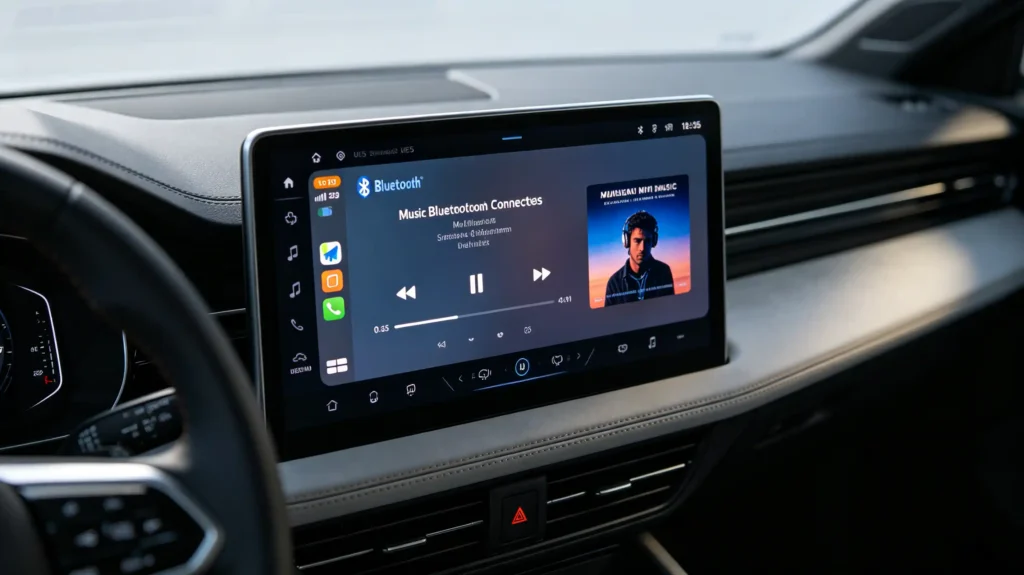
“Why is my car GPS not accurate?” is one of those questions that sounds simple until you start troubleshooting it. The answer is rarely just one thing. A driver stuck in a downtown parking structure sees the blue dot drift onto the wrong street. Another driver on a straight open highway watches the same unit track perfectly. Both are using the same technology. But the conditions — and sometimes the hardware — are doing very different amounts of work. This breaks down what actually determines car navigation accuracy. It also covers what buyers should ask before assuming a unit is simply defective. For a foundational overview of navigation systems, see our what is a car navigation system guide.
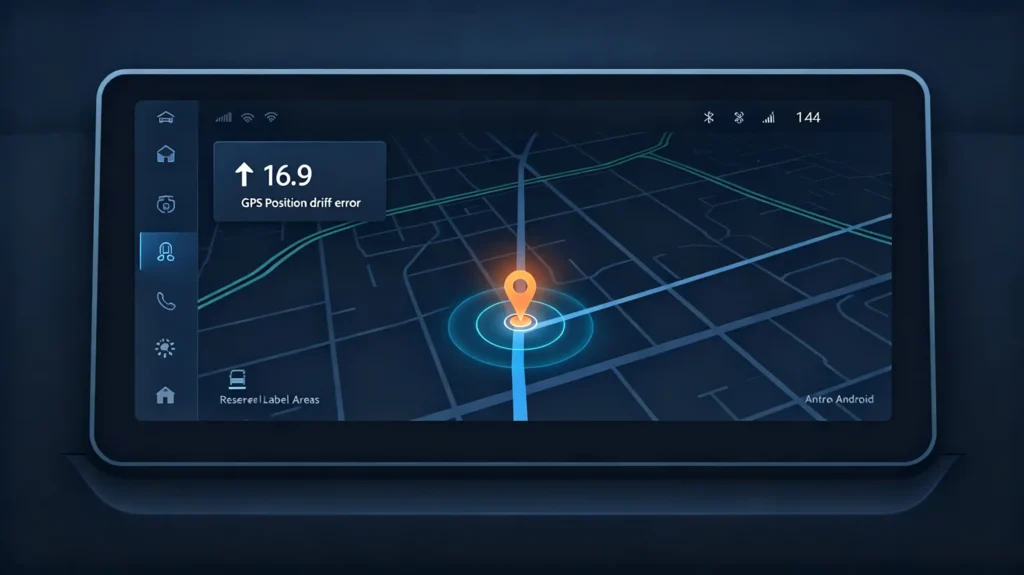
Why Is My Car GPS Not Accurate? Common Causes
The Signal’s Long Journey
GPS positioning accuracy depends on a signal traveling from satellites roughly 20,000 kilometers away. Almost anything that interferes with that signal’s clarity affects the result. This is worth explaining to customers directly. “GPS not accurate” complaints often have nothing to do with the head unit itself.
Signal Obstruction and Antenna Placement
Tall buildings, dense tree cover, tunnels, and parking structures block or reflect GPS signals before they reach the receiver. This problem is commonly called signal multipath. The receiver picks up a reflected signal alongside the direct one. It has to work out which is accurate. This is why navigation accuracy noticeably drops in dense city centers compared to open highways. This happens regardless of how good the underlying hardware is. For more on navigation technology, see our how does a car navigation system work guide. Antenna placement matters here too. An antenna with a clear view of the sky performs meaningfully better than one tucked under thick dashboard trim or metallic tinting that blocks satellite reception.
Satellite Geometry and Urban Environments
Accuracy also depends on how many satellites the receiver can see. It also depends on how they are spread across the sky. GPS engineers refer to this as satellite geometry or dilution of precision. When available satellites are clustered close together in the sky rather than spread out, positioning calculations become less precise. This happens even with a strong signal. This explains why the same vehicle can show excellent accuracy in one location and noticeably worse accuracy a few blocks away. It is purely based on which satellites happen to be visible at that moment.
Hardware Factors That Affect GPS Navigation Accuracy
Environmental vs Hardware
Environmental conditions explain a lot. But hardware quality still accounts for a real difference between units. This is particularly true for buyers comparing head units at different price points.
GPS Chipset and Antenna Quality
Not all GPS receivers process signal the same way. A higher-quality chipset combined with a well-designed antenna acquires satellites faster after startup. It holds a stable fix longer in marginal conditions like light tree cover. It recovers more quickly after a signal loss such as exiting a tunnel. This is a legitimate differentiator between head unit tiers. It is worth dealers understanding well enough to explain to customers. Do not treat every navigation complaint as a software problem.
Dead Reckoning
Many modern systems also improve accuracy through dead reckoning. Dead reckoning affects GPS accuracy in challenging environments. See our GPS dead reckoning guide for detailed guidance. They use the vehicle’s speed and steering data, often pulled through the CAN Bus connection, to estimate position during brief GPS gaps. This includes tunnels or parking garages. The system then corrects once satellite signal returns. A head unit with solid CAN Bus integration tends to handle these gaps more gracefully than one relying on GPS alone. For foundational context on CAN Bus, see our what is CAN BUS guide.
Map Data and Software Calibration
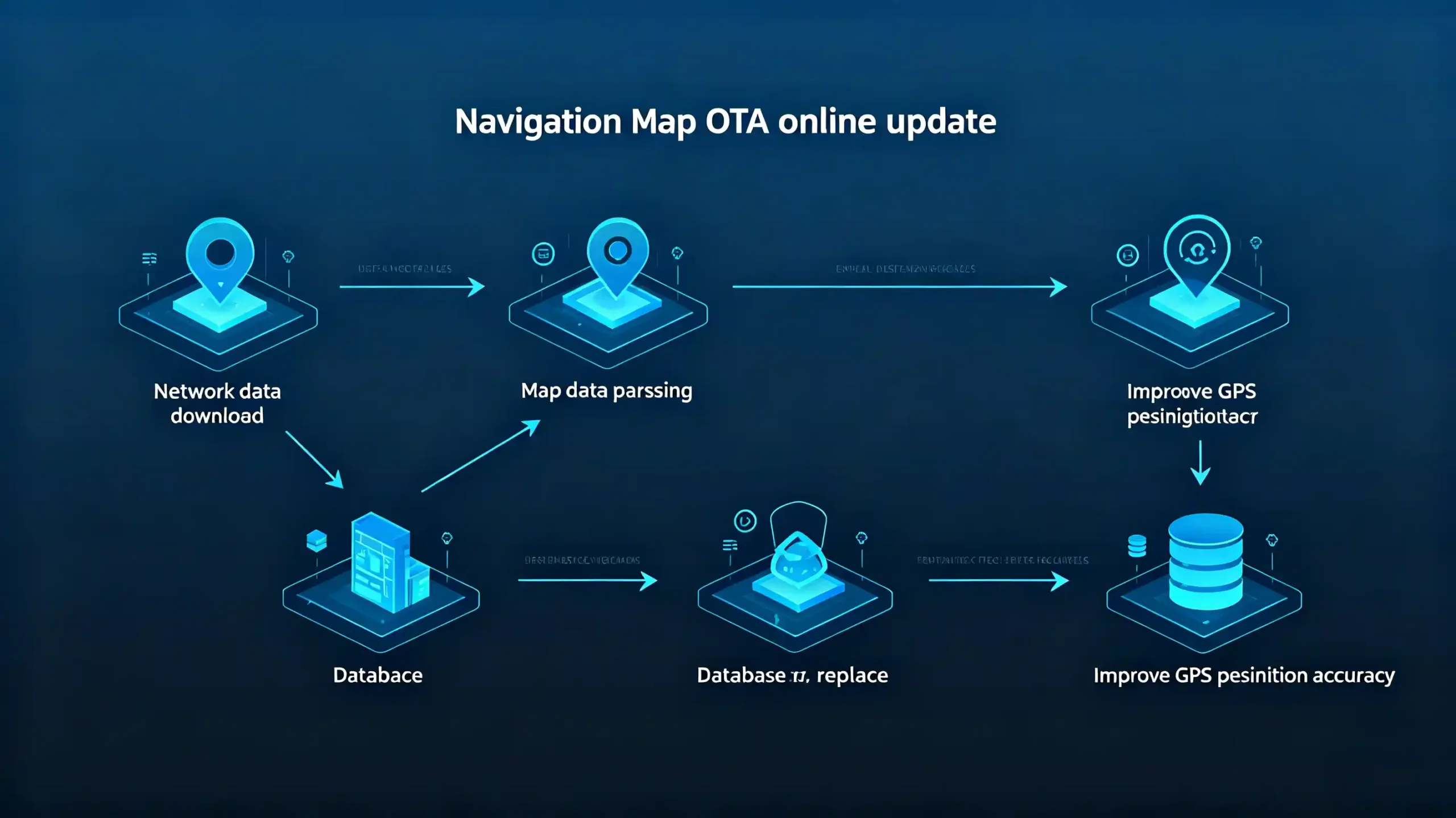
Positioning hardware only tells part of the story. Map data quality and how well the software matches a raw GPS coordinate to the actual road — a process called map matching — affects what the driver actually sees on screen. A system with outdated or poorly matched map data can show a vehicle appearing to drive through buildings or take non-existent turns. This happens even when the underlying GPS fix is technically accurate. This is a common source of confusion. The fault sits in the mapping software layer rather than the positioning hardware.
How to Improve Car GPS Accuracy

What Can Be Done
Some accuracy issues are outside anyone’s control. Dense urban canyons and heavy tree cover will always challenge any GPS system to some degree. But a few practical steps genuinely help.
Practical Steps
Keeping the antenna area clear of aftermarket window tint or metallic wraps that block signal is important. Allowing the receiver a few minutes to complete a full satellite lock after a long period parked or after a battery disconnect helps. Keeping map software updated ensures the system is not trying to match positioning data against outdated road layouts.
For Dealers
For dealers fielding these complaints regularly, walking a customer through this list before assuming a hardware fault saves a fair number of unnecessary warranty claims. For step-by-step installation guidance, see our head unit installation guide.
Setting Expectations
It also helps to set expectations at the point of sale rather than after a complaint arrives. A brief note in the owner’s documentation is useful. Mention that satellite lock may take a few minutes in a parking garage or after a long period unused. Mention that dense city driving will always show more variance than open highways. This heads off a category of support calls that are not actually product defects. It positions the dealer as knowledgeable rather than defensive when the question does come up.
B2B Considerations for Sourcing Accurate Navigation Systems
Why Accuracy Matters for Sourcing
For dealers, wholesalers, and automakers sourcing navigation-equipped head units at scale, accuracy is not just a customer satisfaction issue. It is a specification that affects returns, complaints, and long-term brand reputation across an entire product line.
Customization for Regional Map Data
The buyer needs a navigation system with map data that is actually accurate and current for the target market. This becomes a real consideration for importers selling across multiple regions with different mapping providers and update cycles. Companies usually evaluate whether a supplier can adapt regional frequency and map data configuration to match the destination market. They do not want a single global configuration that performs unevenly outside its home region. For guidance on choosing the right supplier, see our how to choose a car navigation system supplier guide.
Supplier Evaluation Factors
Beyond map data, buyers evaluating navigation hardware for bulk orders tend to check a consistent set of things. How the GPS module performs under real testing conditions rather than just open-sky lab tests. Whether CAN Bus integration for dead reckoning is genuinely supported or just listed as a feature. What the factory’s quality control process looks like before units ship. Whether ongoing map and firmware updates remain available after the sale rather than leaving customers with a system that ages poorly.
Long-Term Update Commitment
This last point tends to matter more over time than buyers initially weigh it. A navigation system that performs well at launch but has no update path for map data becomes a source of complaints within a year or two. Roads change and new developments appear on the ground but not on screen. Confirming a supplier’s long-term update and support commitment before placing a large order is worth as much attention as the initial accuracy specifications.
FAQ
Why is my car GPS accurate on the highway but not in the city?
Urban environments create more signal obstruction from buildings. Reflected signals off building surfaces — known as multipath interference — confuse the receiver’s positioning calculation. Highways typically offer a clearer, unobstructed view of the sky. This lets the GPS receiver maintain a stronger, more direct signal. This difference is largely environmental. It is not a sign of a faulty unit.
Does a more expensive head unit always mean better GPS accuracy?
Not automatically. But chipset and antenna quality do vary between price tiers. They genuinely affect performance in marginal conditions like light tree cover or brief tunnels. The bigger differentiator is often whether the system supports CAN Bus-based dead reckoning to bridge GPS gaps. It is also how well its map data is matched and maintained. These factors matter more than price alone.
Can outdated map data make GPS seem inaccurate even if the signal is fine?
Yes. A GPS receiver can report a technically accurate position. But the map software may fail to match it correctly to current roads. This is especially true in areas with new construction or road changes. This shows up as the vehicle appearing off-road or taking incorrect turns on screen. The underlying satellite positioning is working normally. The fault is in the map data.
What should I look for when sourcing navigation-equipped head units for a new market?
Confirm the map data source is current and properly licensed for the target region. Check whether the GPS module and antenna have been tested under real driving conditions rather than lab-only benchmarks. Ask whether the supplier can adjust regional configuration for that market specifically. For OEM or ODM orders, clarify how firmware and map updates will be handled after the units ship.
Conclusion
Whether you are stocking standard navigation head units or specifying an OEM configuration adapted for a new regional market, getting GPS hardware, CAN Bus integration, and map data right upfront reduces accuracy complaints down the line.