A customer asks a dealer whether a vehicle “parks itself.” The honest answer usually needs a follow-up question first. Does the buyer mean full automatic parking? Or the sensor-and-camera assistance that most cars already ship with? The two get used interchangeably in showroom conversations. But they are different technologies. They have different sourcing implications for dealers and installers.
This guide separates the two clearly. It covers what matters when specifying or upgrading parking assistance hardware for a vehicle fleet. For a complete guide on camera hardware, see our backup camera guide.
What Is Parking Assistance in a Car?
Definition
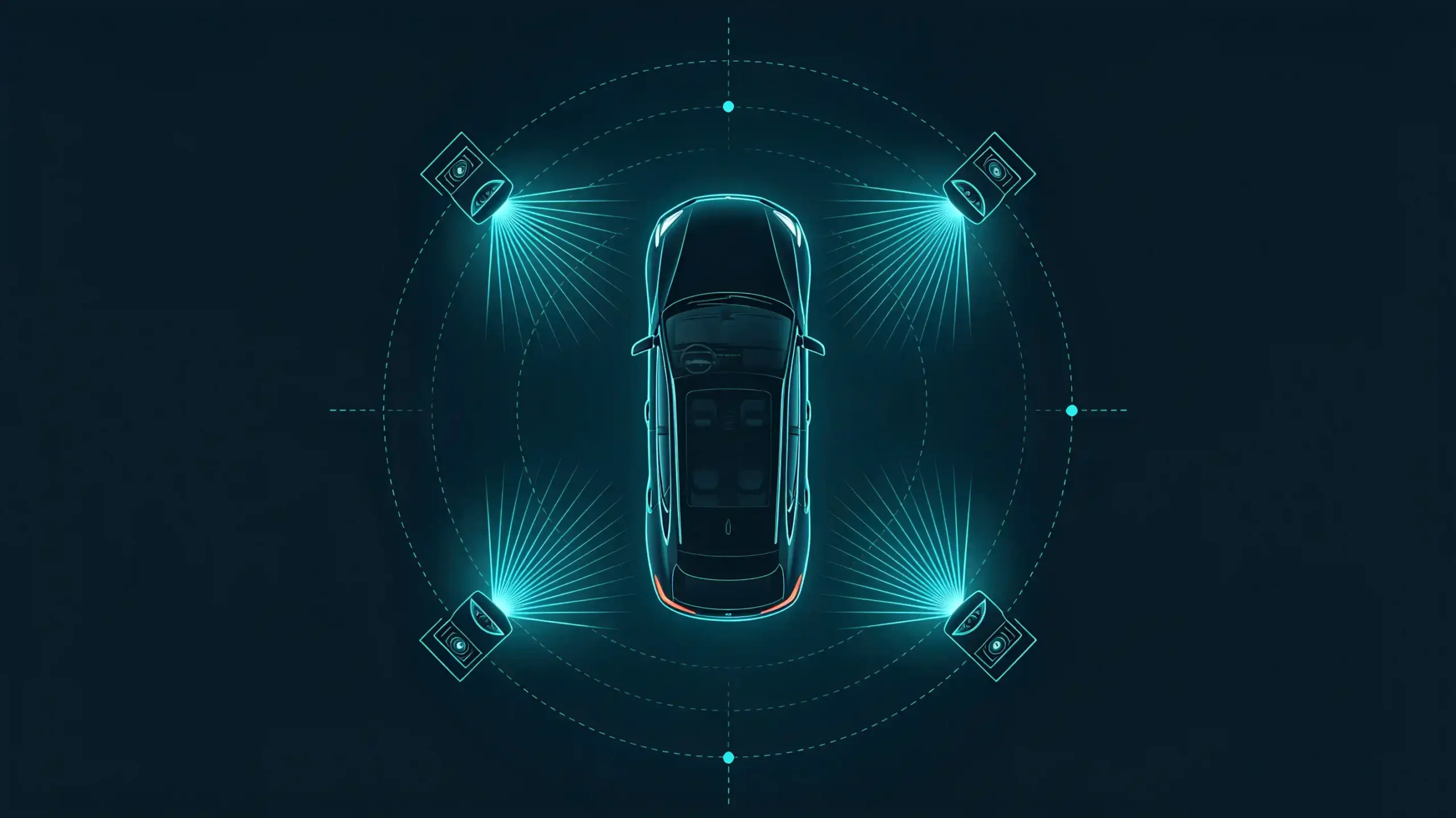
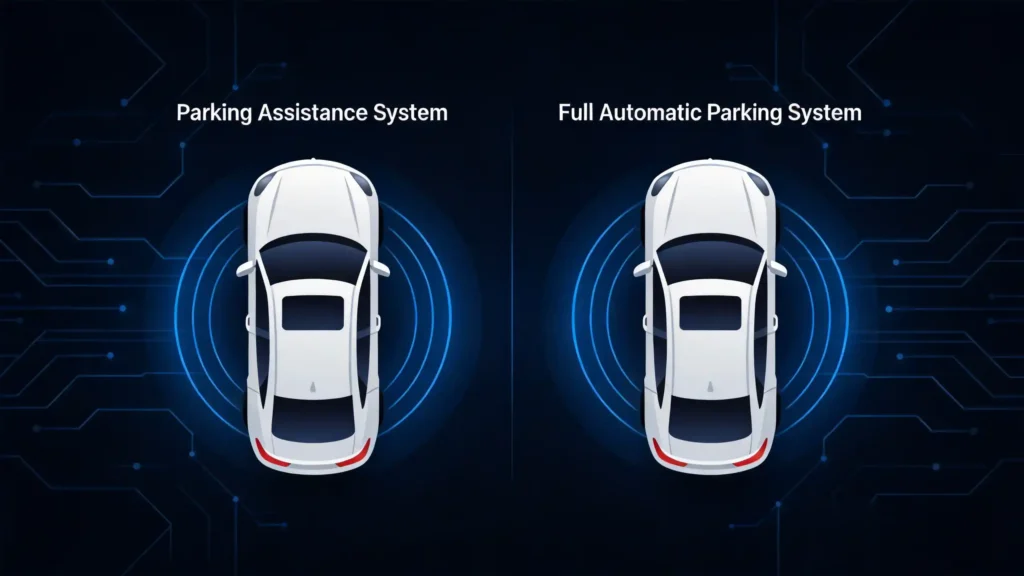
Parking assistance covers any system that helps a driver park more accurately. It does not necessarily take control of the vehicle. This includes rear parking sensors that beep faster as an obstacle gets closer. It includes reverse cameras that display a live feed on the dashboard screen. It also includes 360-degree camera setups that stitch multiple views into a top-down perspective of the vehicle.
What Is Automatic Parking?
Automatic parking, by contrast, refers to systems where the car actively steers itself into a space. The driver controls the pedals, or in some implementations, not even that. The vehicle’s control unit handles steering based on sensor input. This is a more advanced capability. It is generally built into the vehicle’s core electronics by the automaker. It is not added aftermarket. It requires steering actuator control that is not accessible through a typical head unit or accessory upgrade.
Commercial Implication
For dealers and installers, this distinction matters commercially. Camera and sensor-based parking assistance is a realistic aftermarket and OEM accessory business. Fully automatic parking is a vehicle-platform feature. It is not something retrofitted through a stereo or navigation upgrade. When a customer asks for “automatic parking,” it is worth clarifying early. Ask whether they actually mean better visibility and warnings during manual parking.
How Parking Assistance Systems Work
Two Categories
Most assistance systems buyers encounter fall into two overlapping categories. Sensor-based and camera-based. Many modern vehicles combine both.
Sensor-Based Assistance
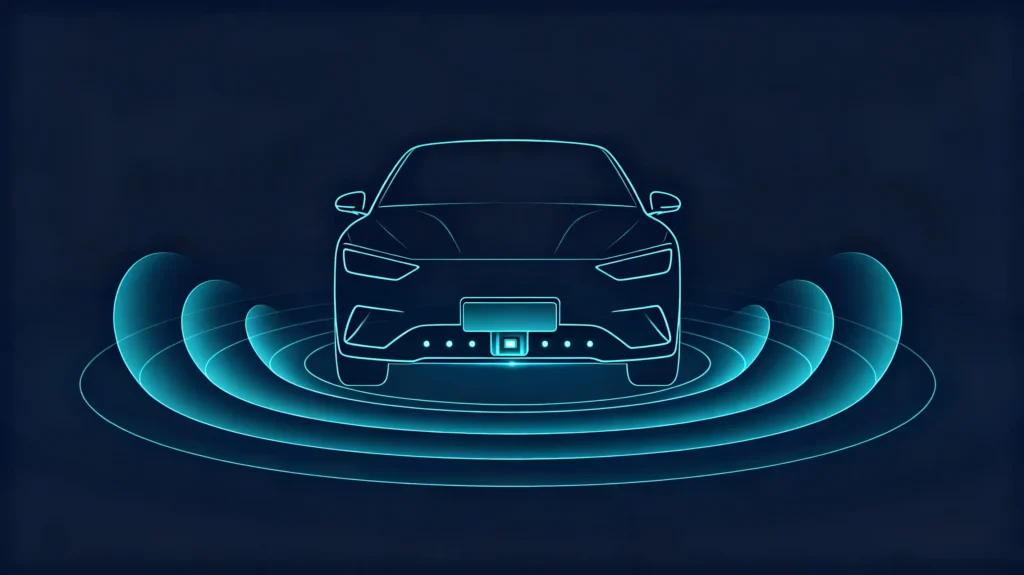
Ultrasonic parking sensors are usually mounted in the front and rear bumpers. They measure distance to nearby objects. They translate that into an audible warning. Slower beeps at a distance. A steady tone when very close. This has been standard technology for years. It is inexpensive. It is reliable in most weather conditions. It does not require a display to be useful. Pairing it with an on-screen distance indicator makes the feedback easier to interpret at a glance.
Camera-Based Assistance
Reverse cameras add a visual layer that sensors alone cannot provide. They show line markings, curbs, low obstacles a bumper sensor might miss, and pedestrians or cyclists crossing behind the vehicle. Where a head unit supports it, the camera feed displays automatically when the vehicle shifts into reverse. Dynamic guidelines often adjust as the steering wheel turns.
Integration Quality
The practical difference for a buyer specifying vehicles at scale is integration quality. A reverse camera that works but displays with lag, poor low-light performance, or an interface that does not match the rest of the head unit creates a worse experience than sensors alone. Camera compatibility with the target head unit model is worth confirming before ordering in bulk. Do not wait until after installation. For guidance on choosing the right head unit, see our how to choose an Android head unit guide.
Parking Assistance Features Buyers Ask About
Common Customer Concerns
Dealers fielding customer questions on parking technology tend to hear a recurring set of concerns. They are worth addressing directly rather than defaulting to generic marketing language.
Display and Head Unit Compatibility
A reverse camera is only as useful as the screen displaying it. Buyers upgrading older vehicles or fitting new stock often need to confirm that a reverse camera’s video format and connector type match the head unit going into the dashboard. Mismatches here are a common source of installation delays and return requests. An Android-based head unit with a dedicated reverse camera input tends to simplify this. The video switching and guideline overlay are handled within one integrated system. They do not act as a bolt-on accessory fighting for screen space. For more on display technology, see our IPS vs QLED display technology guide.
Night Vision and Weather Performance
Parking happens in poor lighting as often as daylight. Camera low-light performance and lens coating against water spray are practical concerns dealers raise regularly. They are not abstract spec-sheet items. A waterproof, night-vision-capable reverse camera holds up better across the range of conditions a vehicle actually encounters. This matters more for customer satisfaction than a marginally higher resolution number that does not perform in the dark.
Sourcing Parking Assistance Components for B2B Buyers
Integration Is Key
For dealers, wholesalers, and 4S store networks, parking assistance components are rarely purchased in isolation. They are specified alongside the head unit or navigation system a vehicle is being fitted with. Supplier compatibility becomes a bigger factor than price alone.
Integration and Customization
Companies usually evaluate whether a supplier’s camera and head unit product lines are designed to work together out of the box. They also check whether pairing them requires additional wiring adapters and configuration work at the installation stage. For foundational context on vehicle communication, see our what is CAN BUS guide. A customized solution — where the head unit’s software is already set up to recognize a matched reverse camera and CAN Bus-based sensor input — reduces installation time and after-sales callbacks considerably. This is compared to sourcing components from unrelated suppliers and hoping they integrate cleanly.
Matched Sourcing
Suppliers that support matched sourcing provide reverse cameras and Android head units from the same production line. They offer CAN Bus decoder development for connecting sensor and steering wheel data into the display system. They provide OEM/ODM customization for dealers who want a consistent parking assistance experience across an entire vehicle lineup. This avoids a patchwork of third-party accessories.
Supplier Evaluation Factors
Beyond compatibility, the buyers who avoid repeat sourcing problems tend to check the same handful of things upfront. Whether the factory tests camera and sensor units under real conditions before shipment. What the minimum order quantity looks like for a first trial batch. How spare parts are supplied if a camera or connector needs replacing months after installation. Whether the same supplier can scale up once a configuration proves out in the market. For guidance on choosing the right supplier, see our how to choose a car navigation system supplier guide.
Lead Time
Lead time is another factor that gets overlooked until it becomes a problem. A dealer stocking ahead of a seasonal sales push needs to know whether standard camera and head unit combinations ship from existing stock. They also need to know if they require a full production run. The two scenarios can mean a difference of weeks. Asking for a realistic delivery timeline during the quoting stage — rather than assuming standard lead times apply to a customized configuration — saves both sides from missed deadlines later.
FAQ
What’s the difference between parking assistance and automatic parking?
Parking assistance — sensors and cameras — helps the driver park manually. It provides distance warnings or a visual feed. The driver retains full control. Automatic parking systems, by comparison, actively steer the vehicle into a space with reduced driver input. Assistance features are common aftermarket and OEM accessory additions. Fully automatic parking is typically built into a vehicle’s core platform by the automaker. It is not added through a stereo or navigation upgrade.
Can a reverse camera be added to any car head unit?
Not universally. The head unit needs a compatible video input. It also needs the software support to switch to the camera feed automatically when reverse gear engages. Older or very basic head units may lack this entirely. When specifying units for a fleet or dealership stock, confirming reverse camera input compatibility before ordering avoids mismatched components arriving separately. It also avoids needing extra adapters during installation.
Do parking sensors and cameras need to work together, or is one enough?
Either can function independently. But they cover different blind spots. Sensors detect close obstacles a camera angle might miss. A camera shows lane markings, curbs, and moving objects a sensor’s beep alone cannot identify. Many dealers now recommend both together for vehicles where parking accuracy matters most. This is particularly true for larger vehicles with limited rear visibility.
What should I check before ordering parking assistance hardware in bulk?
Confirm video and connector compatibility with the target head unit. Check night vision and weather resistance for the camera. Verify CAN Bus support if sensor data needs to integrate with the display system. Confirm the supplier’s testing process before shipment. For OEM or ODM orders, clarify whether camera and head unit lines are designed to pair together. Matched components reduce installation issues significantly compared to sourcing separately.
Conclusion
Whether you are upgrading a vehicle lineup with reverse cameras and compatible head units or specifying a full OEM parking assistance package for new stock, getting the camera, sensor, and display integration right from the start avoids costly installation delays.